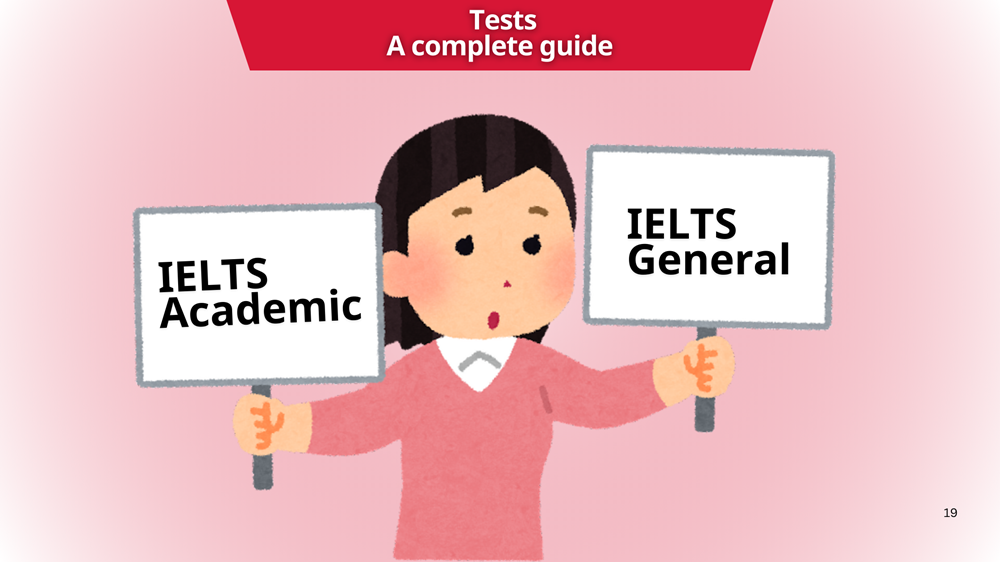
Four components make up the International English Language Testing System (IELTS), which evaluates a person's English language proficiency. It evaluates individual speaking, listening, reading, and writing capability. There are two types of IELTS tests: Academic and General Training. However, understanding the distinctions between IELTS academic and general training is crucial for learners because the test varies depending on whether a candidate is heading overseas for employment, schooling, or citizenship.
To be eligible to study abroad, students must receive a band score according to requirements by their educational institutions or different organizations. After finishing the exam, those who took it are given an official acknowledgment of test analysis. Scores are good for two years. The band score used by IELTS ranges from 1 to 9.
One of the most popular English proficiency tests for applicants wishing to pursue overseas education is the IELTS. Gateway Abroad Jaipur is the best overseas education consultant that offers IELTS Training to applicants. This overview will compare the formats, materials, and aims of the IELTS Academic and General Training examinations to ensure that you make a sound decision about your future.
In nations where English is the primary language for interaction, individuals who wish to apply for licensing as professionals or higher learning must take the IELTS Academic exam. Assessing a candidate's readiness to start taking courses in the English language is the primary goal of the test. The US, UK, Canada, Australia, and New Zealand are among the nations that accept IELTS as an educational instrument.
Conversely, the IELTS General Training is intended for candidates who wish to submit applications for higher education, job training, and employment exposure in an English-speaking setting or who wish to immigrate to New Zealand, Australia, Canada, the US, and the UK. The purpose of the assessment is to assess the applicant's everyday non-academic English. Countries use the IELTS General Training for immigration requirements. Here, the test focuses on the applicant's fundamental ability to survive in a wide range of professional and social circumstances.
There are two types of IELTS exams: Academic and General Training. Reading, writing, speaking, and listening skills are evaluated in both forms. The exams vary somewhat, although they have distinct curricular priorities. Go through the entire detail below.

The IELTS is a famous English language proficiency test that IDP India gives. To date, the IELTS has been approved by 11,500 organizations, including the government, well-known organizations, universities, and corporations. The British Council IELTS offers both computer-based and paper-based test options, giving test-takers flexibility. Speaking, writing, reading, and listening are the four main test components when discussing the IELTS format. While the Listening, Reading, and Writing portions must be completed simultaneously, the Speaking assessment can be conducted on the same day as all other sections or within seven days of them. The IDP IELTS mock test booking allows you to practice for the IELTS exam and will help you understand the format of the exam paper.
Examiners and candidates conduct verbal interviews as part of the speaking segment. All speech exams are recorded on videotape. Each candidate may take anywhere from eleven to fourteen minutes to complete this section. Concerning the relationship between the structure, task feedback, and applicant results, this test part is divided into three sections, each with a distinct goal. This segment's primary goal is to evaluate the applicant's verbal English competence.
Structure-This section has become common in IELTS academic and general, and it is divided into three sections-
In addition to listening to four audio files of proficient English speakers, applicants must respond to a variety of problems. This portion is thirty minutes long. The main objective of this section is to determine the applicants' understanding of the main concepts and particular facts, assess their attitudes and views, the purpose of their remarks, and prove their capacity to track the development of concepts.
Structure-This section has become common in IELTS academic and general, and it has divided into four portions-
Academic Reading: The reading portion of the IELTS Academic exam, which evaluates comprehension of texts in sixty minutes, has forty problems. Test-takers read three lengthy passages from publications such as books, magazines, and academic papers; these passages may be accurate, logical, or expressive. The target audience for this section is employers or individuals seeking additional education.
General Reading: In this section, applicants will get 40 questions on the General Reading test, and you have to finish it within 60 minutes. It contains parts regarding brochures, ads, company rules, and other commonplace documents. Because it uses ordinary terminology in its passages, this test is thought to be simpler than the academic edition.
Academic Writing: Candidates should spend an hour writing about subjects linked to their bachelor's and graduate coursework. Task 1 entails explaining visual data such as graphs, tables, or sketches, while Task 2 calls for composing an essay formally with suitable illustrations.
General Writing: In this segment, you must write for an hour about subjects of general interest. Task 2 is to write an essay in a less formal tone, whereas Task 1 is to write an experienced individual, formal to semi-form, or informal letter describing a specific scenario.
The company or university where you intend to study or work will determine whether you need IELTS Academic or IELTS General Training. We advise you to review the organizations and university specifications before choosing the one that best suits your needs. Applicants who need help with their university applications can contact Gateway Abroad Jaipur for assistance. Here, you will be guided by intellectual personalities with years of experience.
FAQs-
Ans- There is no passing or failing rating for IELTS questions, which usually have the purpose of gauging an applicant's ability in English. IELTS's Academic edition evaluates an applicant's comprehension, whereas the General Training exam's language section is more accessible than the Academic version.
Ans- In contrast to the regular IELTS, the academic IELTS is more difficult because it requires an excellent vocabulary and command of English. However, obtaining an overall score of seven or higher is relatively easy if one practices regularly and is committed to boosting their English.
Ans—The IELTS Academic exam is required for students who want to study for an MS overseas. Proving their English language skills will help students get accepted into a respectable school or university abroad.
Ans- There are two possible answers to this question, based on the particular needs of the university or organization you are applying to. Organizations for general IELTS purposes may occasionally accept academic IELTS results.
Ans- The IELTS Academic test is probably the best option for you if you intend to study in an English-speaking nation. The test determines whether you are prepared to start learning English. It contains words that are common in colleges and universities.
Author
Content Writer & International Education Specialist
Sakshi Taneja is a content writer specializing in international education, study abroad opportunities, university admissions, student visas, scholarships, and career guidance. She creates accurate, research-driven, and student-focused content to help aspiring international students make informed decisions about their global education journey.
No comments yet
Be the first to share your thoughts!
Please provide your contact information
Free Counselling

9/21/2026

2/26/2026

11/3/2025

11/3/2025
10/27/2025
Want some help figuring out what kind of prep service is right for you?
Help and Support

Leave a Comment
Your email address will not be published.