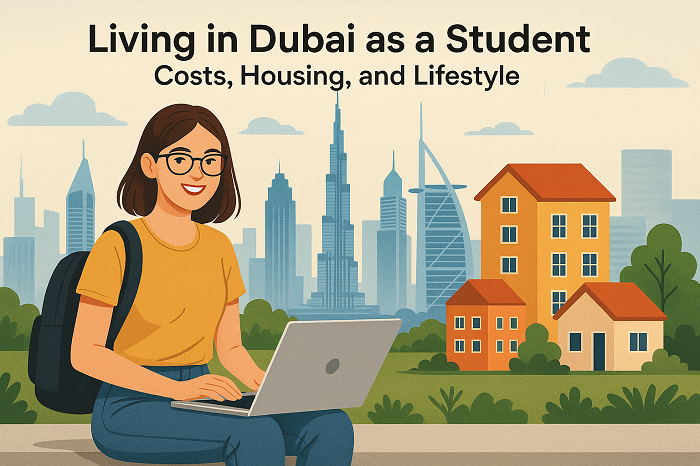
Dubai, a global hub of business, technology, and tourism, has become an attractive destination for international students. With world-class universities, a multicultural environment, and a thriving economy, Dubai offers a unique experience for students. However, living in this vibrant city comes with its challenges and costs. This guide will walk you through the expenses, accommodation options, and lifestyle in Dubai as a student.
Living in Dubai can be expensive compared to other student-friendly destinations, but careful budgeting can help students manage their expenses effectively. Below is a summary of the main expenses-
Tuition fees in Dubai vary depending on the university, program, and whether the institution is private or public. On average, annual tuition fees range from AED 40,000 to AED 100,000 (USD 10,800 to USD 27,000). Some top universities, like the University of Dubai, American University in Dubai (AUD), and Heriot-Watt University Dubai, have higher fees for specialized courses.
Housing is one of the biggest expenses for students in Dubai. There are various options available:
Individual tastes determine the price of food.
Dubai has an efficient and affordable public transport system, which includes the Metro, buses, and taxis:
Dubai is famous for its entertainment options, and students have a range of budget-friendly activities:
Students in Dubai have several accommodation choices, each with its pros and cons:
Dubai offers a dynamic lifestyle, balancing academics, leisure, and career-building opportunities. Here’s what student life in Dubai looks like-
Dubai hosts numerous career fairs, workshops, and networking events, allowing students to connect with industry professionals. Universities often have career services that help students find internships and job placements after graduation. Dubai is not just a global education hub but also a thriving center for career opportunities and professional networking. International students in Dubai have access to a dynamic job market, industry events, and internship programs that help them build strong career foundations. The city’s multicultural environment and business-friendly policies make it an ideal place for students looking to expand their professional horizons.
Most universities in Dubai have dedicated career service centers that assist students with job placements, internships, and career counseling. Institutions like the University of Dubai, American University in Dubai (AUD), and Middlesex University Dubai frequently organize career fairs, resume-building workshops, and networking sessions with recruiters. Internships are a crucial stepping stone for students, allowing them to gain real-world experience and establish industry connections. Many multinational companies, particularly in sectors like finance, hospitality, technology, and media, offer internships that often lead to full-time employment upon graduation.
Dubai is home to numerous business conferences, trade expos, and networking events that connect students with potential employers and industry leaders. Events like GITEX, Expo Dubai business forums, and DIFC networking events attract professionals from around the world. Students who attend these events can build relationships with recruiters, explore career trends, and even secure internships or job offers. Additionally, platforms like LinkedIn, Meetup.com, and Eventbrite host networking sessions tailored for young professionals and graduates.
While studying, international students in Dubai can take up part-time jobs, provided they obtain the necessary work permit. Popular part-time job sectors include retail, hospitality, customer service, and tutoring. These roles help students develop essential skills and financial independence while studying. Moreover, Dubai has a fast-growing startup ecosystem, with incubators and accelerators like Dubai Startup Hub, Dubai Future Accelerators, and Dubai Internet City supporting young entrepreneurs. Aspiring business owners can leverage these resources to launch their ventures and connect with investors.
After graduation, students have various pathways to remain in Dubai and pursue careers. The UAE government has introduced the Golden Visa for outstanding students, allowing them to stay and work in Dubai for up to 10 years. Additionally, graduates can apply for a job seeker visa, which permits them to remain in Dubai while searching for employment. Dubai’s tax-free income policy and booming industries make it an attractive destination for young professionals looking to advance their careers.
In a city like Dubai, surviving requires more than just covering the "expenses." It also involves sharing a good tune with others and integrating into the varied workplace and culture. As a result, we've included some extra survival advice for Dubai below.
Living in Dubai as a student offers a unique blend of academic excellence, cultural diversity, and exciting lifestyle opportunities. While the cost of living can be high, careful budgeting, choosing affordable housing, and utilizing student discounts can make it manageable. The city provides excellent public transport, a vibrant social life, and numerous career growth opportunities through networking and internships. Safety, modern infrastructure, and global exposure make Dubai an attractive destination for international students. By balancing academics, finances, and social life, students can enjoy a fulfilling experience in one of the world’s most dynamic cities while preparing for a bright future.
Ans- Yes, Dubai is relatively expensive compared to other student destinations, but smart budgeting and student discounts can help manage costs effectively.
Ans- The cost of living varies, but on average, students spend AED 3,000 to AED 6,000 (USD 820 to USD 1,630) per month, including rent, food, transportation, and entertainment.
Ans- Shared apartments and university dormitories are the most budget-friendly options, ranging from AED 1,500 to AED 4,500 (USD 410 to USD 1,230) per month.
Ans- Yes, international students can work part-time if they have a student visa and a work permit. They are allowed to work up to 15 hours per week during academic sessions.
Ans- Affordable areas for students include International City, Al Nahda, Silicon Oasis, and Dubai Academic City due to lower rents and proximity to universities.
Ans- Students can get a discounted Nol card, and a monthly public transport pass costs AED 200 to AED 300 (USD 55 to USD 80).
Ans- Students can save money by eating at university cafeterias, budget restaurants, or cooking at home. A meal at an inexpensive restaurant cost around AED 25 to AED 50 (USD 7 to USD 14).
Ans- Yes, Dubai is one of the safest cities globally, with low crime rates and strict regulations ensuring public safety.
Ans- Students can enjoy beaches, desert safaris, shopping malls, theme parks, cultural sites, and outdoor sports. Many attractions offer student discounts.
Ans- Yes, international students must have health insurance, which costs around AED 2,000 to AED 4,000 (USD 550 to USD 1,100) per year.
Author
Content Writer & International Education Specialist
Sakshi Taneja is a content writer specializing in international education, study abroad opportunities, university admissions, student visas, scholarships, and career guidance. She creates accurate, research-driven, and student-focused content to help aspiring international students make informed decisions about their global education journey.
No comments yet
Be the first to share your thoughts!
Please provide your contact information
Free Counselling

9/21/2026

2/26/2026

11/3/2025
11/3/2025
10/27/2025
Want some help figuring out what kind of prep service is right for you?
Help and Support

Leave a Comment
Your email address will not be published.