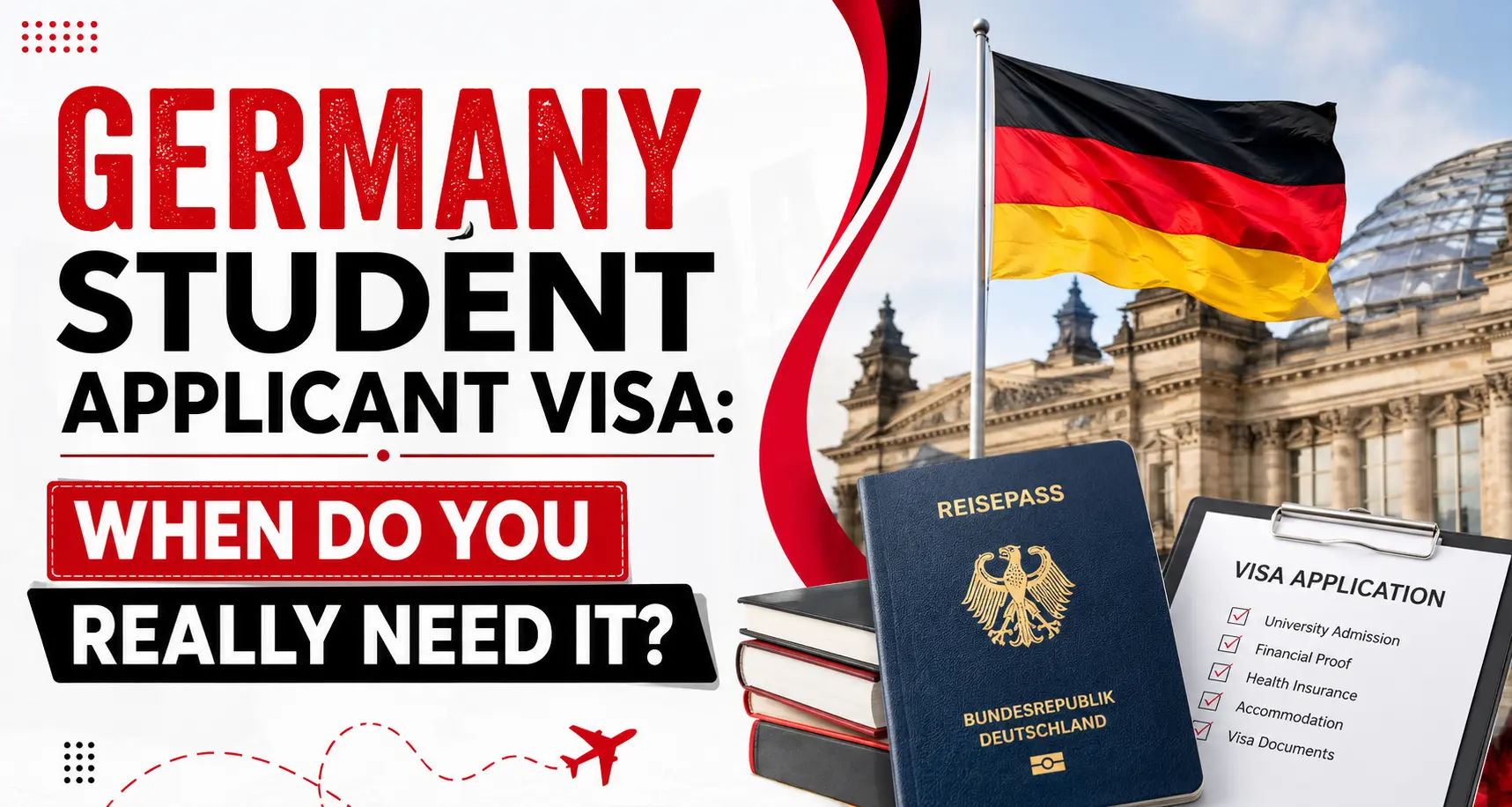
Germany has become a popular destination for international students because of its top universities, affordable education, and excellent career opportunities. However, before planning your journey, it is important to understand the German Student Applicant Visa. Many students often confuse it with the regular Student Visa, but both serve different purposes. The Student Applicant Visa is designed for students who have already applied to German universities but have not yet received their final admission letter. It allows them to travel to Germany and complete the admission process, such as attending interviews or entrance exams. Understanding when this visa is required can make your study plans much smoother. This guide explains who should apply for it, how the visa works, and what documents you should prepare before starting your application process.
What do you understand by the Germany student applicant visa?
The Germany Student Applicant Visa (also called Visum zur Studienbewerbung) allows international students to enter Germany before they receive final admission from a university. It is designed for students who have already applied to German universities but still need to complete some steps in the admission process. Sometimes universities take longer to evaluate applications. In other situations, students must attend entrance exams, interviews, or preparatory courses in Germany before they can secure admission. Instead of waiting in their home country, this visa allows them to travel to Germany and finish the application process directly there.
Usually, the visa remains valid for three months, but authorities may extend it for up to six months if students need more time to complete their university admission procedures. In simple terms, it works like a temporary bridge that helps students move from the application stage to the admission stage. For example, imagine a student who applied to three universities in Germany. One of them invites the student to attend an entrance exam in Munich. Without the Student Applicant Visa, the student cannot legally travel to Germany for the exam. With this visa, the student can enter the country, attend the exam, and continue the admission process.
Beyond the applicant visa, Germany has introduced flexible pathways like the Germany Opportunity Card, which is designed for skilled professionals who want to enter the country without a job offer and search for work directly.
Key highlights of the Germany student applicant visa-
- It allows students to enter Germany before receiving final university admission
- This student visa is suitable for applicants who must attend entrance exams, interviews, or admission tests
- It is usually valid for three months, with the possibility of an extension up to six months
- It helps students complete the university admission process from inside Germany
- However, it can later be converted into a Germany Student Visa after receiving a confirmed admission letter.
- It is ideal for students who want to explore universities and finalize their study plans in Germany
When do you need a Germany student applicant visa?
Not every student needs this visa. In fact, many students directly apply for a Student Visa after receiving their admission letter. You should consider a Student Applicant Visa in the following situations.
- Waiting for university admission- Many universities in Germany take several weeks or even months to review student applications. During this waiting period, some students prefer to travel to Germany so they can stay closer to the admission process and complete any required formalities there. The Germany Student Applicant Visa makes this possible. For example, a student applying for a master’s program in engineering may receive an invitation to attend an interview at the university campus. Instead of delaying the opportunity, the visa allows the student to travel to Germany and participate in the interview while the application is still under review.
- Courses that require entrance exams- Some study programs in Germany require students to pass entrance examinations before the university confirms admission. These tests help universities assess a student’s academic knowledge or practical skills. This situation is common in fields such as architecture, music, sports science, and design. In these programs, applicants may need to demonstrate their abilities through practical assessments or performance tests. The Student Applicant Visa allows students to stay in Germany while preparing for and taking these entrance exams.
- Admission interviews or evaluations- Certain universities prefer meeting applicants before making a final admission decision. Shortlisted candidates may receive invitations for interviews, language evaluations, or academic discussions with faculty members. These meetings help universities better understand a student’s academic background and study goals. The Student Applicant Visa allows students to travel to Germany and complete these steps without any legal difficulties.
- Applying to universities in Germany- Some students also choose to travel to Germany first and apply to universities from there. Being present in the country allows them to visit campuses, attend university open days, speak with professors, and learn more about available programs before making their final decision.
In which situations is a Germany student applicant visa not required?
A Germany Student Applicant Visa is not necessary in every case. Some students can directly apply for a Germany Student Visa if they have already completed the admission process and received confirmation from a university. Since the application stage is already finished, there is no need for a visa designed for applicants.
- Confirmed admission from a German university- Students who already have a confirmed admission letter from a German university do not need a Student Applicant Visa. The admission letter proves that the university has accepted the student into a specific program. In this situation, the student can directly apply for a Germany Student Visa to begin their studies.
- Conditional admission letter- In some cases, universities issue a conditional admission letter. This means the student has been accepted but must complete certain requirements before starting the program. These conditions may include language courses or preparatory classes. Even with conditional admission, students usually apply for a Student Visa rather than a Student Applicant Visa.
- Program start date and admission formalities completed- Students who have already finished all admission requirements and are preparing to begin their program do not need the Student Applicant Visa. Since their seat at the university is already confirmed and the course start date is approaching, applying for the Student Visa is the correct and more suitable option.
Student Applicant Visa vs Student Visa: What’s the Difference?
Many students planning to study in Germany often confuse the Student Applicant Visa with the Student Visa. While both visas are related to studying in Germany, they are meant for different stages of the admission process. The Student Applicant Visa is designed for students who are still completing their university application steps. At the same time, the Student Visa is issued after a student has already received admission from a German university.
The table below explains the key differences between the two visas in a simple way-
|
Basis of Comparison
|
Germany Student Applicant Visa
|
Germany Student Visa
|
|
Purpose
|
Allows students to enter Germany to complete the university admission process
|
Allows students to enter Germany to start their studies after receiving admission
|
|
Admission Status
|
Applicant has applied but has not yet received final admission
|
Applicant already has a confirmed admission letter
|
|
Main Use
|
Attend entrance exams, interviews, or complete admission requirements
|
Begin academic studies at a German university
|
|
Validity Period
|
Usually valid for about 3 months, extendable up to 6 months
|
Typically issued for a longer period depending on the study program
|
|
Conversion
|
Can be converted into a Student Visa or student residence permit after admission
|
No conversion needed since it is already for studying
|
|
Best For
|
Students still in the application stage
|
Students ready to start their university program
|
Who Should Apply for a Germany Student Applicant Visa?
This visa suits students who meet certain conditions.
You may be eligible if you:
- Have completed your school or bachelor’s degree
- Plan to study at a German university
- Have already started the university application process
- Need to stay in Germany to complete admission steps
Embassies usually ask for proof that you are a serious applicant. That means you must show documents such as application confirmations, communication with universities, or exam invitations.
What documents are required for a student applicant visa?
The German embassy typically asks for several documents. These documents prove your identity, academic background, and financial ability. Although requirements may vary slightly between embassies, most applicants must submit the following.
- Valid Passport- A valid passport is one of the most important documents for the visa application. Your passport should remain valid for the entire application period and ideally for the duration of your stay in Germany. It must also contain a few blank pages so the embassy can place the visa stamp and other official entries.
- Proof of University Application- Applicants must show clear evidence that they have already applied to universities in Germany. This proof confirms that the student genuinely intends to study in the country. It may include application confirmation emails received from universities, invitations to entrance exams, interview invitations, or email communication with university admission offices. These documents show that the applicant is actively involved in the admission process.
- Academic Certificates- Students must also provide their previous academic records to demonstrate their eligibility for higher education in Germany. These documents usually include school certificates, bachelor’s degree certificates if applying for a master’s program, and academic transcripts. By reviewing these records, visa officers can confirm that the applicant meets the academic requirements for university studies.
- Proof of Financial Resources- Germany requires international students to prove that they can support themselves financially while staying in the country. Many students meet this requirement for opening a blocked account, which shows that they have sufficient funds to cover living expenses. This financial proof reassures the authorities that the student will be able to manage daily expenses without facing financial difficulties.
- Health Insurance- Health insurance is mandatory for anyone entering Germany. Students usually start with travel health insurance that covers their initial stay in the country. After receiving university admission and enrolling in the program, they typically switch to a student health insurance plan that provides long-term coverage during their studies.
- Motivation Letter- A motivation letter is another important part of the visa application. In this letter, students explain why they want to study in Germany, which programs or universities interest them, and how the chosen degree fits into their long-term career plans. A clear and honest motivation letter helps visa officers understand the applicant’s study goals and intentions for traveling to Germany.
How to apply for the Germany student applicant visa?
The application process follows several steps. Planning early can make the process much smoother.
- Prepare your documents- Start by gathering all necessary documents. Double-check that your academic records, passport, and application proofs are ready. However, preparing early prevents last-minute stress.
- Book a visa appointment- Next, book an appointment at the German embassy or consulate in your country. Appointments can fill up quickly, especially during peak student seasons. Therefore, try to book your slot several weeks in advance.
- Attend the visa interview- During the visa interview, the officer may ask questions about your academic background, your study plans in Germany, and the universities you have applied to. These questions help the officer understand your educational goals and your reasons for choosing Germany as a study destination. It is important to answer each question honestly and confidently. The interview is usually simple, and the officer mainly wants to understand your intentions and future study plans.
- Wait for the decision- After the interview, the embassy will review your application. Visa processing times vary. Some applications receive approval within a few weeks, while others may take longer. Once approved, you will receive your visa and can travel to Germany.
What should you do after arriving in Germany on a student applicant visa?
Arriving in Germany is an exciting step, but there are still a few important tasks you need to complete after entering the country. These steps help you settle legally and continue your university admission process smoothly.
- Register your address- German law requires new residents to register their address at the local registration office. Students usually complete this step within the first two weeks of arrival.
- Continue university applications- Now you can focus on completing your admission process. You may attend interviews, submit additional documents, or take entrance exams.
- Convert your visa- Once you receive a confirmed admission letter, you must convert your Student Applicant Visa into a Student Visa or residence permit for studies. This conversion happens at the local immigration office in Germany.
What are the common mistakes students should avoid?
- Applying for the wrong visa type- Many students confuse the Student Applicant Visa with the regular Student Visa. Applying for the wrong visa can slow down the process or even lead to rejection. It is important to understand your admission status before choosing the visa type.
- Submitting incomplete documents- Missing documents are one of the most common reasons for delays. Students should carefully review the document checklist and ensure that all papers, including academic certificates and financial proof, are complete and properly arranged.
- Applying too late- Visa appointments and processing can take time. Waiting until the last moment may create unnecessary stress and reduce your chances of preparing properly.
- Writing a weak motivation letter- A vague motivation letter may leave a poor impression. Students should clearly explain their study goals and reasons for choosing Germany.
Tips to improve your visa approval chances-
- Be honest in your application- Always provide accurate and truthful information in your visa application. Visa officers carefully review the details you submit, so honesty is essential. Any incorrect or misleading information can create problems and may even lead to rejection.
- Explain your study goals clearly- Your study plan should show that you have a clear academic purpose. Explain why you chose Germany, which program interests you, and how the degree will support your future career. A well-explained plan helps the visa officer understand your intentions.
- Prepare well for the visa interview. The visa interview is usually simple, but preparation can make a big difference. Review your application details, understand your chosen program, and be ready to talk about your academic background and study plans confidently.
- Keep your documents organized- Arrange your documents neatly before attending the visa appointment. Having all the required papers in order shows that you are well prepared and serious about your study plans in Germany.
Is the student applicant visa worth it?
The Germany Student Applicant Visa can be very helpful for students who are still in the university admission stage. Instead of waiting in their home country for admission decisions, this visa allows them to travel to Germany and complete important steps such as entrance exams, interviews, or academic assessments. Being present in Germany also allows students to visit campuses, interact with professors, and understand study programs better before making a final decision.
Another advantage is that once a student receives a confirmed admission letter, the Student Applicant Visa can usually be converted into a Student Visa or residence permit for studies. This makes the transition to studying in Germany smoother. Overall, the visa offers flexibility and supports students who need to complete part of their admission process in Germany.
Final Thoughts
The Germany Student Applicant Visa plays an important role for students who are still in the application stage. It allows you to enter Germany, attend interviews or entrance exams, and complete admission procedures directly in the country. Once you receive your university admission, you can convert this visa into a full Student Visa and begin your academic journey. Germany offers incredible opportunities for international students, but proper planning makes all the difference. Understanding which visa you need helps you avoid delays and move forward with confidence. If you are applying to German universities and expect to complete part of the admission process in Germany, the Student Applicant Visa might be exactly what you need to start your journey.
FAQs on Germany Student Applicant Visa
Q.1 What is a Germany Student Applicant Visa?
Ans- A Germany Student Applicant Visa allows international students to enter Germany while they are still completing the university admission process and have not yet received a final admission letter.
Q.2 Who should apply for a Germany Student Applicant Visa?
Ans- Students who have applied to German universities but are still waiting for admission or need to attend interviews or entrance exams should apply for this visa.
Q.3 How long is the Student Applicant Visa valid?
Ans- The visa is usually valid for three months, and in some cases, it can be extended for up to six months while students complete their admission process.
Q.4 Can the Student Applicant Visa be converted into a Student Visa?
Ans- Yes, once you receive a confirmed admission letter from a German university, you can convert the Student Applicant Visa into a Student Visa or residence permit for studies.
Q.5 Do all students need a Student Applicant Visa to study in Germany?
Ans- No, students who already have a confirmed admission letter can directly apply for a Germany Student Visa instead.
Q.6 What documents are required for this visa?
Ans- Common documents include a valid passport, proof of university application, academic certificates, financial proof, health insurance, and a motivation letter.
Q.7 Can you attend entrance exams in Germany with this visa?
Ans- Yes, the visa allows students to travel to Germany to attend entrance exams, interviews, or other admission-related activities.
Q.8 Is financial proof required for the Student Applicant Visa?
Ans- Yes, students must show proof that they have enough funds to support themselves during their stay in Germany.
Q.9 Can you apply to multiple universities while staying in Germany on this visa?
Ans- Yes, students can apply to several universities and complete the admission process while staying in Germany legally.
Q.10 What happens if you do not receive admission during the visa period?
Ans- If admission is not secured within the visa validity period, students may need to return to their home country unless the visa is extended.



Leave a Comment
Your email address will not be published.