
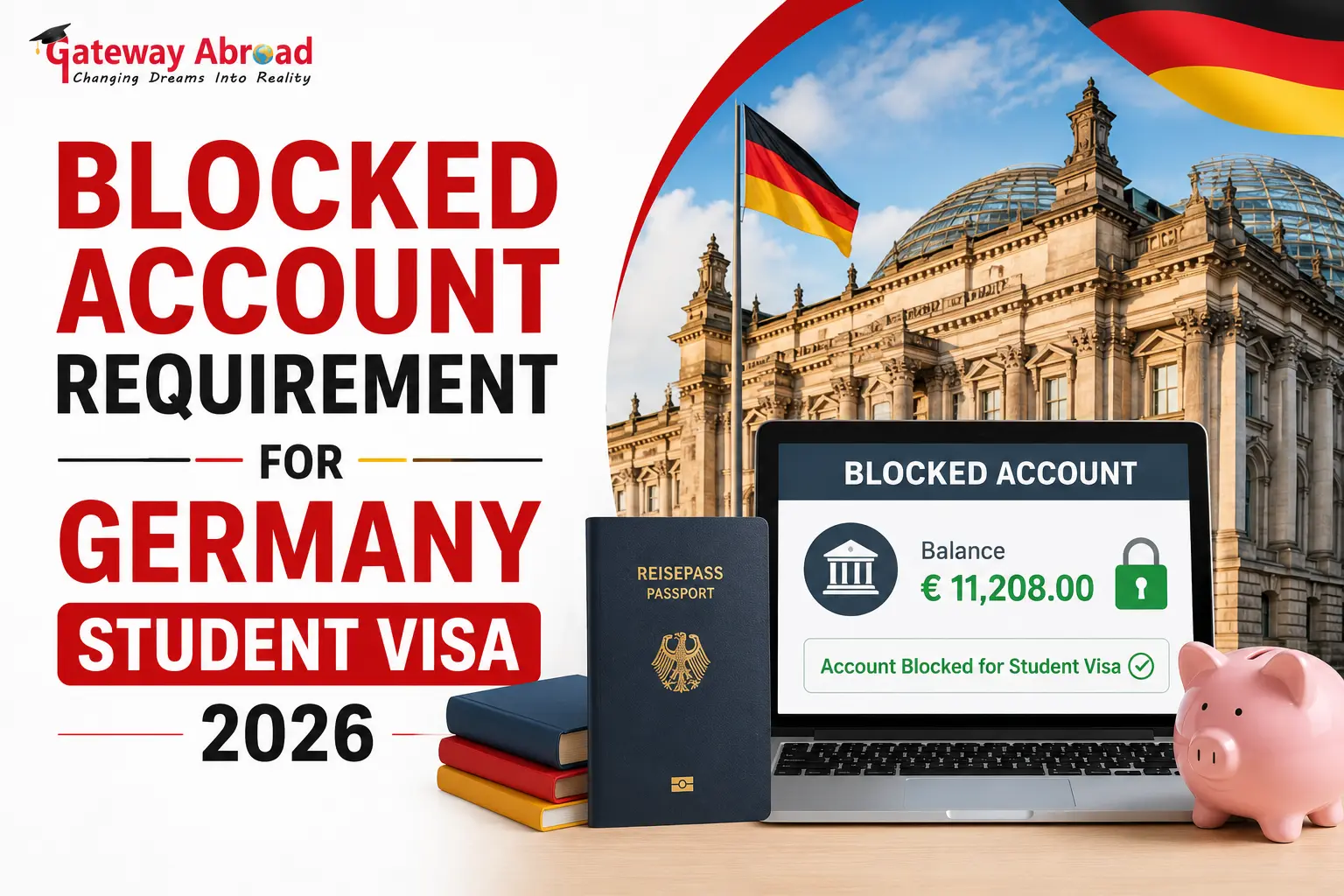
Study in Germany is a dream for many international students. The country offers high-quality education, globally recognized universities, and affordable tuition fees. However, before you can start your studies, you must complete several visa requirements. One of the most important among them is opening a blocked account. Many students feel confused when they first hear about this requirement. What exactly is a blocked account? How much money do you need? When should you open it? In this guide, we will explain everything in simple language, so you clearly understand the process.
What is a Blocked Account?
A blocked account (Sperrkonto) is a special bank account required by the German government for international students who need a student visa. The purpose of this account is simple: it proves that you have enough money to support yourself while living in Germany. Unlike a normal bank account, you cannot withdraw the entire amount at once. The money remains “blocked,” and you receive only a fixed monthly amount after you arrive in Germany. This system helps students manage their expenses and ensures they can cover their living costs during their studies.
For example, many students from countries like India, Nepal, or Nigeria open a blocked account before their visa interview. Once the funds are deposited and verified, they receive a confirmation document. This document becomes an important part of their visa application.
Key highlights of a Blocked Account-
Here are the most important points every student should understand about a blocked account:
- Proof of financial support- A blocked account proves that you have enough money to live in Germany during your studies.
- Minimum required amount- Students usually need to deposit around €11,208 for one year, although the amount may change depending on living costs.
- Monthly withdrawal limit- You cannot withdraw the full amount at once. Instead, you receive about €934 per month for daily expenses.
- Mandatory for most non-EU students- Most international students who apply for a German student visa must open a blocked account.
- Needed for visa application- The confirmation document from the blocked account provider is required during the student visa appointment.
- Activated after arrival in Germany- Once you reach Germany, you connect the blocked account to a local German bank account. The monthly allowance then gets transferred to your regular account.
- Available through approved providers- Several financial services offer blocked accounts for students, including well-known providers like Fintiba, Expatrio, Coracle, and Deutsche Bank.
Why does Germany require a Blocked Account?
Germany wants to make sure that international students can live comfortably without facing financial difficulties. Living expenses such as rent, food, health insurance, transportation, and study materials can add up quickly.
By asking students to deposit money in a blocked account, the German authorities make sure that:
- Students have financial security during their stay.
- They do not depend on illegal work or financial help.
- They can focus on their studies without constant money worries.
In simple words, the blocked account acts like a financial safety net for students.
What is the minimum amount required for a blocked account in 2026?
For a German student visa in 2026, international students must deposit €11,904 for one year in a blocked account. The German government sets this amount as proof that students can support themselves while studying in the country. The money is not a fee. It still belongs to the student, but it remains locked in the account and is released in monthly installments after the student arrives in Germany. Here is how the amount is structured:
- Total amount required: €11,904 for one year.
- Monthly withdrawal limit: €992 per month.
- Purpose: To cover basic living expenses such as rent, food, transportation, and health insurance.
How does the monthly withdrawal work?
Once you reach Germany and activate your blocked account, the bank releases a fixed amount every month to your regular German bank account. Here is how it usually works-
- Arrival in Germany- After reaching Germany, the first step is to open a regular local bank account at a German bank. This account will be used for your everyday transactions, such as paying rent, buying groceries, or using public transport.
- Link your accounts- Next, you connect your blocked account with your local German bank account. Most blocked account providers guide students through this process, and it usually takes only a short time.
- Monthly transfer begins- Once the account is activated, the blocked account provider transfers a fixed monthly allowance to your regular bank account. For example, if the required annual amount is €11,904, students receive about €992 per month.
- Use the money for daily expenses- You can freely use this monthly amount for your living expenses. Students typically spend it on rent, food, health insurance, transportation, and other daily needs.
- The process continues each month- The bank continues transferring the monthly allowance until the full amount deposited in the blocked account is used up.
Who needs a Blocked Account?
Most non-EU international students applying for a German student visa must open a blocked account. However, there are a few exceptions. You may not need a blocked account if:
1. Non-EU / Non-EEA students applying for a student visa- In most cases, students from non-EU and non-EEA countries must open a blocked account. When they apply for a German student visa, the embassy asks for proof that they can financially support themselves during their stay. For example, many students from countries like India, Pakistan, Bangladesh, Nigeria, and Nepal open a blocked account before their visa appointment. The confirmation document from the account becomes an important part of their visa application.
2. Students without a financial sponsor in Germany- Some students have family members or sponsors living in Germany who can support them financially. If you do not have such support, the blocked account becomes the easiest way to show proof of funds. In other words, it reassures the German authorities that you will be able to pay for rent, food, transportation, and other daily expenses.
3. Students applying for long-term study programs- The blocked account requirement usually applies to students enrolling in long-term programs, such as-
- Bachelor’s degree programs
- Master’s degree programs
- Preparatory courses (Studienkolleg)
- Language courses linked to university admission
4. Students who cannot provide alternative financial proof- In some situations, students can show financial proof in other ways. However, if they cannot provide these alternatives, they must open a blocked account. Common alternatives include:
- A fully funded scholarship that covers living expenses
- A formal obligation letter (Verpflichtungserklärung) from a sponsor in Germany
- A recognized financial guarantee
Which are the popular blocked account providers for Germany?
Several financial service companies offer blocked accounts (Sperrkonto) for international students who apply for a German student visa. These providers make it easier to open an account online from abroad and submit the confirmation document required for the visa process. Below are some of the most popular and widely used blocked account providers.
1. Fintiba- It is one of the most well-known blocked account providers for international students. The platform allows students to open a blocked account completely online within a few minutes. Many students prefer Fintiba because it works directly with a German bank and provides fast confirmation for visa applications. Key features include:
- Fully digital account opening
- Quick verification process
- Mobile app to manage the account
- Additional services like health insurance
2. Expatrio- It is another popular provider that offers an all-in-one package for students moving to Germany. Besides the blocked account, it also provides services such as health insurance and travel insurance. Because of these bundled services, many students choose Expatrio as a convenient option before arriving in Germany. Some benefits of Expatrio include-
- Simple online application
- Fast confirmation letter for visa submission
- Optional package with insurance and banking services
3. Coracle- This is also a growing fintech platform that provides blocked accounts specifically designed for international students. Although it is slightly smaller than other providers, Coracle has become increasingly popular among students looking for a simple and affordable option. Key highlights include-
- One-time setup fee with low or no monthly charges
- Quick online registration
- Optional packages with travel and health insurance
4. Studely- It is another digital provider that offers blocked accounts along with financial and insurance services for students moving to Germany. Studely is also recognized by many German embassies for visa applications. Its services usually include-
- Online blocked account setup
- Insurance support
- Fast processing time
How do international students open a Blocked Account for Germany?
1. Choose a blocked account provider- The first step is selecting a reliable blocked account provider. Many students compare different providers before making a decision. They usually check factors such as service fees, processing time, and customer support. Choosing a trusted provider can make the entire process easier. Popular options like Fintiba, Expatrio, Coracle, and Studely are widely accepted by German embassies and allow students to open their accounts online from their home country.
2. Complete the online application- After choosing a provider, students must fill out an online application form. The form usually asks for basic personal details such as full name, contact information, passport details, admission letter from a German university, nationality, and current address. The application process is simple and normally takes only a few minutes to complete.
3. Verify your identity- Once the application is submitted, the provider asks students to verify their identity. This step helps financial institutions follow banking regulations and security rules. In most cases, identity verification happens through passport verification or a short video identification process.
4. Transfer the required amount- After the account is approved, students must transfer the required amount to the blocked account. This money proves that they can cover their living expenses while studying in Germany. The transfer is usually made through an international bank transfer from the student’s local bank.
5. Receive the blocked account confirmation- When the funds arrive, the provider issues an official blocked account confirmation letter. This document confirms that the required amount has been deposited. Students must submit this confirmation during their German student visa appointment.
6. Activate the account after arriving in Germany- After arriving in Germany, students open a regular local bank account and link it to the blocked account. Once the account is activated, the provider begins transferring the fixed monthly allowance to the student’s local bank account for daily expenses.
What are the common mistakes students should avoid?
- Opening the account too late- Many students delay opening their blocked account until the last moment. Since verification and international transfers can take several days, starting late may delay the visa process. It is always better to begin the process early.
- Sending the wrong amount- Students sometimes transfer less than the required minimum amount. Since Germany updates the financial requirement from time to time, always check the latest amount before sending the money.
- Ignoring bank transfer fees- International bank transfers often include additional charges. If these fees are deducted from the total amount, the blocked account may receive less than required.
- Choosing an unreliable provider- Using an unknown or unapproved provider can create problems during the visa application.
- Entering incorrect personal details- Mistakes in name, passport number, or other details can cause delays. Always review the information carefully before submitting the application.
What are some practical money management tips for living in Germany?
- Create a monthly budget- Start by listing your monthly income and expenses. Include rent, food, transportation, health insurance, and other daily costs. A simple budget helps you understand where your money goes and allows you to control unnecessary spending.
- Track your spending- Keep a record of your daily expenses. You can use a mobile banking app or a simple notebook to track your spending. This habit helps you notice spending patterns and adjust your budget when needed.
- Choose affordable accommodation- Housing is usually the biggest expense in Germany. Consider student dormitories, shared apartments (WG), or smaller rooms to reduce rent costs.
- Use student discounts- Many places in Germany offer student discounts on transportation, museums, restaurants, and entertainment. Always carry your student ID and check for available discounts.
- Cook at home more often- Eating out regularly can quickly increase your expenses. Cooking meals at home is usually cheaper and also healthier.
- Use public transportation- Germany has an excellent public transport system. Using trains, buses, or student travel passes can save a lot of money compared to taxis or owning a car.
- Build an emergency fund- Try to save a small amount every month. An emergency fund can help you handle unexpected expenses such as medical costs or urgent travel.
Conclusion-
The blocked account requirement is an important part of the German student visa process. Although it may seem confusing at the beginning, it becomes much easier once you understand the steps involved. A blocked account simply shows the German authorities that you have enough funds to support yourself during your studies. This financial proof helps ensure that students can cover their living expenses while staying in Germany. With proper planning and early preparation, the process can be completed without stress. It is always helpful to check the latest required amount, select a trusted provider, and transfer the funds on time. Once your blocked account is confirmed, you can move forward with confidence in your visa application and focus on preparing for your new academic and cultural experience in Germany.
FAQs
Q.1 What is a blocked account for Germany?
Ans- A blocked account is a special bank account where international students deposit a fixed amount of money to prove they can cover their living expenses while studying in Germany.
Q.2 Why is a blocked account required for a German student visa?
Ans- It shows the German authorities that the student has enough financial support to live in Germany during their studies.
Q.3 How much money is required in a blocked account?
Ans- The German government sets a minimum amount each year that students must deposit to cover their basic living costs.
Q.4 Who needs a blocked account for Germany?
Ans- Most students from non-EU countries who apply for a German student visa need to open a blocked account.
Q.5 Can you withdraw all the money at once?
Ans- No, students can withdraw only a fixed amount every month.
Q.6 When should you open a blocked account?
Ans- It is better to open the account several weeks before your visa appointment to avoid delays.
Q.7 Which banks offer blocked accounts?
Ans- Many German banks and financial service providers offer blocked account services for international students.
Q.8 Can your parents transfer money to the blocked account?
Ans- Yes, parents or sponsors can transfer the required amount to the student’s blocked account.
Q.9 What happens if your visa is rejected?
Ans- Most providers allow students to request a refund after submitting proof of visa rejection.
Q.10 Is a blocked account still useful after arriving in Germany?
Ans- Yes, students receive their monthly allowance from the blocked account to manage their living expenses.



Leave a Comment
Your email address will not be published.