
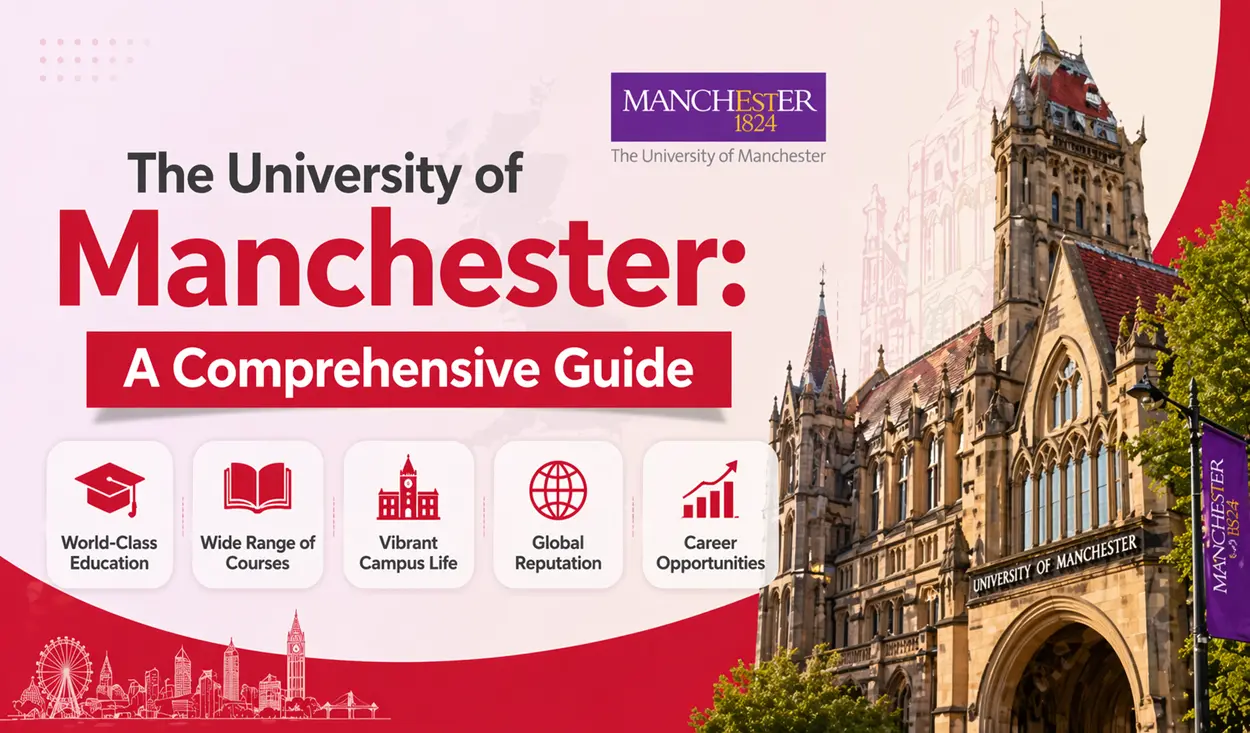
The University of Manchester (UoM) stands among the most respected and influential universities in the world, combining a rich heritage with cutting-edge research and a truly global outlook. With strong ties to industry, a broad range of academic offerings, and a vibrant student community, it represents a top destination for students seeking excellence in higher education. Known for its innovation, inclusivity, and academic strength, the university attracts learners from over 160 countries. It offers world-class teaching, modern facilities, and strong career support. From science and engineering to business and humanities, Manchester provides diverse learning paths. This guide explores its history, programs, admissions, campus life, and global reputation in a simple and clear way.
What makes the University of Manchester a true story of innovation?
The roots of The University of Manchester stretch back to 1824, when the Mechanics’ Institute was established to promote wider access to education. From the beginning, the institution focused on practical learning and real-world impact. Over time, it grew through key developments and major mergers, most notably between the Victoria University of Manchester and the University of Manchester Institute of Science and Technology (UMIST). This historic union in 2004 created the modern University of Manchester.
From its early role during the Industrial Revolution to its present position as a global research leader, the university has driven progress in science, technology, and society. It has made significant contributions to fields such as physics, materials science, engineering, medicine, and the humanities.
Today, Manchester blends tradition with modern excellence. Its historic campus buildings stand beside state-of-the-art laboratories and learning spaces, symbolizing its commitment to both heritage and innovation. This unique balance makes the University of Manchester a true story of progress.
What makes the University of Manchester stand out in global rankings?
The University of Manchester earns high positions in global rankings because of its strong academics, powerful research, and real-world impact. It focuses on quality education, innovation, and global engagement.
- Strong academic excellence- Manchester offers high-quality teaching across a wide range of subjects. These include science, engineering, medicine, business, social sciences, and humanities. Expert faculty members guide students through modern learning methods. The university also updates its courses to match global trends and industry needs.
- World-class research and innovation- The university leads in research that solves real-world problems. Its experts work on climate change, healthcare, artificial intelligence, clean energy, and advanced materials. Many of these projects influence industries and public policy. This strong research output plays a significant role in its global ranking success.
- Global student community- Manchester welcomes students from over 160 countries. This diverse environment supports cultural exchange and global learning. International collaborations also improve its global reputation and academic reach.
- Strong industry connections- The university maintains close ties with leading companies and organizations. These partnerships help students gain practical experience through internships, placements, and live projects. This career-focused approach boosts its ranking performance.
- High graduate employability- Employers trust Manchester graduates. Students develop strong problem-solving, communication, and leadership skills; moreover, many secure jobs soon after graduation, which further strengthens the university’s global image.
How do the diverse programs and strong schools at the University of Manchester shape academic excellence?
- Wide range of academic programs- The university offers programs in science, engineering, medicine, business, humanities, and social sciences. This wide selection allows students to choose courses that match their interests and career goals. It also supports flexible learning paths.
- Strong faculty structure- Manchester organizes its academics into three main faculties: Biology, Medicine and Health; Science and Engineering; and Humanities. Each faculty includes several specialized schools. These schools focus on deep subject knowledge and skill development.
- Focus on interdisciplinary learning- The university encourages students to learn across disciplines. Many courses allow students to combine subjects and work on real-world problems. This approach helps students develop critical thinking and creative problem-solving skills.
- Expert teaching staff- Experienced professors lead the programs. Many of them are active researchers and industry professionals. They bring real-world experience into the classroom, making lessons more practical and engaging.
- Modern learning environment- Students learn through lectures, workshops, group projects, and research work. The university also provides advanced labs, libraries, and digital tools. These resources support deeper learning.
- Career-focused education- Manchester designs its courses to meet industry needs. Students gain hands-on experience through internships, placements, and live projects. This prepares them for successful careers.
Study at the University of Manchester with Expert GuidanceGet complete support on courses, admissions, scholarships, and visa process to secure your place at a top UK university. Apply Now & Start Your Journey |
What are the key admission requirements for the University of Manchester?
The University of Manchester follows a competitive but fair admission process. It looks for students with strong academic records, clear goals, and good English skills. Requirements vary by course and level of study.
- Undergraduate Admission Requirements- Applicants must complete their secondary education with strong grades. International students usually need high scores in their Class 12 or equivalent exams. Some programs, such as medicine and engineering, may ask for higher marks. Students must also submit a personal statement. This explains their interests, goals, and reasons for choosing the course.
- Postgraduate admission requirements- Postgraduate applicants need a relevant bachelor’s degree from a recognized university. Most courses require a good academic score. Some programs may ask for work experience. Business and management courses may require GMAT or GRE scores.
- English language requirements- International students must prove their English skills. The university accepts tests such as IELTS, TOEFL, and PTE. Most courses require an IELTS score between 6.5 and 7.0. Some subjects may ask for higher scores. learn: how to calculate IELTS band score
- Supporting documents- Applicants must submit several documents. These usually include-
· Academic transcripts
· Statement of Purpose (SOP)
· Letters of Recommendation (LORs)
· Resume or CV (for some courses)
· Portfolio (for creative courses)
- Course-specific requirements- Some courses have extra requirements. These may include interviews, entrance tests, or written samples. Students should always check the official course page for exact details.
- Application deadlines- Deadlines vary by course and level. Undergraduate students usually apply through UCAS. Postgraduate students apply through the university website.
What are the application tips for students to get admission to the University of Manchester?
- Choose the Right Course- Select a course that matches your academic background and career goals. Read the course details carefully. Make sure you meet all entry requirements before applying.
- Maintain strong academic scores- Manchester values good academic performance. Try to achieve high grades in your previous studies. Strong marks show your ability to handle challenging coursework.
- Write a powerful personal statement- Your personal statement plays a key role. Explain why you chose the course. Share your goals, interests, and relevant experiences. Keep your writing clear and honest.
- Prepare a strong Statement of Purpose (SOP)- For postgraduate students, the SOP is essential. Explain your academic journey, career plans, and why Manchester fits your goals. Avoid copying content.
- Get quality recommendation letters- Choose referees who know you well. They should be teachers, professors, or employers. Their letters should highlight your skills, discipline, and achievements.
- Meet English language requirements- Prepare well for IELTS, TOEFL, or PTE. Try to score above the minimum requirement. A higher score improves your chances.
- Apply early- Early applications get more attention. Some courses fill quickly. Applying early also helps with scholarships and accommodation.
- Check course-specific requirements- Some programs need portfolios, interviews, or extra tests. Always review the course page for special instructions.
- Show relevant experience- Internships, projects, research, and volunteering add value to your profile. Mention them clearly in your application.
- Proofread everything- Errors can hurt your chances. Check grammar, spelling, and formatting. Make sure all details are correct.
What about the fees and financial planning to get admission to the University of Manchester?
Studying at the University of Manchester is a valuable investment. But to plan well, you need to know the costs and how to manage them wisely. This section explains tuition fees, living costs, and smart financial planning steps.
1. Tuition fees- Tuition fees at the University of Manchester vary by course and level of study-
- Undergraduate Programs- Most courses cost between £20,000 and £36,000 per year. Moreover, professional programs like Medicine or Dentistry may be higher.
- Postgraduate Programs- Master’s degrees generally range from £20,000 to £36,000 per year. However, fees can vary based on subject and course type.
- Research Degrees (PhD)- Research fees depend on the department and funding availability.
2. Living and other costs- In addition to tuition, students should plan for daily living costs-
- Accommodation- Students can stay in on-campus halls or private housing. Costs depend on room type, facilities, and location, with city-center or en-suite rooms usually costing more.
- Food and transport- Food expenses vary based on lifestyle. Students who cook at home spend less, while those who eat out spend more. Manchester has an affordable transport system, with buses, trams, and bicycles commonly used.
- Academic and personal expenses- Books, software, and materials vary by course. Personal costs include clothing, social activities, and emergencies. Overall, living costs usually range from £10,000 to £15,000 per year.
3. Financial Planning Tips- Good planning helps you manage costs confidently-
- Start early- Begin financial planning at least a year before applying. Knowing the cost range lets you prepare documents and budget effectively.
- Create a budget plan- List your income sources and expenses. Divide them monthly to estimate how much you need each term.
- Explore scholarships- Manchester offers many scholarships for international students. Some reward academic merit. Others support financial need. Early application increases your chances.
4. Scholarships and Funding Support- Manchester offers numerous scholarships, especially for international students-
- Merit and need-based awards.
- Scholarships are aimed explicitly at Indian and Commonwealth students.
- Some awards provide up to £10,000 per year for eligible undergraduate students.
- Recent high-value scholarships of approx. £24,000 (~₹26 lakh) has been available for Indian students.
5. Part-time work options- International students in the UK can usually work part-time (up to 20 hours per week during term time). This helps with personal expenses and living costs. Always check visa rules before starting any work.
What about the campus and student life of the University of Manchester?
- The University of Manchester offers a vibrant campus experience with modern facilities, cultural diversity, and opportunities for personal growth. Students enjoy a balance of academic excellence and social engagement.
- The university campus is spread across Manchester city, blending historic buildings with state-of-the-art facilities. Students have access to modern lecture halls, advanced laboratories, extensive libraries, and comfortable study spaces. The city environment allows easy access to cafes, shops, and cultural attractions.
- Manchester hosts a diverse student body from over 160 countries. This multicultural environment promotes cultural exchange and global friendships. Students can connect through various clubs, societies, and interest groups.
- The university offers over 400 clubs and societies, covering sports, arts, culture, and hobbies. Students can join debate clubs, music groups, sports teams, or entrepreneurial networks to enhance skills outside the classroom.
- Regular cultural festivals, guest lectures, sports tournaments, and social events enrich student life. These activities encourage interaction, teamwork, and personal growth.
- Manchester provides excellent sports facilities, including gyms, sports halls, and outdoor fields. Students can participate in football, cricket, badminton, or fitness classes to stay active and healthy.
How Does the University of Manchester Excel in Research, Career Support, and International Student Services?
· Research Excellence and Innovation- The University of Manchester is a world-leading research institution. Its researchers tackle global challenges in health and medicine, sustainable technologies, digital transformation, social sciences, and climate and environmental studies. The university has contributed to major scientific breakthroughs, most famously the isolation of graphene, which earned a Nobel Prize. Manchester’s research attracts international collaborations and significant funding, making it a hub for innovation. Students have opportunities to participate in cutting-edge research projects, gaining practical experience alongside academic knowledge. This focus on impactful discovery strengthens the university’s global reputation.
· Career Support and Employability- Manchester graduates are highly sought after by employers worldwide. The university provides strong career services, including one-to-one coaching, internships, placement support, networking events, and mentoring programs with global professionals. These services help students gain real-world skills and industry exposure. The institution maintains close ties with major employers and an extensive alumni network, which further supports graduate employability. As a result, students leave the university with both academic knowledge and practical skills that enhance their global career prospects.
· International Student Support- With students from over 160 countries, the University of Manchester emphasizes inclusivity and support for international students. Dedicated services guide students from pre-arrival to graduation. Peer mentoring programs, cultural clubs, and academic support services help students adapt to life in Manchester. The city’s multicultural environment also makes it easier for international students to feel at home, connect with diverse communities, and thrive academically and socially. These efforts ensure a smooth transition and a fulfilling student experience for learners from around the world.
Explore More Universities: Oxford University
Conclusion-
The University of Manchester remains a top choice for ambitious students worldwide. It combines academic rigor, world-class research, global recognition, and vibrant student life in one of the UK’s most dynamic cities. The university offers competitive programs across STEM, business, social sciences, and the arts, along with scholarships and financial support for deserving students. With modern facilities, dedicated career services, and strong industry connections, Manchester prepares students for real-world success. Its inclusive and multicultural environment ensures that international students feel supported and engaged. Whether your goal is to innovate, influence, or lead, the University of Manchester provides a holistic and rewarding pathway to personal growth, academic achievement, and future career success.
FAQs on Manchester University
Q1. What is the University of Manchester known for?
Ans: The University of Manchester is known for its world-class research, academic excellence, and innovations, including the discovery of graphene.
Q2. When was the University of Manchester established?
Ans: Its roots date back to 1824 with the Mechanics’ Institute, and the modern university was formed in 2004 through the merger of the Victoria University of Manchester and UMIST.
Q3. How many students study at the University of Manchester?
Ans: The university has over 40,000 students, including learners from more than 160 countries.
Q4. What programs does the University of Manchester offer?
Ans: It offers undergraduate, postgraduate, and research programs in science, engineering, medicine, business, humanities, and social sciences.
Q5. What are the admission requirements?
Ans: Students need strong academic records, English language proficiency, and, for some courses, work experience or entrance tests.
Q6. How much are tuition fees?
Ans: Undergraduate and postgraduate fees typically range between £20,000 and £36,000 per year, depending on the course.
Q7. Does the university provide scholarships?
Ans: Yes, the university offers merit- and need-based scholarships, as well as country-specific scholarships, for both international and domestic students.
Q8. How is student life at Manchester?
Ans: The university has a vibrant student community with 400+ clubs and societies, sports, cultural events, and a multicultural environment.
Q9. What career support is available?
Ans: Manchester provides one-to-one career coaching, internships, employer fairs, mentoring programs, and strong alumni networks to support graduates.
Q10. How does the university support international students?
Ans: It offers pre-arrival guidance, academic and personal support, peer mentoring, cultural societies, and a welcoming city environment.





Leave a Comment
Your email address will not be published.