Nestled in the heart of England, the University of Oxford England, is more than just a prestigious institution it is a symbol of academic brilliance, historical legacy, and cultural richness. With a history that spans over nine centuries, Oxford is not only the oldest university in the English-speaking world but also one of the most respected and sought-after centers for higher learning globally.
In this comprehensive blog, we will explore Oxford University’s origins, academic excellence, colleges, admission process, student life, research impact, and global standing, providing you with an in-depth look at what makes Oxford a timeless beacon of education.
What about the history and legacy of Oxford University?
The University of Oxford's exact founding date is uncertain, but teaching existed in some form as early as 1096. Its rapid development began in 1167 when English students were banned from attending the University of Paris by King Henry II. This led to a surge in scholarly activity in Oxford.
Over the centuries, Oxford became a magnet for the brightest minds in Europe. It survived political upheavals, religious reforms, and civil wars, continuously evolving and contributing to intellectual and scientific advancements. It has produced 30 British prime ministers, over 70 Nobel laureates, and countless leaders in every field imaginable.
Read about the Collegiate System of Oxford University-
One of the unique features of Oxford University is its collegiate structure. The university is made up of 39 autonomous colleges and six permanent private halls, each with its history, traditions, and administration. These colleges are more than just residences; they are academic communities where students receive tutorials and pastoral care.
Some of the most renowned colleges include:
- Christ Church – Known for its grandeur and association with figures like Lewis Carroll and John Locke.
- Magdalen College is famous for its beautiful grounds and notable alumni, including Oscar Wilde.
- Balliol College – One of the oldest, with a strong tradition in politics and philosophy.
Each college has its character, coat of arms, dining hall, library, and chapel, fostering a close-knit environment within the larger university.
What is the academic excellence and the courses of Oxford University?
Oxford offers a broad range of undergraduate and postgraduate programs in humanities, social sciences, mathematical, physical, and life sciences, as well as medical sciences. It consistently ranks among the top five universities in the world and is known for its rigorous academic standards.
What are the popular courses offered by Oxford University?
The university emphasizes critical thinking, in-depth research, and personalized learning. Oxford’s tutorial system—one-on-one or small group discussions with subject experts—is widely considered the gold standard in education. Which are the popular courses offered by Oxford University? Oxford University offers a wide range of highly respected undergraduate and postgraduate courses across various disciplines. Here’s a list of some popular and prestigious courses offered at Oxford:
Sciences and Medicine-
- Medicine (MBBS/BMBCh)
- One of the most competitive and prestigious medical programs in the world.
- Strong emphasis on research and clinical practice.
- Biological Sciences
- Focus on genetics, molecular biology, ecology, and evolution.
- Cutting-edge research and lab training.
- Chemistry
- Includes physical, organic, inorganic, and theoretical chemistry.
- Known for Nobel Prize-winning faculty and research.
- Physics
- Covers classical and quantum mechanics, relativity, and astrophysics.
- Home to many internationally renowned physicists.
- Engineering Science
- General engineering in the first two years, then specialization (civil, mechanical, electrical, etc.).
Humanities-
- Philosophy, Politics, and Economics (PPE)
- A unique interdisciplinary course producing many politicians, economists, and thought leaders.
- English Language and Literature
- One of the oldest English literature programs globally.
- Rich in literary history and analysis.
- History
- Offers broad topics from ancient to modern history with world-class resources.
- Classics (Literae Humaniores)
- In-depth study of Latin, Greek, and ancient cultures.
- Modern Languages
- French, German, Spanish, Russian, and more.
- Combines literature, linguistics, and culture.
Social Sciences and Law-
- Law (Jurisprudence)
- Highly regarded undergraduate law program (BA in Jurisprudence).
- Also offers the BCL and MJur at the postgraduate level.
- Economics and Management
- Very competitive, combining analytical rigor with business understanding.
- Human Sciences
- Interdisciplinary study of biological, social, and cultural aspects of humans.
- Geography
- Focuses on human and physical geography with strong fieldwork components.
Mathematics and Computer Science-
- Mathematics
- Theoretical and applied mathematics with a strong academic reputation.
- Mathematics and Statistics
- Combines analytical math with data interpretation.
- Computer Science
- Modern course covering AI, machine learning, algorithms, and programming.
- Mathematics and Computer Science (Joint Degree)
- Offers a unique blend of theoretical and practical knowledge.
Interdisciplinary and New-Age Programs-
- Biomedical Sciences
- Focus on neuroscience, physiology, and pharmacology.
- Psychology (Experimental Psychology / Psychology, Philosophy and Linguistics - PPL)
- Emphasis on experimental research and human behavior.
- Environmental Science / Earth Sciences
- Studies geology, climate, and natural resources.
Research and Innovation Opportunity at Oxford University-
Oxford is at the forefront of global research. Its scholars have made groundbreaking contributions to science, medicine, the humanities, and social sciences. The university has more than 100 research centers and institutes, and its research income is among the highest in the UK.
Notable research milestones include:
- The Oxford-AstraZeneca COVID-19 vaccine was developed in record time during the pandemic.
- AI and machine learning – Through its Oxford Internet Institute and Department of Computer Science.
- Climate science and sustainable development – Spearheading efforts to combat climate change.
Oxford collaborates with governments, industries, and institutions across the world, reinforcing its role as a global research powerhouse.
Which colleges come under Oxford University?
Oxford University is a federation of 39 autonomous colleges and 6 Permanent Private Halls (PPHs). Each college operates independently but is part of the university system — meaning they share teaching, facilities, and resources. Here’s a list of the 39 colleges under Oxford University:
Undergraduate & Graduate Colleges (Accept both UG and PG students)
- Balliol College
- Brasenose College
- Christ Church
- Corpus Christi College
- Exeter College
- Harris Manchester College (mature students only)
- Hertford College
- Jesus College
- Keble College
- Lady Margaret Hall
- Lincoln College
- Magdalen College
- Mansfield College
- Merton College
- New College
- Oriel College
- Pembroke College
- The Queen’s College
- Regent’s Park College
- St Anne’s College
- St Catherine’s College
- St Edmund Hall
- St Hilda’s College
- St Hugh’s College
- St John’s College
- St Peter’s College
- Somerville College
- Trinity College
- University College
- Wadham College
- Worcester College
Graduate-Only Colleges-
- All Souls College
- Blackfriars
- Campion Hall
- Green Templeton College
- Kellogg College
- Linacre College
- Nuffield College
- St Antony’s College
- St Cross College
- Wolfson College
Permanent Private Halls (PPHs)-
These are typically affiliated with religious organizations:
- Blackfriars
- Campion Hall
- Regent’s Park College
- St Benet’s Hall (currently closed to undergraduates but under review)
- St Stephen’s House
- Wycliffe Hall
The best thing about all colleges is that each college offers accommodation, dining (formal halls), academic and welfare support, and social and extracurricular opportunities.
What are the documents and exams required to get admission to Oxford University?
To apply for admission to Oxford University, you need to provide a set of essential documents. The exact requirements depend on whether you're applying for undergraduate or postgraduate programs, but here's a comprehensive list for both.
For Undergraduate Admission (via UCAS)-
UCAS Application-
All undergraduate applicants must apply through the UCAS portal.
Academic Transcripts-
- High school transcripts (e.g., A-levels, IB, CBSE, etc.).
- Must show subjects studied and predicted/achieved grades.
Predicted Grades-
- From your school or college.
- Should meet Oxford's conditional offer requirements.
Personal Statement-
- A 4000-character statement explaining:
- Why do you want to study the course?
- Your academic interests and experiences.
- Any relevant extracurriculars or achievements.
Teacher Reference Letter-
- A strong academic reference from a teacher or school official.
Admissions Test Scores (if applicable)
- Many courses require subject-specific tests (e.g.):
- TSA (Thinking Skills Assessment)
- LNAT (Law)
- MAT (Mathematics)
- BMAT (Medicine – for 2026 entry and earlier)
- HAT (History Aptitude Test), etc.
Written Work (for some subjects)-
- Typically required for:
- English, History, Classics, etc.
- Must be original and marked by a teacher.
Proof of English Language Proficiency (if applicable)
- IELTS, TOEFL, or Cambridge English qualifications.
- Minimum IELTS: 7.0–7.5 overall (with 6.5+ in each section).
For Postgraduate Admission (via Oxford's Online Application Portal)-
1. Academic Transcripts
- Bachelor’s and/or Master’s degree certificates and transcripts.
- Should be officially translated into English (if in another language).
2. CV/Resume
- Detailed academic and/or professional background.
3. Personal Statement / Statement of Purpose (SOP)
- Explains:
- Why are you applying to Oxford?
- Your academic interests and career goals.
- Why you're a good fit for the course.
4. Letters of Recommendation (usually 3)
- Academic referees (professors/lecturers).
- Some courses allow professional references if you're out of academia.
5. Writing Sample / Portfolio (for some courses)
- Required for subjects like English, History, Creative Writing, Architecture, etc.
6. Standardized Test Scores (if required)
- GRE or GMAT for specific courses (mostly in Business/Economics).
- Not required for most humanities or science programs.
7. Proof of English Language Proficiency
- IELTS Academic, TOEFL iBT, or Cambridge C1/C2.
- Requirements vary by program, but typically:
- IELTS: 7.5 overall, no band below 7.0
- TOEFL iBT: 110+
Sometimes colleges also ask for extra documents-
- Research proposal (for DPhil/PhD applicants).
- Funding or scholarship documents.
- Portfolio (for Fine Art or Design programs).
What is the admission process at Oxford University?
Gaining admission to Oxford is highly competitive. Here’s a step-by-step overview of the undergraduate application process:
- Choosing a Course and College- Applicants must first choose a course and may either apply to a specific college or submit an open application.
- UCAS Application- Students apply through UCAS (Universities and Colleges Admissions Service) by 15th October of the year before entry.
- Entrance Tests and Written Work- Many courses require applicants to sit admissions tests (e.g., the Thinking Skills Assessment, LNAT, MAT) and submit written work.
- Interviews- Shortlisted candidates are invited for interviews, either in person or online. These are intellectually rigorous and mimic Oxford’s tutorial style.
- Offers- Successful candidates receive conditional or unconditional offers, often requiring top grades in final exams.
For graduate admissions, students must apply directly to the university, submit academic transcripts, references, and a personal statement, and may also need to provide GRE/GMAT scores, depending on the program.
Oxford University financial aid and scholarships program-
Oxford is committed to widening access and ensuring that financial hardship does not prevent talented students from attending. There are several scholarships and financial aid options, including:
- Rhodes Scholarship – One of the most prestigious scholarships in the world for international students.
- Clarendon Fund – Offers over 130 fully funded graduate scholarships each year.
- Reach Oxford Scholarships – Aimed at students from low-income countries.
UK students may also benefit from the Oxford Bursaries, and international students have access to a wide range of funding opportunities based on merit and need.
What is the ratio of international students’ percentage at Oxford University?
Oxford is truly international, with over 45% of its student body coming from outside the UK, representing more than 160 countries. The university provides comprehensive support for international students, including visa assistance, language support, and integration programs.
There are numerous cultural societies, including:
- Oxford India Society
- Oxford Africa Society
- Oxford Chinese Students Society
These groups offer a sense of community, celebrate cultural events, and foster global friendships.
Student life and extracurricular activity at Oxford University-
Student life at Oxford University is vibrant, diverse, and deeply enriching—balancing centuries-old traditions with modern-day excitement. From rowing on the Thames to late-night debates, life at Oxford goes far beyond lectures and libraries.
Student Societies:
- Oxford Union – A world-famous debating society that hosts global leaders, authors, and celebrities.
- Oxford University Dramatic Society (OUDS) – Launchpad for numerous actors.
- Sports Clubs – From rowing and rugby to fencing and martial arts, there are over 80 sports clubs.
Which unique traditions are followed by Oxford University?
Oxford University is steeped in centuries of rich traditions—some formal, some quirky, and all deeply embedded in its identity. These traditions are a big part of what makes the Oxford experience so unique and memorable.
- Oxford is steeped in traditions. From formal dinners in gowns to ancient ceremonies like matriculation, exams, and graduation, students partake in rituals that connect them to centuries of alumni.
- Final exams are called Finals—very intense, often multiple days long, and students wear full sub-fusc.
- After finishing exams, friends throw glitter, confetti, champagne, and even whipped cream at students in celebration. It is a messy but joyful tradition marking the end of academic stress.
- A formal dinner is held in each college’s dining hall. Attendees wear sub-fusc or smart attire and dine by candlelight. Think Harry Potter’s Great Hall, many colleges have similar architecture.
- The annual rowing race between Oxford and Cambridge is held on the River Thames in London.
- Oxford Union Debates is one of the oldest and most prestigious debating societies in the world. Weekly debates on topical issues. Guest speakers include world leaders, celebrities, authors, and academics.
- Friendly rivalries between colleges like Balliol and Trinity have led to legendary student pranks such as turning statues into disco balls or swapping college flags. These humorous antics are considered part of the Oxford charm.
- The tutorial system is a key Oxford academic tradition. One or two students meet weekly with an expert professor for in-depth discussions.
Libraries and Museums:
Oxford has over 100 libraries, including subject-specific, college, and central university libraries. The crown jewel is the Bodleian Libraries—one of the most famous library systems in the world.
· The Bodleian Library was founded in 1602 and is also popularly known as “The Bod”.
- It is a legal deposit library and receives a copy of every book published in the UK.
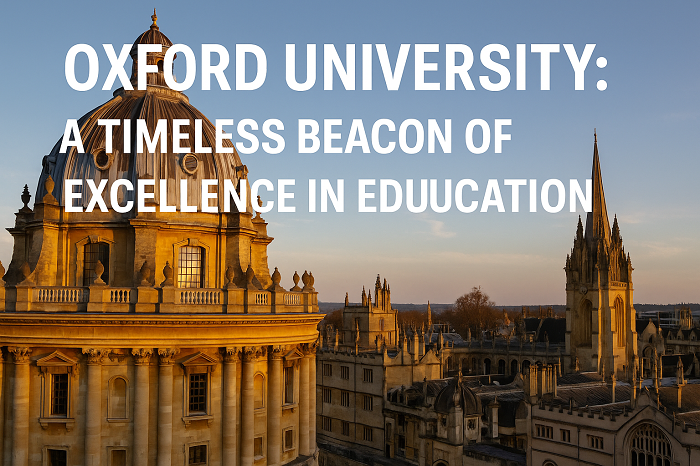
- Stunning reading rooms like the Radcliffe Camera, Duke Humfrey’s Library, and Divinity School.
- It has also been used in filming for the Harry Potter series.
- Oxford students can apply for a Bod card for access.
- Some parts are open to the public via guided tours.
Oxford has several world-renowned museums, many open to the public for free.
- Ashmolean Museum – The world’s first university museum.
- Pitt Rivers Museum – Home to ethnographic and archaeological treasures.
A Summary of the City of Oxford-
Nestled in the heart of southern England, the City of Oxford is a captivating blend of medieval charm and vibrant, modern culture. Oxford is not just a university—it’s a city with its charm. Known as the "City of Dreaming Spires,”. Oxford is famous for its stunning architecture, cobbled streets, and, of course, the world-renowned University of Oxford. But beyond the university walls, the city offers a rich tapestry of experiences, making it a fantastic place to live, study, and explore. Its beautiful architecture, cobbled streets, and lush gardens provide an inspiring environment for study and reflection. The city is bike-friendly, walkable, and brimming with cafes, bookstores, theatres, and historical landmarks.
Oxford has a deep-rooted history that stretches back over a thousand years. Originally a Saxon settlement, it grew into a thriving medieval city and an intellectual powerhouse during the 12th century with the rise of the university. While Oxford is historic, it is also youthful and energetic, largely thanks to its 40,000+ student population from the University of Oxford and Oxford Brookes University.
Key highlights of the city are-
- Historic sites: Radcliffe Camera, Carfax Tower, Oxford Castle.
- Cultural attractions: Ashmolean Museum, Sheldonian Theatre, and Bodleian Library tours.
- Activities: Punting, river walks, ghost tours, and college visits.
- Festivals: Oxford Literary Festival, May Morning, Cowley Road Carnival.
Alumni of Oxford University who created a success story-
Oxford’s alumni network is a global powerhouse, featuring leaders in politics, literature, science, business, and the arts. Graduates enjoy exceptional career prospects, with many securing roles in top firms, government, academia, and international organizations. The university’s careers service offers personalized support, internships, and employer connections. Prominent names include-
- Stephen Hawking – Theoretical physicist and cosmologist.
- Malala Yousafzai – Nobel Peace Prize laureate.
- Indira Gandhi – Former Prime Minister of India.
- Tony Blair – Former UK Prime Minister.
- Emma Watson – Actress and activist.
What is Oxford University's role in the modern world?
Oxford University’s role in the modern world is that of a global powerhouse in knowledge, ethics, innovation, and leadership. It bridges the past and the future, tackling global challenges while continuing to inspire new generations of thinkers and change-makers.
Oxford continues to evolve to meet modern challenges. It is a leader in sustainability, diversity, and digital transformation. Initiatives like Oxford Net Zero, Oxford Foundry, Entrepreneurship Center, and Equality and Diversity Strategy show that the university is future-focused while honoring its past. The university is also actively working to increase accessibility and reduce barriers for underrepresented students through outreach and partnership programs.
- A global leader in education- Oxford is consistently ranked among the top universities in the world. Its rigorous academic standards, prestigious faculty, and rich history attract students from across the globe. It sets benchmarks for educational excellence and inspires curriculum models internationally.
- Pioneering research and innovation- Oxford leads cutting-edge research in medicine, science, engineering, humanities, and social sciences. Some notable modern contributions include:
§ COVID-19 vaccine development in partnership with AstraZeneca.
§ Innovations in AI and machine learning.
§ Groundbreaking work in climate change, genetics, and neuroscience.
- Policy and global influence- Oxford scholars regularly advise governments, international organizations (like the UN and WHO), and NGOs. Through its research and think tanks, such as the Blavatnik School of Government and the Oxford Martin School, the university helps shape global strategies on issues like climate change, poverty reduction, public health, digital governance, and global security.
- Cultural and intellectual hub- Oxford is a guardian of cultural heritage and intellectual discourse. Its libraries, museums (like the Ashmolean), and presses make vast contributions to the arts, history, and literature. The Oxford University Press (OUP) is one of the world’s largest and most respected academic publishers.
- Champion of global talent- Oxford attracts a highly diverse student body—around 45% of its students are international. It fosters a community of future leaders, scientists, authors, and innovators. Its alumni include: 30+ world leaders, e.g., Bill Clinton, and Indira Gandhi. 70+ Nobel Prize winners and influential thinkers like Stephen Hawking and J.R.R. Tolkien
- Social Impact and Ethical Leadership- Oxford contributes to solving real-world problems through initiatives like: Oxford Poverty and Human Development Initiative (OPHI), Ethox Centre for bioethics and global health, and environmental sustainability and climate resilience programs. It also offers scholarships and outreach programs e.g., the Rhodes Scholarships, to ensure inclusivity and global equity.
- Driving the Knowledge Economy- Oxford plays a vital role in the UK and global economy by spinning out high-tech companies and collaborating with industries and startups. Its research commercialization generates billions in economic activity and job creation.
Conclusion-
Oxford University is more than an academic institution it is a cultural icon, a cradle of innovation, and a global community. For students, it offers an unparalleled opportunity to engage with world-class faculty, access vast resources, and become part of a historic yet forward-thinking tradition.
Whether you are an aspiring scholar, researcher, leader, or artist, Oxford offers an environment where ideas flourish, friendships blossom, and dreams take flight. In a world of rapid change, Oxford remains a timeless beacon of intellectual light, guiding generations to come.
FAQs on Oxford University-
Q.1 What is Oxford University known for?
Ans- Oxford is renowned for its academic excellence, historic traditions, and its tutorial-based teaching method. It is constantly rated as one of the best colleges in the world.
Q.2 How old is Oxford University?
Ans- Oxford University dates back to 1096, making it the oldest university in the English-speaking world.
Q.3 How many colleges are part of Oxford University?
Ans- Oxford has 39 colleges and 6 permanent private halls, each operating as an independent academic community.
Q.4 What is the admission process for undergraduate courses?
Ans- Students must apply via UCAS, take any required admissions tests, and attend an interview if shortlisted.
Q.5 Does Oxford accept international students?
Ans- Yes, over 45% of Oxford’s students are international, representing more than 160 countries.
Q.6 What are the most popular courses at Oxford?
Ans- Some top courses include Philosophy, Politics and Economics (PPE), Medicine, Law, Computer Science, and Mathematics.
Q.7 Are scholarships available at Oxford?
Ans- Yes, Oxford offers several scholarships, including the Rhodes Scholarship, Clarendon Fund, and Reach Oxford Scholarships for international and domestic students.
Q.8 What is the tutorial system?
Ans- Oxford’s tutorial system involves personalized teaching in small groups or one-on-one sessions, encouraging deep discussion and critical thinking.
Q.9 Where is Oxford University located?
Ans- The university is located in Oxford, England, about 60 miles (96 km) northwest of London.
Q.10 What is life like for students at Oxford?
Ans- Oxford offers a vibrant student life with academic rigor, rich traditions, over 400 clubs and societies, and a strong global community.







Leave a Comment
Your email address will not be published.