facebook pixel
Difference between a CV and a resume

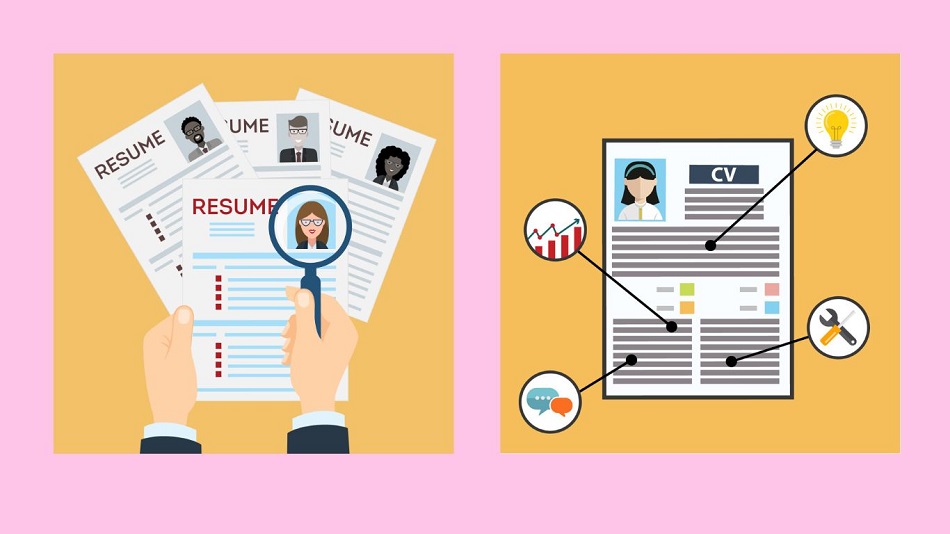
Knowing the difference between a resume and a CV is essential when looking for jobs. Despite their frequent interchangeability, these documents have different formats, content, and goals. Your chances of getting the job you want can be significantly affected by the one you choose to use. This blog will explain the definition, goal, length, format, content, and regional preferences of a CV and a resume.

What is a CV?

A curriculum vitae, or CV, is an extensive document that lists a person's training, employment history, accomplishments, and credentials. Applications for jobs in academia, research, or medicine usually require resumes. They frequently appear while submitting grants, fellowships, or postsecondary education applications.

A CV is perfect for jobs highlighting academic accomplishments and a thorough professional history because it provides a comprehensive overview of a person's career. Generally speaking, a CV is longer than a resume. Depending on the experience and level of the candidate's career, it may be two or many pages. A CV can have as many pages as it wants.

How does a CV show up?

Although they have certain similarities, resumes and CVs have a different format. CVs have a distinct format and are more detailed. You should arrange your professional and academic achievements using the following framework-

  • Contact details- Provide details that are comparable to those on a résumé.
  • Title of choice- Indicate the title of the position you are applying for.
  • Professional profile- Similar to a resume's summary of qualifications, this section should be framed as an elevator pitch emphasizing your CV's accomplishments.
  • Teaching, including research subjects- List your GPA, major, minor, and research concentration in reverse chronological order, along with your college degrees.
  • Honours and awards- List any accolades you've won from academic or professional associations and any grants you've been given.
  • Qualifications- A CV's description of qualifications, like a resume, emphasizes your abilities concerning the position you seek. For instance, highlight your virtual and in-person presentation abilities when applying for an academic job.
  • Teaching experience- List the names of any classes you have instructed, along with the location and dates of those classes.
  • Publications and presentations- Your published studies and conference presentations caught the attention of potential employers when you included them in your resume. Depending on the employer's preferred format, cite any published publications using either APA or MLA style.
  • Memberships and affiliations- If you are a member of a professional organization, mention any contributions you have made while serving on its board.
  • Technical skills- List your familiarity with computer software, languages for programming, and research databases, just like one might on a resume.

 What is a Resume?

A resume is a short record emphasizing an applicant's qualifications, work history, and abilities pertinent to a particular position. The word resume comes from the French word "résumé, which means summary.  Applications for business, private, and non-academic jobs usually include resumes. They are made for a specific job application and showcase relevant experience and skills.

A resume is usually one to two pages long. The aim is to present the most crucial information as rapidly and effectively as possible.


What is included in the resume format?

  • Contact details- This section should include your complete name, city, state, phone number, and email address. It may assist in meeting the application tracking system's requirements but may jeopardize your identity.
  • Summary of qualifications- Instead of expressing a goal, quickly outline your professional background and abilities, emphasizing the benefits you would offer the organization.
  • Education- Provide a list of your professional qualifications and college degrees. Academic awards will also be listed in this section.
  • Certifications- This category includes special certifications and professional licenses for teaching, nursing, social work, or computers. Your CV should include additional professional certifications, training, or professional growth.
  • Work Experience- Listing your previous positions and professional experience in this portion of your resume is crucial.
  • Technical skills- Enumerate any programming languages, software applications, or other technical credentials you may possess that are relevant to the new role you're looking for.


What are the primary distinctions between a resume and a CV?

  • Length: Resumes are usually 1-2 pages long; however, CVs are several pages long.
  • Purpose- While CVs serve as tools for careers in academia, research, or medicine, resumes are used for jobs in the commercial sector.
  • Content- While resumes emphasize specific work experience and skills, CVs include a comprehensive academic and professional history.
  • Format- CVs are chronological, whereas resumes can be functional, chronological, or a mix.
  • Customization- Resumes are adaptable to job applications; however, CVs are static and can hardly be altered.
  • Regional preference- CVs are more common in academic settings, the UK, Europe, and India, although resumes are commonly utilized in corporate roles in the USA, Canada, and Australia.

Aspect

CV

Resume

Length

Multiple pages

1-2 pages

Purpose

Academic, research, or medical jobs

Private sector jobs

Content

Detailed academic and professional history

Targeted work experience and skills

Format

Chronological

Chronological, functional, or combination

Customization

Static, rarely changes

Highly customizable

Regional Preference

UK, Europe, India, and academic settings

USA, Canada, Australia, and corporate jobs


When to Use a CV vs. a Resume?

Use a CV when-

  • Applying for academic positions, grants, or fellowships.
  • Submitting applications for research jobs.
  • Seeking roles in medical or scientific fields.
  • Applying for higher education programs.

Use a Resume when-

  • Applying for jobs in the private sector.
  • Targeting corporate or business roles.
  • Applying for internships.
  • Submitting applications in the USA, Canada, or Australia.


What are the essential tips for writing a strong resume or CV?

  • Use pertinent keywords from the job description to customize your CV or resume for each application.
  • Display your work experience in reverse chronological order to help recruiters visualize your professional advancement.
  • Keep your text formatted with basic fonts like Arial and Times New Roman, and avoid photos or graphics that could mislead the ATS.
  • For clarity, use bullet points and pertinent headings.
  • Emphasize your successes rather than just your job responsibilities.
  • Steer clear of hyperbole and give truthful information.
  • Use percentages or numbers to quantify your accomplishments and show your influence in prior positions.
  • Check your CV or resume for typos and grammatical mistakes.
  • Consult with coworkers, mentors, or expert resume writers for their opinions.


Conclusion

Understanding the difference between a CV and a resume is essential for job seekers. While both documents showcase qualifications, they differ significantly in length, content, and purpose. While a resume works best for corporate and private sector positions, a CV is excellent for academic and scientific work.

By tailoring each document to the job requirements, candidates can improve their chances of securing their desired positions. Knowing when to use a CV or resume can significantly impact your job search journey.

FAQs on CV and Resume

Q.1 What is the main distinction between a resume and a CV?

Ans- A resume is a succinct overview of one's abilities and job history, but a CV offers a comprehensive background of one's academic and professional accomplishments.

Q.2 In the United States, which document is necessary?

Ans- In the United States, resumes are necessary for job applications.

Q.3 Can a CV be used in place of a resume?

Ans- The nature of the job determines this. While resumes are necessary for employment in the business sector, academic and research positions prefer CVs.

Q.4 Does a CV have a page limit?

Ans- Depending on your experience, a resume may be many pages lengthy.

 Q.5 How frequently should your CV or resume be updated?

Ans- Make frequent updates to your document, particularly after acquiring new abilities or experiences.

Q.6. Should your resume contain references?

Ans- Unless requested expressly, references are usually not listed on resumes.

Q.7 What is the ideal resume format?

Ans- Your level of experience determines the format. Popular choices include combination, functional, and chronological formats.

Q.8 Is a cover letter necessary for resumes?

Ans- Including a cover letter with your resume is often advised.

Q.9 Is it possible to apply the same resume to multiple positions?

Ans- Customizing your resume for every job application is the best action.

Q.10 Do academic fields utilize CVs exclusively?

Ans- Although resumes may be necessary for specific foreign job applications, they are primarily utilized in the academic, scientific, and medical domains.

Share this post:

~ By Admin

Leave a Reply

Your email address will not be published.

Have a question about GMAT?

Want some help figuring out what kind of prep service is right for you?

Help and Support


Study Abroad Help