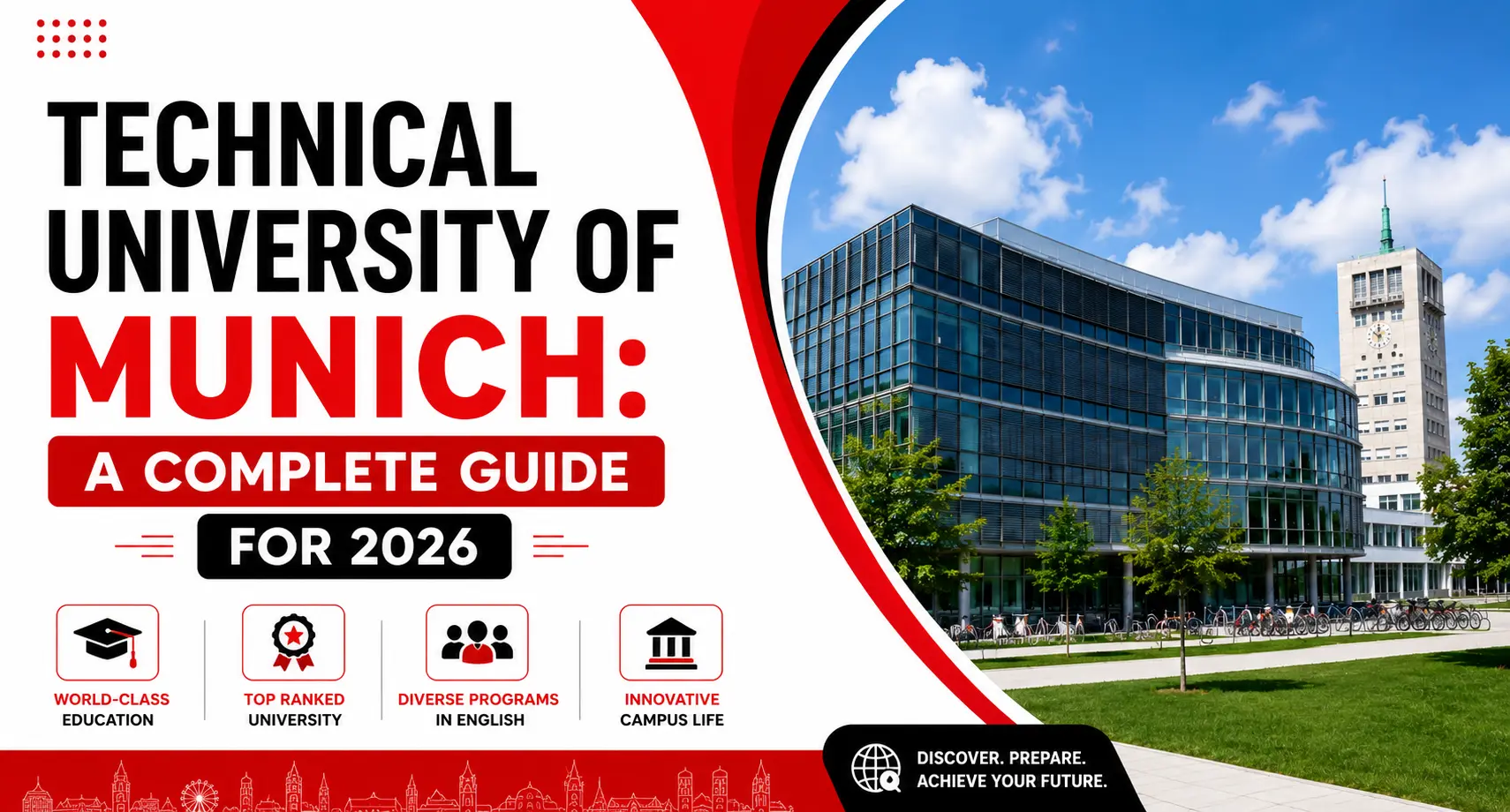
The Technical University of Munich, widely known as TUM, stands as one of the finest technical universities in the world. Students from more than 140 countries choose this German institution every year for its strong academic reputation. This article walks you through everything you need to know about TUM in 2026, from its history to its admission process, tuition fees, and campus life. Whether you are a prospective student or simply curious about this remarkable institution, you will find genuine and updated details here.
King Ludwig II of Bavaria founded TUM in 1868 as the Royal Bavarian Polytechnic of Munich. He wanted to build a centre that would drive technical knowledge and industrial progress across Bavaria. Over the decades, the university grew far beyond its original scope and expanded into new fields of study. It first admitted women students in 1905, which marked an important step toward inclusivity at the time. The institution also played a significant role during Germany's industrial growth in the twentieth century.
Today, TUM carries a legacy of more than 150 years and continues to build on that strong foundation. Several inventors studied or taught at this university, and their work changed everyday life around the world. Carl von Linde, who invented the refrigerator, spent time at TUM developing his groundbreaking ideas. Rudolf Diesel, the engineer behind the diesel engine, also has strong ties to this institution. These historical connections give TUM a unique identity among technical universities globally.
The German government recognized TUM's excellence by awarding it the title "University of Excellence" multiple times. This honour came in 2006, 2012, 2019, and again in 2026, showing consistent quality over two decades. Very few universities in Germany can claim this level of sustained recognition from national authorities. As a result, TUM enjoys a reputation that attracts both talented students and world-class researchers.
· Rankings matter a great deal to students who plan to study abroad, and TUM performs impressively across major ranking systems. The university secured the 22nd position globally in the QS World University Rankings 2026, which places it among the top institutions worldwide. This marks a significant jump from its 37th position just two years earlier in 2024. Such rapid improvement shows how quickly TUM has strengthened its academic and research output.
· Times Higher Education placed TUM at 27th in its World University Rankings 2026, confirming its status as a leading technical university. The institution also ranked 14th in Computer Science and 22nd in Engineering under THE's subject-specific rankings. These subject rankings matter because they reflect real strength in the fields students care about most. Additionally, TUM secured strong positions in Natural Sciences and Physical Sciences during recent evaluation cycles.
· Beyond these two major rankings, TUM performs well in other respected systems too. The Centre for World University Rankings and the Academic Ranking of World Universities both list TUM among Germany's top institutions. U.S. News and World Report ranked the university 79th globally and 5th within Germany specifically. Within Germany itself, QS placed TUM at the very top spot for 2026, ahead of all other technical universities.
· TUM also earns recognition for graduate employability, a factor that many students overlook while choosing a university. The institution holds the 13th position globally for graduate employability, according to recent QS data. This ranking directly benefits students because employers actively seek out TUM graduates for jobs across Europe. Consequently, students who complete their degree here often find strong career opportunities soon after graduation.
These offices strengthen international partnerships, promote research collaboration, and connect students with global academic and industry networks.
Getting into the Technical University of Munich requires careful planning, since the university maintains high academic standards across every program. Below is a clear breakdown of the acceptance rate, application steps, and key requirements for 2026.
TUM's overall acceptance rate falls between 8 and 10 percent, making it one of the most selective universities in Germany. This rate is much lower than LMU Munich's average of eighteen per cent and RWTH Aachen's average of twenty-three per cent. Highly competitive programs like Data Science, Artificial Intelligence, and Computer Science often see acceptance rates dip even lower. TUM does not publish one official university-wide figure because each department evaluates applicants individually rather than through a central quota.
TUM's strong global rankings, close ties to companies like BMW, Siemens, and Google, and its reputation for research excellence attract thousands of applicants every year. Programs in Engineering and Computer Science receive the highest volume of applications, which naturally increases competition. Since TUM uses aptitude-based selection rather than open enrollment, a strong academic profile alone does not guarantee admission. Building a well-rounded application with relevant test scores, a clear statement of purpose, and strong academic records improves your chances significantly.
Study in Germany often costs far less than studying in countries like the United States or the United Kingdom. TUM remains an affordable choice overall, though international students should plan carefully for both tuition and living expenses.
Program Level | Tuition Fee (Per Semester) |
Bachelor's Programs | €2,000 – €3,000 |
Master's Programs | €4,000 – €6,000 |
Moreover, these fees apply to international students following the Bavarian Higher Education Innovation Act, introduced from the winter semester of 2024-25. Before this change, TUM did not charge tuition fees to students from many non-European countries. Scholarships remain available and can reduce or fully eliminate these costs for eligible students.
Expense Category | Estimated Monthly Cost |
Student Dormitory Room | €400 – €700 |
Private Shared Flat (WG), per room | €700 – €1,000 |
Meals at University Mensa (per meal) | €3 – €6 |
However, housing in Munich remains competitive due to a genuine shortage of accommodation. TUM does not run its own residence halls; the Munich Student Union (Studentenwerk München) manages most student housing instead. Applying for accommodation right after receiving an admission offer greatly improves the chances of securing a room.
Studying at TUM comes with real costs, but the university offers several scholarship options to ease that financial burden. Here is a clear look at what international students can access in 2026.
This scholarship comes directly from Bavarian government funds and offers real financial help to enrolled students. It provides a one-time financial aid between €500 and €1,800 per semester, paid directly to eligible students. Students can reapply every semester, and the maximum funding period runs up to 36 months. For the Summer Semester 2026, the application window ran from April 13 to April 26, 2026, giving students a clear timeline each cycle.
Since the winter semester of 2025 and 2026, TUM charges tuition fees for international students from non-EEA countries. To offset this cost, the university created waiver scholarships specifically for high-performing students. Unlike the cash scholarship above, this type of aid covers the amount of tuition fees and applies directly to the student's tuition account. Both merit-based and need-based waivers exist, covering Bachelor's and Master's students who face these international tuition charges.
TUM also recognizes that certain life circumstances deserve extra financial consideration beyond standard merit or need. Students on an approved leave of absence do not pay international tuition fees during that period. Those undergoing an asylum procedure in Germany may qualify for a full fee waiver as well. Students caring for children or dependent family members can receive a waiver for up to two semesters, and students with a documented disability can also apply for exemption from these fees.
Beyond TUM's own funding, several external organizations support international students studying in Germany. The DAAD Scholarship, Germany's national academic exchange service, funds many students pursuing degrees or research stays at TUM. Programs like the DAAD KOSPIE Scholarship support specific fields, including environmental engineering and signal processing engineering. These external scholarships often cover a stipend, insurance, travel allowance, and even a language course. Indian students can also explore options like the National Overseas Scholarship, funded by the Indian government for students studying abroad. This scholarship covers tuition fees, an annual maintenance allowance, visa fees, and medical insurance for eligible applicants.
Technical University of Munich has firmly established itself as one of the world's leading technical universities in 2026. Its blend of academic excellence, strong research output, and close industry ties creates genuine value for students. From its founding in 1868 to its current global rankings, TUM demonstrates consistent growth and improvement over time. Students who choose this university gain access to world-class facilities, diverse peers, and strong career prospects.
Anyone considering TUM should start preparing well ahead of application deadlines, especially regarding language tests and certification requirements. Researching specific program requirements carefully will improve the chances of a successful application significantly. With careful planning, studying at TUM can open doors to opportunities across Europe and beyond. This German institution continues to prove why it remains a top choice for ambitious students worldwide.
Ans: Yes. TUM is one of Germany's top universities, recognized worldwide for its excellence in engineering, technology, natural sciences, business, and research.
Ans: TUM has campuses in Munich, Garching, Weihenstephan, and Straubing, along with an international campus in Singapore (TUM Asia).
Ans: TUM has a competitive admission process, with an estimated acceptance rate of around 8–10%, depending on the program.
Ans: Yes. TUM offers more than 70 English-taught Master's programs, along with several English-language bachelor's and doctoral programs.
Ans: Requirements vary by program but generally include academic transcripts, proof of language proficiency, a CV, a statement of purpose, and supporting documents.
Ans: Not always. English-taught programs require proof of English proficiency, while German-taught programs require German language certification.
Ans: Tuition fees depend on the student's nationality and the selected program. Students should check the latest fee structure on TUM's official website before applying.
Ans: Yes. International students can work part-time according to German student visa regulations and often find internships or Werkstudent positions.
Ans: TUM graduates enjoy excellent career prospects, with many securing jobs at leading companies such as BMW, Siemens, Google, and other global employers.
Ans: TUM offers world-class education, cutting-edge research, strong industry connections, excellent employability, and a diverse international student community, making it one of Europe's most attractive universities.
Ans: https://www.tum.de/
Author
Content Writer & International Education Specialist
Sakshi Taneja is a content writer specializing in international education, study abroad opportunities, university admissions, student visas, scholarships, and career guidance. She creates accurate, research-driven, and student-focused content to help aspiring international students make informed decisions about their global education journey.
No comments yet
Be the first to share your thoughts!
Please provide your contact information
Free Counselling
Want some help figuring out what kind of information you need?
Help and Support



Leave a Comment
Your email address will not be published.