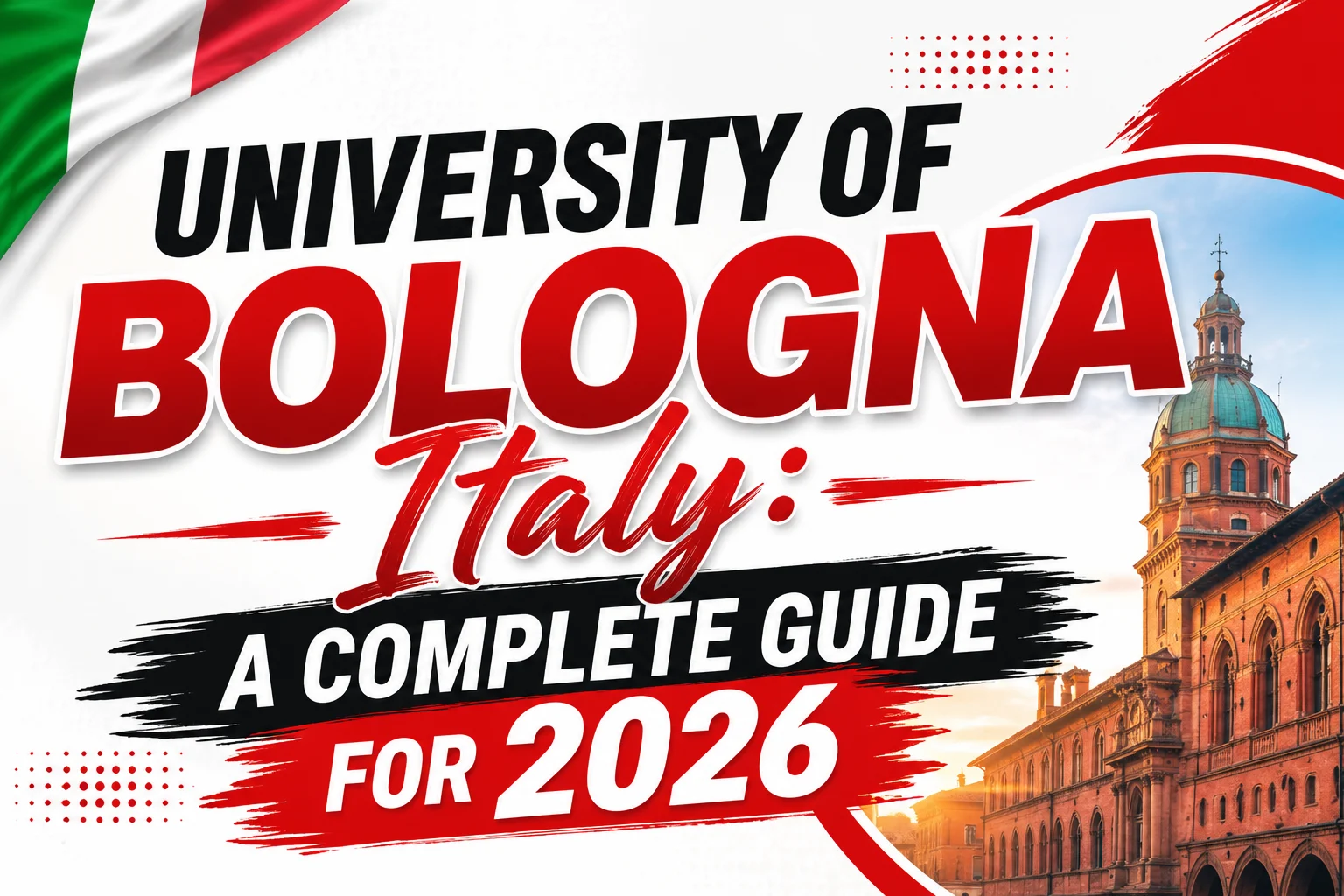
The University of Bologna Italy, stands as the oldest university in the Western world, and it still shapes global higher education today. Founded in 1088, this Italian institution welcomed scholars long before most modern nations even existed. Students from Dante Alighieri to Nicolaus Copernicus once walked its halls, and their legacy still echoes through its lecture rooms. Today, the university blends nearly a thousand years of tradition with modern research, international programs, and a genuinely global student community. If you plan to study abroad or simply want to understand why this university matters, this guide covers everything you need in 2026.
A brief history that still shapes the present-
The University of Bologna began as a school of law, and a guild of organized students created it themselves. This detail makes it unique because students, not the church or the state, controlled the early curriculum. They hired their own professors and set their own academic rules, which was a bold idea for the eleventh century. Over the centuries, the university expanded into medicine, philosophy, and the natural sciences, and it became a magnet for European scholars.
The Archiginnasio building once served as the university's main home until the nineteenth century. It still houses an important library and the Anatomical Theatre, a lecture hall once used for anatomy demonstrations. This theatre remains one of the earliest examples of its kind anywhere in the world. Walking through Bologna today, you constantly bump into centuries of academic history tucked between cafés and cobblestone streets.
Because the university coined the very term "university," it holds a special place in the history of education. Many modern academic traditions, including degree ceremonies and structured faculties, trace their roots back to Bologna. This history is not just decoration; it actively shapes the identity and reputation of the institution today.
Where is the University of Bologna located?
The university's main campus sits in Bologna, the lively capital of Italy's Emilia-Romagna region. Bologna offers a rich mix of medieval architecture, world-class food, and a genuinely welcoming atmosphere for students. The historic centre houses Palazzo Poggi, the university's central administrative building, along with a huge library collection. That library holds around 1.5 million printed works and manuscripts, giving researchers deep archives to explore.
Beyond the main campus, the university runs four additional campuses across the region. These are located in Cesena, Forlì, Ravenna, and Rimini, and each one focuses on a different academic speciality. Cesena leans toward engineering and technology, while Ravenna emphasizes cultural heritage and environmental studies. Forlì hosts political science and international studies, and Rimini focuses on economics and tourism management. This spread-out structure lets students study in smaller cities while still holding a Bologna degree.
What about the global rankings and academic reputation in 2026?
The Italy Bologna University QS World University Rankings 2026-
- The University of Bologna climbed fifteen places in the June 2026 QS World University Rankings, reaching 123rd worldwide.
- This jump placed it third nationally among Italian universities.
- It confirms a steady five-year rise of 43 places overall.
- The University of Bologna QS ranking now evaluates over 1,500 universities, selected from an initial pool of nearly 8,800 institutions worldwide.
- This result puts Bologna firmly in the top ten percent of universities ranked globally.
Strong performance on specific QS indicators:
- Ranks 66th worldwide for Academic Reputation.
- Ranks 65th worldwide for its International Research Network.
- Citations per Faculty jumped 66 places compared to the previous year, showing real momentum in research impact.
- The International Students indicator improved by 78 places, reflecting the university's growing pull for people from abroad.
Times Higher Education (THE) Rankings 2026:
- Placed Bologna at 130th globally, an improvement from 146th the previous year.
- Ranked the university first in Italy for five consecutive editions, a genuinely impressive streak.
Subject-level rankings:
- QS ranks Bologna in the global top 100 for 21 different disciplines.
- Holds the number one spot in Italy for 19 of those subjects, spanning law, classics, and modern languages.
Sustainability rankings:
- The GreenMetric ranking places the university ninth worldwide for environmental practices and sustainability efforts.
- It has held first place in Italy for nine consecutive years, showing consistent commitment rather than a single good year.
What about the degree programs and fields of study?
|
Ranking Body |
2026 Position |
Previous Position |
Key Highlight |
|
University of Bologna QS ranking |
123rd worldwide |
138th |
Climbed 15 places; 3rd in Italy; 43-place rise over 5 years |
|
QS – Academic Reputation |
66th worldwide |
— |
Most influential QS indicator |
|
QS – International Research Network |
65th worldwide |
— |
Strong global collaboration score |
|
QS – Citations per Faculty |
Up 66 places |
— |
Major jump in research impact |
|
QS – International Students |
Up 78 places |
— |
Growing appeal for global applicants |
|
Times Higher Education (THE) |
130th worldwide |
146th |
1st in Italy for 5 consecutive editions |
|
QS Subject Rankings |
Top 100 in 21 disciplines |
— |
1st in Italy for 19 subjects (law, classics, modern languages) |
|
GreenMetric Sustainability Ranking |
9th worldwide |
— |
1st in Italy for 9 consecutive years |
The University of Bologna QS ranking now evaluates over 1,500 universities, chosen from an initial pool of nearly 8,800 institutions worldwide. Hence, this result puts Bologna firmly in the top ten percent of universities ranked globally.
Degree programs and fields of study
|
Category |
Details |
|
Total Programs |
More than 250 |
|
Bachelor's Degrees |
Around 95 |
|
Master's Degrees |
Roughly 115 |
|
Languages of Instruction |
Italian and English |
|
International Programs |
Erasmus Mundus, double-degree partnerships |
|
Popular Fields |
Law, engineering, economics, medicine, humanities, political and social sciences |
|
English-Taught Programs Since |
2009 |
|
Notable English Tracks |
Data science, economics, international relations, engineering |
The University of Bologna Italy, offers more than 250 study programs across nearly every academic field imaginable, giving students genuine flexibility in shaping their education. Since 2009, the university has steadily expanded its English-taught program offerings for international applicants. Students without fluent Italian can now pursue degrees in data science, economics, international relations, and several engineering tracks. This shift opened the doors of a historic institution to thousands of students who would have otherwise faced a language barrier. The university's law programs remain especially strong, consistently ranking among the best in the world for legal studies.
Beyond bachelor's and master's programs, Bologna also runs an extensive doctoral school system. PhD candidates work alongside experienced researchers across science, medicine, humanities, and social science departments. The university maintains numerous interdepartmental research centres, which focus on specialised industrial and scientific research. These centres help connect academic theory with practical, real-world applications across various industries.
Admission Requirements for International Students at the Bologna University in Italy
Eligibility Requirements-
- Undergraduate Admission Requirements- Undergraduate applicants need a completed higher secondary school certificate, similar to twelfth grade in many countries. Students coming from an eleven-year schooling system often need a foundation year before they qualify for direct bachelor's admission. This foundation year usually costs around five thousand euros and helps bridge the academic gap. Alternatively, some students transfer into Bologna after completing one year at a university in their home country.
- Master's Admission Requirements- Master's degree applicants typically need a completed bachelor's degree from a recognized institution in their home country. The degree should generally align with the subject area of the master's program the applicant wishes to pursue.
- Language Proficiency Requirements- For English-taught programs, applicants must submit proof of English proficiency through recognized tests. IELTS scores of 5.5 or higher, or equivalent TOEFL results, generally satisfy this requirement across most departments. Students applying to Italian-taught programs instead need a B2-level Italian language certification to demonstrate readiness.
Step-by-Step Application Process
- Research and Select a Program- Prospective students must review course details on the official university website and select a suitable program that matches their academic background and career goals.
- Submit the Online Application- Applicants complete the application form through the official portal and upload all required academic documents for review.
- Pay the Application Fee- Applicants pay a modest application fee, generally around fifty euros for graduate-level courses, to complete the submission process.
- Await the Admission Decision- After submitting all required documents, the university typically responds with a decision within a few weeks.
- Accept the Offer and Enrol- Admitted students formally accept their offer and proceed with the enrollment steps outlined by the university's international office.
Visa and Documentation Process
- Applying for a Student Visa- Once admitted, non-EU students must apply for a Type-D student visa before travelling to Italy.
- Securing a Residence Permit- After arrival, students also need to secure a permesso di soggiorno, which is a residence permit for extended stays in Italy.
- Document Translation and Notarization- All academic documents must be translated into Italian and properly notarized before submission to the university.
- Support from the International Office- The university's international office typically guides this entire process for accepted students, helping them navigate paperwork and deadlines.
| Explore More: Italy Study Visa Requirements for Indian Students |
Application Intakes and Deadlines
- Fall Semester Intake- The University of Bologna runs two main application intakes each year for most programs. The primary fall semester intake opens applications during spring or early summer of the same year.
- Spring Semester Intake- A smaller spring semester intake exists mainly for master's and doctoral programs, with deadlines falling in late autumn.
- 2026 Admission Cycle Deadline- For the 2026 admission cycle, a second intake deadline falls in early April, so applicants should plan carefully.
Tuition Fees and the Cost of Studying in Bologna
As a public university, fees at Bologna depend heavily on a student's family financial situation rather than a fixed flat rate. This system means two students in the same program could pay very different amounts, based purely on financial need.
|
Family Financial Index |
Annual Tuition Fee |
|
At or below €27,000 |
Fully exempt — pays only ~€157 (fixed amount) |
|
Above €27,000 |
€900 – €4,000 per year |
|
Students from developing/non-OECD countries |
Reduced flat fee (varies by country) |
Monthly Living Costs in Bologna
Beyond tuition, students should budget for housing, food, and daily living expenses in Bologna—the ER. GO regional student service manages affordable housing options and also helps students find rooms in private apartments, along with discounts on meals and transportation.
|
Expense Category |
Estimated Monthly Cost |
|
ER.GO Student Residence |
€200 – €400 |
|
Overall Living Costs (housing, food, transport, etc.) |
€700 – €1,200 |
Scholarships Available for International Students
Scholarships play a significant role in making Bologna accessible to talented students worldwide. Each option targets a different kind of need, whether financial, academic, or country-specific.
|
Scholarship |
Basis for Award |
Coverage |
|
DSU Scholarship |
Financial need |
Tuition, housing, and meals |
|
Unibo Action |
Merit-based (high academic achievers) |
Tuition support |
|
University Merit-Based Grants |
Academic performance |
Varies by program |
Overall, this fee structure reflects the university's genuine commitment to keeping education accessible rather than reserved for wealthy applicants only. Combined with need-based scholarships like the DSU Scholarship, a degree from Bologna can become nearly free for qualifying students.
Why did students choose the University of Bologna Italy in 2026?
- Rich Academic Heritage- Founded in 1088, the University of Bologna is the world's oldest continuously operating university. Its centuries-long academic tradition offers students a unique learning environment that blends historical excellence with modern education.
- Strong Global Reputation- The university's consistently improving global rankings reflect its commitment to high-quality teaching, research, and innovation. Employers and academic institutions worldwide respect a degree from the Bologna University.
- Affordable Tuition Fees- One of the university's biggest advantages is its income-based tuition fee system. Unlike many European universities that charge fixed fees, Bologna adjusts tuition according to a student's financial situation, making quality education more accessible to students from diverse economic backgrounds.
- Wide Range of English-Taught Programs- The Bologna University offers numerous bachelor's and master's programs in English. This allows international students to pursue their education without requiring advanced Italian language skills, making the transition to studying in Italy much smoother.
- Student-Friendly City and Lifestyle- Bologna is widely recognized as one of Italy's best student cities. Its rich history, vibrant cultural scene, world-famous cuisine, and welcoming atmosphere provide an enjoyable and supportive environment for both academic and personal growth.
- Excellent International Opportunities- The university is an active member of prestigious international networks such as Erasmus+, the Coimbra Group, and UNA Europa. These partnerships provide students with valuable opportunities for exchange programs, international research collaborations, and global career exposure.
- A Top Choice for International Students- The combination of academic excellence, affordable education, English-taught programs, international mobility opportunities, and an exceptional student experience continues to attract students from around the world. These strengths have helped the Bologna University maintain its strong global reputation and remain one of the most sought-after study destinations in Europe in 2026.
Final Thoughts
The University of Bologna proves that age and relevance can coexist within the same institution. Nearly a thousand years after its founding, it continues to rank among the world's most respected universities. Its rising 2026 rankings, affordable tuition system, and genuinely diverse student body all point toward continued growth. Whether you value historical prestige, modern research, or simply an unforgettable place to live, Bologna delivers on multiple fronts.
Students considering Italy for their higher education should take a close look at what this university offers. From ancient lecture halls to cutting-edge research centres, the University of Bologna blends the old and new remarkably well. As rankings continue to climb and international programs continue to expand, its global reputation seems likely to grow even further in the coming years.
Frequently Asked Questions
Q.1 Is the University of Bologna a good choice for international students?
Ans- Yes, the university genuinely welcomes international applicants, with students arriving from more than 140 countries each year. Its rising rankings, English-taught programs, and income-based tuition structure make it a practical and rewarding choice.
Q.2 How competitive is admission to the University of Bologna?
Ans- Admission is moderately accessible, with the University of Bologna acceptance rate estimated between 60 and 73 percent depending on the program. Competitive academic records and strong language test scores still improve an applicant's overall chances significantly.
Q.3 Does the Bologna University offers scholarships for international students?
Ans- Yes, scholarships like the DSU award and Unibo Action grant genuinely help reduce or even eliminate tuition and living costs. Eligibility usually depends on financial need, academic merit, or a combination of both factors.
Q.5 What is the University of Bologna best known for academically?
Ans- The university holds particularly strong global rankings in law, classics, modern languages, and ancient history programs. It also ranks first in Italy across numerous subjects, according to recent QS subject rankings for 2026.
Q.6 What is the application deadline for the Bologna University in 2026?
Ans- Application deadlines vary by program and intake. International students should check their chosen course well in advance and submit all required documents before the official deadline.
Q.7 Does the University of Bologna offer English-taught master's programs?
Ans- Yes, the university offers a wide range of master's programs taught entirely in English across fields such as business, engineering, economics, data science, and international relations.
Q.8 Is IELTS mandatory for admission to the University of Bologna?
Ans- IELTS is commonly accepted as proof of English proficiency, but the university also accepts other recognized language tests or qualifications, depending on the program requirements.
Q.9 How much does it cost to live in Bologna as a student?
Ans- International students generally spend between €700 and €1,200 per month on accommodation, food, transportation, and other personal expenses, depending on their lifestyle.
Q.10 Can international students work while studying at the Bologna University?
Ans- Yes, eligible international students in Italy can usually work part-time during their studies, subject to the conditions of their student visa and Italian regulations.
Q.11 Are student exchange programs available at the Bologna University?
Ans- Yes, the university participates in several international exchange programs, allowing students to study abroad through partnerships with universities across Europe and other regions.
Q.12 What documents are required to apply to the University?
Ans- Common application documents include academic transcripts, degree certificates, proof of language proficiency, a passport, a CV, a statement of purpose, and letters of recommendation, depending on the chosen program.
Q.13 What is the University of Bologna's QS ranking in World Top Universities?
Ans- The University of Bologna QS ranking is 123 worldwide
Q. 14 What is the University of Bologna acceptance rate for 2026
Ans- The acceptance rate of the University of Bologna is around 70%



Leave a Comment
Your email address will not be published.