
Italy Study Visa Requirements for Indian Students 2026 – Complete Guide
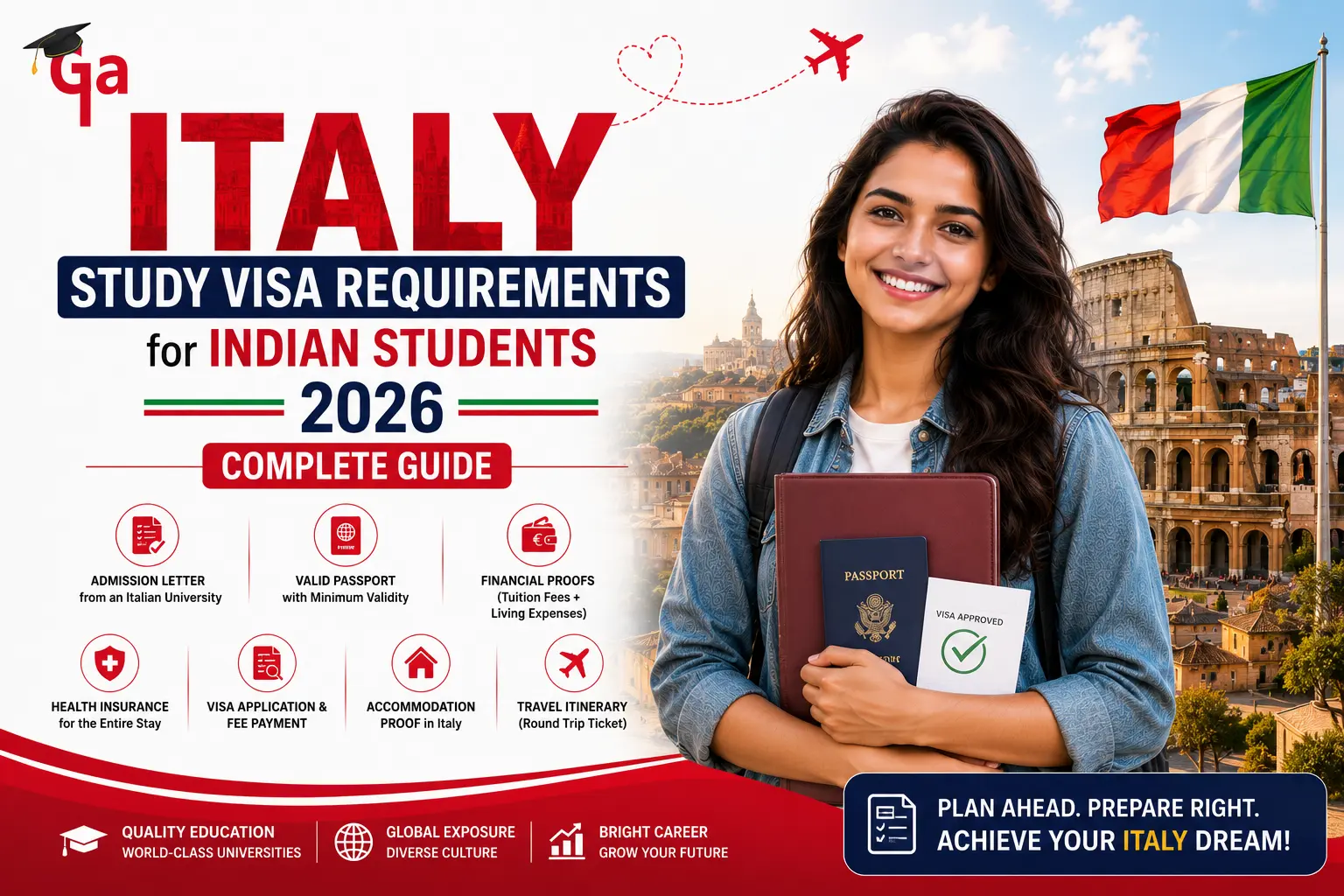
Table of Contents
Study in Italy feels like stepping into a living museum. From ancient streets in Rome to modern campuses in Milan, the country offers a perfect mix of culture, education, and lifestyle. If you’re an Indian student planning to study in Italy in 2026, understanding the visa process is your first big step. At first, the requirements may look confusing, and you might feel unsure about where to begin. However, once you understand the steps and gather the right documents, the process becomes much more manageable. In fact, thousands of Indian students apply every year and successfully secure their visas with proper planning.
So, instead of feeling overwhelmed, take it one step at a time. This guide will walk you through the Italy study visa requirements clearly and practically, helping you move forward with confidence and avoid common mistakes along the journey.
Why choose Italy for higher studies?
Choosing the right country for higher education is an important decision, and Italy stands out for many good reasons. It offers a strong mix of quality education, affordability, and a rich cultural experience. Let’s look at the key reasons why Italy has become a preferred destination for Indian students.
- Globally recognized universities- Italy is home to some of the world’s oldest and most respected universities, including the University of Bologna. These institutions are known for their academic excellence and strong global reputation. As a result, degrees earned in Italy are widely recognized, which helps students build international career opportunities.
- Affordable tuition fees- One of the biggest advantages of studying in Italy is the cost. Compared to countries like the USA or the UK, tuition fees in Italy are much lower, especially in public universities. In many cases, fees are also based on family income, which makes education more accessible and less stressful for students.
- Availability of English-taught programs- Many Italian universities offer courses in English, particularly at the postgraduate level. Cities like Milan and Rome have a wide range of programs in fields such as business, engineering, and design. This allows international students to study comfortably without facing a language barrier, while also having the option to learn Italian gradually.
- Scholarships and financial support- Italy provides various scholarships that help reduce the financial burden on students. Government and regional scholarships often cover tuition fees, accommodation, and even living expenses. Because of this support, many Indian students find it easier to manage their studies abroad.
- Rich culture and lifestyle- Studying in Italy is not just about academics—it’s also about the experience. The country is famous for its history, art, architecture, and food. Students get the chance to explore historic sites, attend cultural events, and enjoy a vibrant lifestyle. For example, you might spend your weekends visiting museums or enjoying local festivals, which makes your study journey more memorable.
- Easy travel across Europe- Italy is part of the Schengen Zone, which allows students to travel to other European countries without additional visas. This means you can easily explore nearby countries like France, Germany, or Spain during your holidays. Such experiences help broaden your perspective and add value to your international exposure.
- Part-time work opportunities- International students in Italy are allowed to work part-time for up to 20 hours per week. This not only helps in managing daily expenses but also gives practical work experience. Many students take up jobs in cafes, retail stores, or internships related to their field of study.
- Strong career prospects- Italy offers good career opportunities, especially in sectors like fashion, design, business, and engineering. Cities like Milan are known as global hubs in these industries. Studying in such environments helps students build strong networks and improve their chances of finding jobs after graduation.
- Safe and student-friendly environment- Italy is generally considered a safe country for international students. Universities provide support services, student communities, and guidance to help newcomers settle in easily. This welcoming environment makes it easier for students to adjust and feel at home.
What are the types of Italy study visas?
If you plan to study in Italy, you will mostly apply for a National Visa (Type D). This visa is for students who intend to stay in Italy for more than 90 days. There are two main categories:
- Short-Term Study Visa (Type C)- The short-term study visa, also known as the Type C visa, is suitable for students who plan to stay in Italy for up to 90 days. This option is commonly chosen by students enrolling in language courses, short-term certifications, or exchange programs.
§ For example, if you decide to attend a two-month Italian language course in Rome, this visa would be the right choice. However, it is important to remember that this visa cannot be extended for long-term studies. Therefore, if you plan to continue your education, you would need to apply for a different visa from your home country.
- Long-Term Study Visa (Type D)- The long-term study visa, or Type D visa, is designed for students who plan to stay in Italy for more than 90 days. This is the most common visa for Indian students pursuing full-time degree programs such as bachelor’s, master’s, or PhD courses.
§ For instance, if you have secured admission to a master’s program in Milan, you will need to apply for a Type D visa. This visa allows you to stay in Italy for the entire duration of your course. After arriving, you must also apply for a residence permit, which allows you to continue your stay during your studies legally.
How is the Italy study visa determined based on the duration of your course?
The type of Italy study visa you need depends directly on how long your course will last. If your program is short and does not exceed 90 days, you should apply for a Type C visa, which is meant for short-term studies. On the other hand, if your course continues for more than 90 days, you will need a Type D visa, which is designed for long-term academic programs such as bachelor’s or master’s degrees.
Because of this, it is very important to check your course duration carefully before applying. Even a small difference in the timeline can change the visa category, so choosing the correct one from the beginning helps you avoid delays and complications later.
How can you choose the right Italy study visa based on your course and study plans?
You can choose the right Italy study visa by matching your course duration with the correct visa type. If your course lasts less than 90 days, the Type C visa is suitable for short-term studies. However, if your program continues for more than 90 days, you should apply for the Type D visa, which is meant for long-term courses like bachelor’s or master’s degrees.
In addition, it’s important to consider your overall study plans. If you are aiming for a full-time degree or planning to stay in Italy for a longer period, the Type D visa is the right choice. On the other hand, short courses or exchange programs usually fall under the Type C category. By carefully checking your course details and planning, you can select the correct visa without confusion and avoid unnecessary delays in the application process.
What are the basic eligibility criteria for applying for an Italy study visa?
To apply for an Italy study visa in 2026, you must meet certain conditions. These are quite standard, but each one matters.
- An official admission letter from a recognized Italian university is required.
- A valid passport with sufficient validity for the entire stay must be provided.
- Proof of financial support, such as bank statements, sponsorship letters, or scholarship details, is necessary.
- Confirmed accommodation in Italy, like a hostel booking or rental agreement, should be shown.
- Valid travel insurance covering medical emergencies is mandatory.
- Academic documents, including mark sheets and certificates, must be submitted.
- Proof of language proficiency may be required, depending on the course.
For instance, if you’re applying for a master’s degree in engineering, your bachelor’s degree should be in a related field.
What is the step-by-step process to apply for an Italy study visa?
Let’s break the process into simple steps so you don’t feel overwhelmed.
- Secure admission- First, apply to Italian universities and receive your acceptance letter. Without this, you cannot proceed with the visa process. Many students apply through the Universitaly portal, which is an official platform for international students.
- Pre-enrollment on the Universitaly portal- Once you receive your admission, you must complete pre-enrollment on the Universitaly portal. This step is important because it connects your university admission with the Italian visa system.
- Gather required documents- Now comes the most important part: collecting your documents. Missing even one document can delay your application. We will go into detail about these documents in the next section.
- Book a visa appointment- You need to book an appointment through the Italian embassy or authorized visa centres in India, usually handled by VFS Global. Try to book early because slots fill up quickly, especially during peak admission seasons.
- Attend visa interview- On the day of your appointment, carry all original documents along with photocopies. The visa officer may ask simple questions like:
§ Why did you choose Italy?
§ Why this course?
§ How will you manage expenses?
Answer honestly and confidently. You don’t need fancy words, just be clear.
- Wait for processing- Visa processing usually takes 2 to 4 weeks. However, during busy periods, it may take longer. So, apply as early as possible to avoid last-minute stress.
Complete List of Required Documents
Let’s go through the documents you’ll need. Keep them well-organized.
1. Visa Application Form- Fill it carefully and double-check for errors.
2. Valid Passport-Your passport should be valid for at least three months beyond your intended stay.
3. Admission Letter- Issued by your Italian university.
4. Academic Documents- Include mark sheets, certificates, and transcripts.
5. Proof of Financial Means- You must show that you can support yourself in Italy.
As of recent guidelines, students need around €6,000 to €7,000 per year for living expenses.
This can be shown through:
- Bank statements
- Sponsorship letters
- Scholarship proof
For example, if your parents are sponsoring you, include their income proof and a sponsorship letter.
6. Accommodation Proof- You need to show where you will stay in Italy. This can be:
- University hostel confirmation
- Rental agreement
- Invitation letter (if staying with someone)
7. Travel Insurance- Your insurance must cover medical expenses and emergencies.
8. Flight Reservation- You don’t need to book a confirmed ticket. A reservation is enough.
9. Statement of Purpose (SOP)- This is your chance to explain your goals. Avoid copying from the internet. Write in your own words. Keep it simple. Talk about:
- Why did you choose the course
- Your career plans
- Why Italy
10. Language Proficiency Proof- If your course is in English, you may need:
- IELTS
- TOEFL
Moreover, for Italian-taught programs, you may need proof of Italian language skills.
What are some useful tips to prepare for the Italy study visa interview?
- Dress neatly and maintain a clean, simple appearance to create a good first impression.
- Stay calm and confident throughout the interview, even if you feel a bit nervous.
- Answer all questions honestly and keep your responses clear and to the point.
- Avoid memorizing answers; instead, speak naturally about your study plans and goals.
- Be prepared to explain why you chose Italy and your selected course.
- Keep all documents well-organized so they can be presented quickly if required.
- Maintain positive body language, including eye contact and a relaxed posture.
- Take a moment to think before answering, rather than rushing your response.
What are the common mistakes to avoid when applying for an Italy study visa?
Applying for an Italy study visa requires careful attention, as even small mistakes can cause delays or rejection. However, with proper planning and awareness, these errors can be easily avoided.
- Submitting incomplete documents- Missing documents is a common issue that can slow down your application. Even one missing paper may create problems, so checking your checklist carefully before submission is essential.
- Providing unclear financial proof- Financial proof must be clear and well-organized. If documents appear insufficient or inconsistent, they may raise doubts about your ability to manage expenses during your stay.
- Writing a generic Statement of Purpose (SOP)- A copied or generic SOP can weaken your application. Writing a simple, honest, and personalized statement helps present your goals more effectively.
- Giving incorrect or mismatched information- Any mismatch in documents can affect your credibility. Keeping all details accurate and consistent ensures a smoother verification process.
- Delaying the visa appointment- Late appointment booking often leads to rushed preparation. Booking early gives you enough time to organize documents properly.
- Poor interview preparation- Lack of preparation can leave a weak impression. Clear, confident, and honest answers during the interview can improve your chances of approval.
What happens after visa approval?
- Apply for the residence permit (Permesso di Soggiorno) within 8 days of arriving in Italy to stay legally during your studies.
- Complete final enrollment at your university by submitting original documents, paying remaining fees, and attending orientation sessions.
- Arrange proper accommodation if you are staying temporarily, and look for a long-term place such as shared housing or a student residence.
- Open a local bank account to manage daily expenses, pay rent easily, and receive any scholarship funds without extra charges.
- Get a local SIM card to stay connected for communication, navigation, and important university updates.
- Explore part-time job opportunities once you settle in, as students are allowed to work up to 20 hours per week.
- Focus on adjusting to your new environment by understanding local systems, transport, and daily routines.
What scholarships are available for Indian students to study in Italy?
- Italian Government Scholarship (MAECI)- This is one of the most popular scholarships for international students, including Indians. The Italian Ministry of Foreign Affairs offers it and supports master’s, PhD, and research programs. It usually covers tuition fees, provides health insurance, and offers a monthly stipend of around €900 for living expenses.
- DSU Regional Scholarships- These are need-based scholarships offered by different regions in Italy. They are especially helpful for students from lower-income backgrounds. The DSU scholarship can cover tuition fees, provide free accommodation and meals, and even offer a yearly allowance. In some cases, students may receive up to €7,000 or more, depending on eligibility.
- Invest Your Talent in Italy (IYT)- This program is designed for students from selected countries, including India. It focuses on courses like engineering, management, and design. Students receive tuition fee support, a monthly stipend, and even internship opportunities with Italian companies, which adds real-world experience.
- University-Specific Scholarships- Many top universities offer their own scholarships based on merit or financial need. For example, institutions like the University of Bologna and the University of Padua provide tuition fee waivers and annual grants to international students. These scholarships can range from €3,000 to €13,000 per year and may cover part or full tuition fees.
- Erasmus+ Scholarships- This scholarship is a well-known European program that supports international students. It offers funding for joint degree programs and exchange opportunities. Students can receive monthly stipends, travel allowances, and full or partial tuition coverage, making it a great option for those looking for international exposure.
Conclusion-
Applying for an Italy study visa in 2026 may feel like a long process, but it’s completely doable. With the right mindset and preparation, each step becomes easier to manage. Start early, stay organized, and follow each requirement carefully to avoid unnecessary stress. Instead of rushing at the last moment, focus on preparing clear documents and a strong application.
Many Indian students complete this journey every year, which shows that the process works when handled properly. So, stay confident and keep moving forward step by step. With the right approach, your dream of studying in Italy can turn into reality—and it might just be one of the best decisions of your life.
FAQs on Italy Study Visa Requirements
Q.1 What type of visa is required for studying in Italy?
Ans- A Type D visa is required for long-term courses above 90 days.
Q.2 How long does the visa process take?
Ans- It usually takes around 2 to 4 weeks after the interview.
Q.3 Is IELTS required for Italy study visa?
Ans- It depends on the course; many English programs require IELTS or equivalent proof.
Q.4 How much bank balance is required?
Ans- Around €6,000–€7,000 per year is generally required for living expenses.
Q.5 Can students work while studying in Italy?
Ans- Yes, students can work up to 20 hours per week.
Q.6 Is accommodation proof mandatory?
Ans- Yes, you must show where you will stay in Italy.
Q.7 What is Universitaly?
Ans- It is the official portal for pre-enrollment in Italian universities.
Q.8 Do you need travel insurance?
Ans- Yes, valid medical insurance is required for visa approval.
Q.9 What happens after reaching Italy?
Ans- You must apply for a residence permit within 8 days of arrival.
Q.10 Can you extend your study visa?
Ans- Yes, it can be extended through a residence permit based on your course duration.
Author
Sakshi Taneja
Content Writer & International Education Specialist
Sakshi Taneja is a content writer specializing in international education, study abroad opportunities, university admissions, student visas, scholarships, and career guidance. She creates accurate, research-driven, and student-focused content to help aspiring international students make informed decisions about their global education journey.
Comments (0)
No comments yet
Comments are temporarily closed.
Contact Details
Please provide your contact information
Free Counselling
Latest Articles

Germany Blue Card Benefits for International Graduates in 2026
Oct 24, 2026

STEM vs. Non-STEM Degrees in 2026: Jobs, Salaries & Visa Opportunities Abroad
Oct 23, 2026
PAL vs TAL: The New Canadian Visa Step Every Student Must Know
Oct 22, 2026

Collateral vs. Non-Collateral Loans: How to Fund Your Studies in 2026
Oct 21, 2026

Germany vs UK Study Costs 2026: Tuition Fees, Living Costs & Scholarships
Oct 16, 2026
Categories
Have a question about Articles?
Want some help figuring out what kind of information you need?
Help and Support