
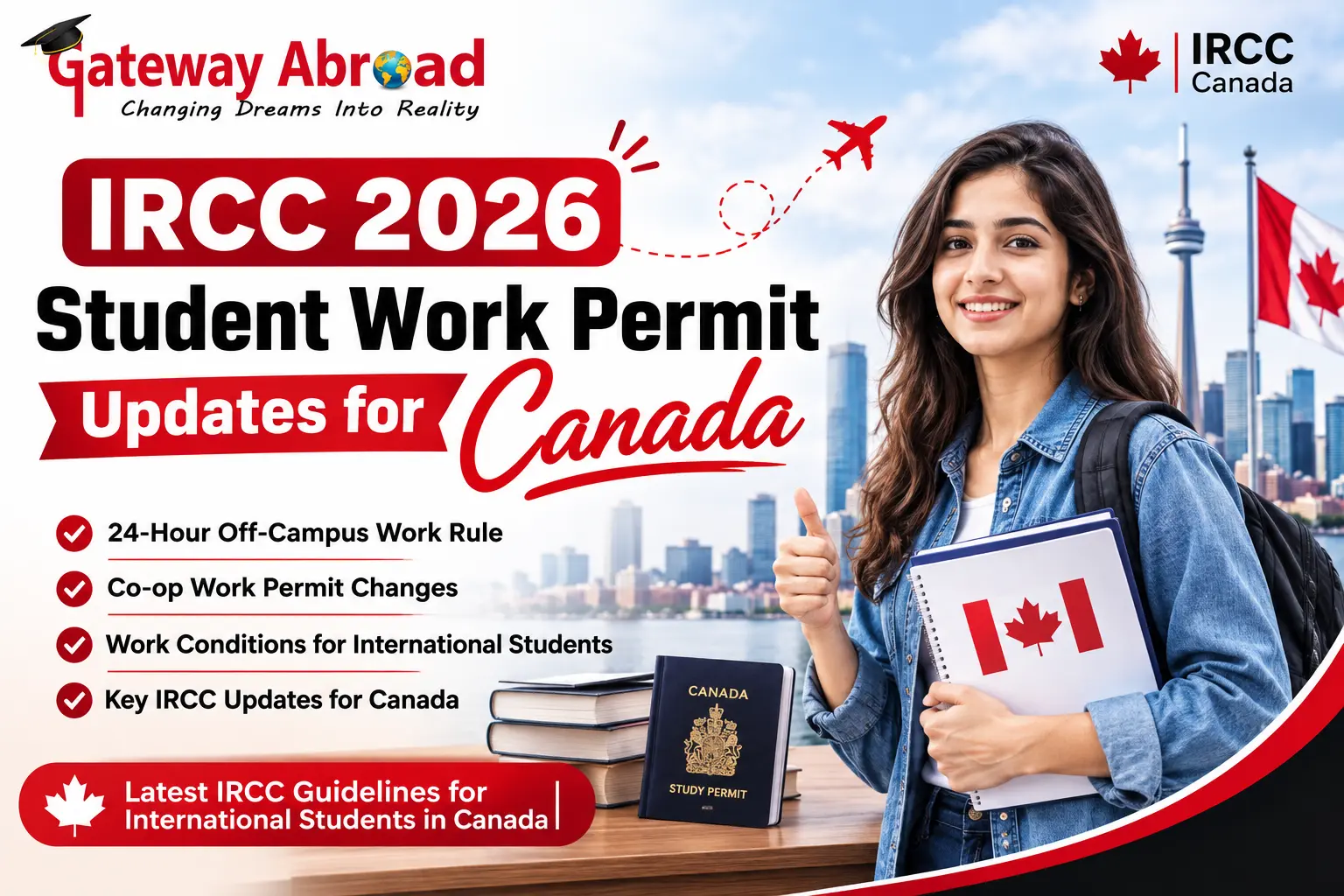
Canada remains a favorite choice of destination for students aiming to learn new skills, gain experience, and develop a successful career after graduation. Yet, the rules and regulations of working in Canada change, and it is essential for students to update their knowledge on time to avoid legal issues. IRCC recently introduced several policy changes concerning eligible students, including those studying on a co-op program and those wishing to get a work permit in Canada.
This article will provide you with the most recent information on IRCC student work permit news in Canada, including an overview of the changes, who is impacted, and what international students need to know before considering employment in Canada. Additionally, we will highlight the essential requirements related to working while holding a study permit so that you can make an informed decision and avoid confusion about the current state of working in Canada.
| Explore more: What is the Difference Between a Study Permit and a Study Visa? |
What Are the Main IRCC Student Work Updates in 2026?
The most significant details of the changes are:
- Eligible students may work up to 24 hours per week outside of their educational institution during regular academic sessions.
- Eligible students may work an unlimited number of hours outside of their educational institution during eligible scheduled breaks.
- Eligible post-secondary students will no longer need a separate co-op work permit to engage in required student work placements beginning on April 1, 2026.
- Students at secondary education institutions still require a co-op work permit for student work placements.
- Students must continue to meet the conditions of their study permits and programs.
- Students must also ensure they are maintaining their status as a student by tracking their hours and ensuring they are not becoming employees.
These changes to the rules do not imply that all international students can work freely. Students remain subject to eligibility requirements.
Why Does the 24-Hour Work Rule Matter for Canada International Students?
The 24-hour rule makes it possible for eligible international students to earn money while studying. Many students choose to take up part-time jobs to earn some extra cash to support their needs like food, transportation, and even to help them save up some money.
Furthermore, the 24-hour rule is a good way of enabling students to take up part-time jobs in order to gain experience while at the same time not making it their primary activity.
Students who are eligible for the 24-hour rule can work up to 24 hours a week during a regular academic session, and this is limited to working off-campus.
Working beyond the allowed time is considered a violation of the study permit conditions and can cause problems when applying for future study permits. It is therefore important for the students to be responsible for their own actions and time management in order to maintain good standing with regards to their study permits.
Who Can Work Off Campus in Canada?
Not every student is entitled to work outside their educational institution. Students must satisfy the eligibility criteria determined by IRCC.
An eligible student must:
- Be studying in a Designated Learning Institution (DLI)
- Be enrolled in an eligible academic, vocational or professional training program
- Meet the student status requirements
- Hold a valid study permit that allows them to work
- Apply for a social insurance number
- Work within the conditions of their study permit
It is essential to understand that simply possessing a study permit is not sufficient evidence of a student’s eligibility to work outside their educational institution. According to the official IRCC website, students can work on or off-campus without requiring a separate Canada work permit, subject to specific conditions. Therefore, it is crucial to ensure one meets all the requirements instead of assuming that one holds all the eligibility conditions based solely on one’s study permit.
Can International Students Work Full-Time During Scheduled Breaks?
Yes, eligible students can generally work unlimited hours off campus during scheduled breaks.
A scheduled break can include periods such as summer holidays, winter holidays or a reading week, provided the break meets IRCC's requirements. Once regular classes resume, the 24-hour weekly limit applies again.
Students should also remember that not every public holiday automatically counts as a scheduled academic break. The break needs to be scheduled by the educational institution and meet the applicable requirements.
If a student's program does not have scheduled breaks, the regular 24-hour-per-week limit continues to apply.
What Changed for Co-op and Internship Work Permits in 2026?
One of the most important Canada work permit changes for post-secondary international students took effect on April 1, 2026.
Eligible post-secondary international students no longer need a separate co-op work permit for student work placements that are required as part of their study program. These placements can include:
Co-op placements
Internships
Practicums
Other approved student work placements
The placement must be required to complete the student's program and approved by the student's DLI.
This means eligible students can complete the required practical part of their program without applying for an additional co-op permit.
Who Is Eligible for the New Co-op Work Placement Rules?
The change is specifically aimed at post-secondary international students.
To participate in an eligible student work placement, the placement must be required for the student's program. IRCC also lists conditions such as having a valid study permit, being a full-time student at a DLI and having confirmation from the institution that the placement is part of the program. The work placement must also total no more than 50% of the study program.
This distinction is important because secondary international students still need a co-op work permit for student work placements.
Why Did IRCC Remove the Separate Co-op Work Permit?
The main purpose of the change is to simplify the administrative process.
Previously, eligible students whose programs included mandatory workplace training could have needed an additional co-op work permit. From April 1, 2026, eligible post-secondary students can complete these required placements without that separate permit.
As a result, students can focus on their studies and the mandatory work placements required in the curriculum. Moreover, it also eases administrative burdens for educational institutions and employers, as fewer paperwork is needed when hiring international students.
Nevertheless, this change would not result in an increase in the number of authorized international students who can work in Canada. The Immigration, Refugees and Citizenship Canada explicitly stated that this update only aims to remove an unnecessary step, rather than to loosen the overall policy on student work permits.
What Happens to Existing Co-op Work Permit Holders?
The changes to the requirements for post-secondary co-op work permits only apply prospectively. Existing co-op work permit holders will not be impacted and may continue to use their work permits until they expire.
Students with pending post-secondary co-op work permit applications that are no longer required under the new rules may also have their eligible applications withdrawn by IRCC. Students should follow any communication they receive from IRCC rather than submitting unnecessary applications.
What Does This Mean for Students Planning to Work in Canada?
While the changes to the work rules in Canada in 2026 may make things a bit easier for students employed off-campus, it is essential to note that there are still critical differences between the conditions for students hired within and outside their field of study.
For example, off-campus employment during regular study periods is subject to the 24-hour weekly limit. A required co-op or internship placement has different rules under the new 2026 changes.
Therefore, it is always safer to keep the copy of the study permit and remember that these rules might not be applied to different kinds of employment.
How Can Student Work Experience Help Future Careers?
A part-time job can not only help students financially while studying in Canada. It will also let the students get accustomed to the working environment in the country and improve some soft skills like communication, cooperating with others and time management.
Co op placements/internships are also great opportunities for students as it bridges the gap between theory and practice, students can get job leads for when they are ready to enter the workforce and help them see what field they would like to specialize in post-graduation.
For Canada international students, this can be an additional advantage to their studies. However, students need to ensure their academics comes first.
What Is the Connection Between Student Work Rules and PGWP Canada?
Student work regulations and the PGWP Canada pathway are closely related but fundamentally different concepts that pertain to a student’s overall educational objectives, as well as their work and career goals.
A Post-Graduation Work Permit offers eligible graduates the opportunity to gain work experience in Canada, while PGWP eligibility criteria are based on specific factors and prerequisites such as a given program’s nature and other requirements.
Therefore, students should not automatically assume that they can secure a PGWP by working while studying.
On the contrary, if a student’s objective is to gain work experience in Canada, they should consider their PGWP eligibility before choosing a program, instead of basing their selection solely on employment opportunities.
Common Mistakes International Students Should Avoid
Working More Than the Allowed Hours
Eligible students are allowed to work up to 24 hours a week during regular academic sessions at an off-campus job. Working more than the allowed hours may result in immigration consequences.
Ignoring Study Permit Conditions
You must know the conditions stated on your study permit. Your work permissions may be limited in specific circumstances.
Assuming That Every Break Lets You Work More Hours Off Campus
Only scheduled breaks from studies let you work more than 40 hours if you meet the requirements. Statutory holidays are not considered breaks from studies.
Confusing Co-op Work With Regular Employment
The new regulation regarding eligible required cooperative education programs does not give permission to take up any type of job. Cooperatives do not authorize extra work hours.
Not Keeping Work Records
If you have more than one job, you must keep a record of the number of hours worked. You may need to submit this information to show that you are complying with your study permit conditions.
Relying on Outdated Information
As Canadian immigration regulations evolve, students should be aware that information on the official IRCC website overrides any information published elsewhere, including articles, forums, and social media reports.
What Should Students Know Before Working in Canada?
Before beginning employment, international students should understand:
- Whether or not their study permit status allows them to work
- Their eligibility based on their program and institution
- Whether the job is on-campus, off-campus or part of a required student work placement
- The number of hours that they are eligible to work in the current term
- Whether they have a valid social insurance number (SIN)
- Whether they would be able to allocate enough time to their studies while working
Should you have a different immigration situation in Canada, it is best to refer to official IRCC eligibility requirements or consult with an experienced immigration lawyer.
Conclusion
The 2026 IRCC student work news contains a significant message for those who are Canadian citizens studying in a post-secondary educational institution. Starting from April 1 st , 2026, there will be no need for a separate co-op work permit for the mandatory student work requirement such as internships and cooperative education programs. Moreover, co-op permit holders will be able to retain their status through to the expiration date of their permits.
However, it is essential to comply with the standard provisions of the off-campus work rules. For instance, students who are temporarily in Canada on eligible visas may work up to 24 hours per week outside educational institutions during regular academic sessions. Meanwhile, one can work full-time during breaks or vacations.
Therefore, the given changes should be highly beneficial for students who want to pursue their academic careers and plans in Canada. Being aware of the work regulations, one will be able to make appropriate choices and manage their work schedules wisely to avoid any legal complications with the immigration authorities.
FAQs
Q.1 What is the main student work news for 2026?
The primary news concerns the removal of the requirement for eligible post-secondary international students to obtain a separate co-op work permit for mandatory student co-op work placements starting from April 1, 2026.
Q.2 Can international students work off campus in Canada?
Yes, they can work off campus in Canada as well as on campus provided that certain conditions have been met by the students.
Q3. How many hours can international students work in Canada?
Eligible students are permitted to work up to 24 hours per week for off campus employment during a regular academic session.
Q.4 Can students work full time during their scheduled breaks?
Yes, international students are allowed to work full time when they have breaks.
Q.5 Do post secondary students require a co-op work permit in 2026?
Eligible post secondary students will not require any separate co-op work permit for working full-time during their breaks and as well on their co-op work starting from April 1, 2026.
Q.6 Do secondary students require a co-op work permit?
International students at secondary grades will require a separate co-op work permit for student work placements.
Q.7 Do students require a study permit to work in Canada?
Eligible students will need to apply for a study permit that allows them to work in Canada, which means that their study permit should mention the work conditions according to which they are allowed to work.
Q.8 Will Working As A Student Automatically Qualify Someone For PGWP Canada?
Student work does not automatically make one eligible for PGWP because the program has its own specific requirements depending on the student’s field of study, institution, and other factors. Therefore, working does not equal eligibility for PGWP.
Q.9 What Happens To Students Who Exceed The Weekly Working Hours?
Students who exceed the allowable working hours risk having their study permits invalidated hence being denied entry into Canada.
Q.10 Why Should International Students Always Visit The IRCC Website?
Since Canadian laws and regulations are subject to change, it is advisable that students look up to date information on the official website. In case of discrepancies between this article and IRCC web pages, the latter should be followed.





Leave a Comment
Your email address will not be published.