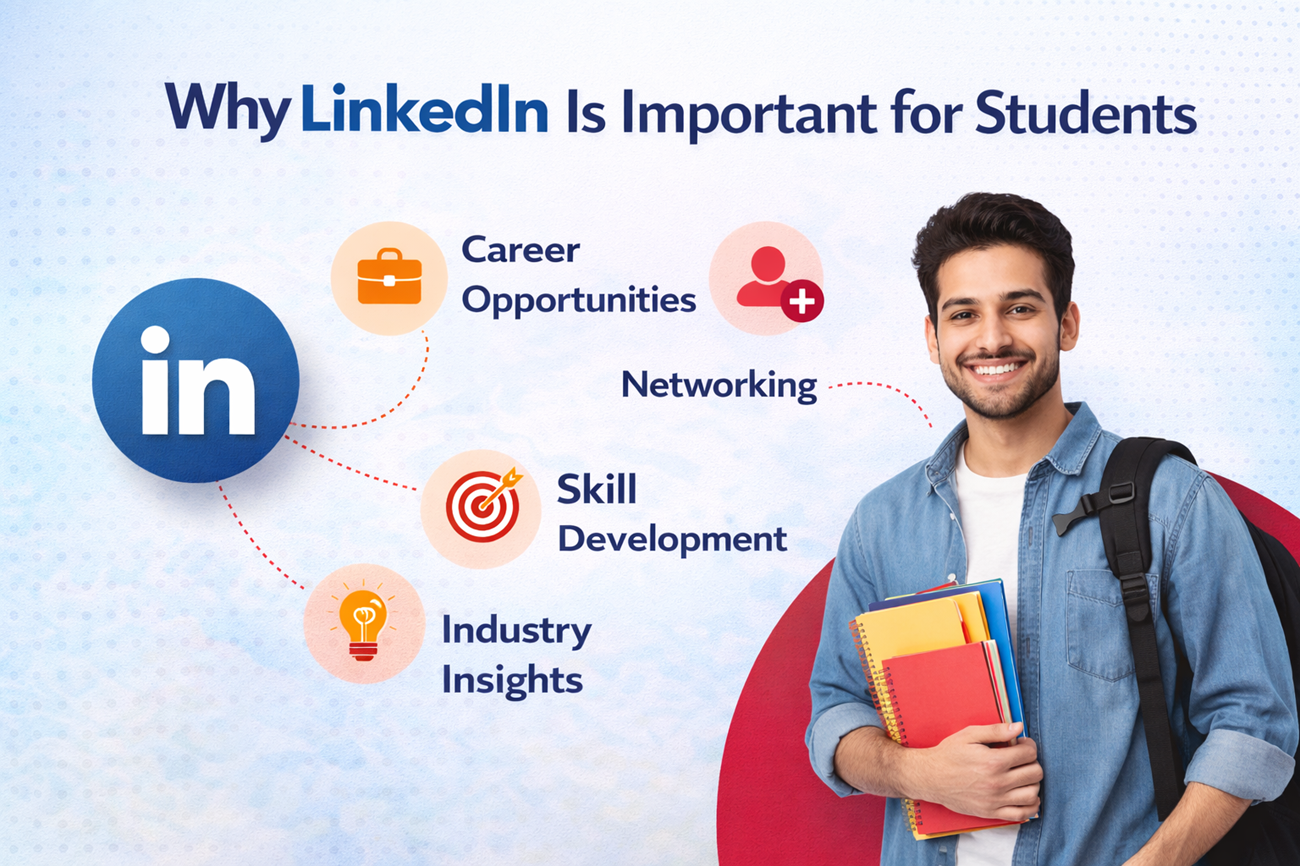
In today’s fast-changing digital world, academic excellence alone is no longer enough to guarantee career success. Employers, universities, and recruiters are increasingly looking beyond grades to assess a student’s professional awareness, communication skills, industry exposure, and networking ability. This is where LinkedIn, the world’s largest professional networking platform, plays a transformative role for students.
LinkedIn is not just a job portal; it is a powerful career-building ecosystem. From showcasing skills and achievements to connecting with industry leaders and discovering global opportunities, LinkedIn helps students bridge the gap between education and employment. Whether you are a high school student exploring career paths, a college student preparing for internships, or a study abroad aspirant planning your future, LinkedIn can be a game-changer. This blog explores why LinkedIn is important for students, how it supports academic and career growth, and how students can use it strategically to stand out in a competitive global job market.
What is LinkedIn, and why does it matter?
LinkedIn is a professional networking platform launched in 2003 that allows users to create professional profiles, connect with others, share industry-related content, and explore career opportunities. With over 1 billion users worldwide, LinkedIn has become the go-to platform for recruiters, employers, universities, and professionals across industries.
For students, LinkedIn serves as:
- A digital professional identity
- A platform for networking and mentorship
- A gateway to internships, jobs, and scholarships
- A learning hub for skills and industry insights
- A credibility tool for admissions and visa applications
Unlike social media platforms used mainly for entertainment, LinkedIn focuses on professional growth, making it especially valuable for students who want to prepare early for their careers.
Why is LinkedIn important for students?
- Builds a professional Digital Identity Early- LinkedIn allows students to begin building a professional identity even before entering the workforce. A well-structured profile acts as an online resume where students can present their education, skills, projects, certifications, and experiences. Starting early helps students shape how they are viewed by recruiters and institutions, enabling a smooth and confident transition from academic life to professional careers.
- Enhances career awareness and clarity- Many students struggle with career decisions due to limited real-world exposure. LinkedIn helps students explore different industries, understand required skills, and learn about job roles and growth opportunities. By following companies and professionals, students gain insights into industry expectations, helping them make informed career choices and prepare strategically.
- Opens doors to internship opportunities- Internships are essential for practical learning, and LinkedIn is a key platform for discovering them. Students can search and apply for internships directly while connecting with recruiters and hiring managers. Since many organizations post internship opportunities exclusively on LinkedIn, the platform significantly increases access to valuable industry experience.
- Strengthens job prospects after graduation- LinkedIn plays a vital role in graduate recruitment, as recruiters actively search for candidates based on skills and qualifications. A strong profile increases visibility, supports resumes, and helps employers verify backgrounds. Regular updates and optimization improve the chances of securing job opportunities soon after graduation.
- Builds a robust professional network- Networking is critical for career success, and LinkedIn makes it accessible for students. The platform enables connections with alumni, professors, seniors, and industry professionals. Early networking helps students gain mentorship, referrals, and long-term career guidance.
- Helps students connect with alumni- LinkedIn makes alumni networking easy and effective. Students can learn from alumni career journeys, seek advice, and discover internship or job opportunities. These connections help bridge the gap between academic learning and professional life.
- Supports study abroad and higher education goals- For students planning higher education or study abroad, LinkedIn strengthens academic profiles by showcasing achievements and career goals. It supports statements of purpose, visa interviews, and connections with international institutions, students, and researchers.
- Improves communication and personal branding skills- Through professional posts and interactions, LinkedIn helps students develop communication skills and personal branding. Sharing insights and achievements builds a strong professional image that helps students stand out to recruiters.
- Provides access to free learning resources- LinkedIn offers valuable learning resources, including courses, webinars, and expert advice. These tools help students upgrade skills, stay industry-ready, and improve employability at minimal cost.
- Boosts confidence and professional maturity- Regular engagement on LinkedIn builds confidence and professional awareness. Students gain clarity about workplace expectations and career goals, giving them a competitive edge during interviews, internships, and early career stages.
How does LinkedIn help students with resume building?
- Acts as a strong foundation for resume content- LinkedIn serves as a central place where students can organize their educational background, internships, projects, certifications, volunteering, and skills. By filling out their LinkedIn profile, students create a clear structure that can be easily converted into a professional resume. This helps students understand what information is relevant and how to present it logically.
- Helps convert experiences into achievement-based points- While building a LinkedIn profile, students are encouraged to describe their roles, responsibilities, and outcomes. This process helps them transform basic experiences into strong, achievement-focused resume points. Writing summaries for internships or projects on LinkedIn teaches students to use action verbs and highlight measurable results, which improves resume quality.
- Identifies skill gaps and improvement areas- LinkedIn allows students to compare their profiles with job descriptions and professional profiles in their target field. This comparison helps students identify missing skills or experiences that need to be added to their resumes. As a result, students can take relevant courses, earn certifications, or gain experience to strengthen their resume.
- Supports keyword optimization for recruiter searches- Recruiters often search for candidates using specific keywords related to skills, tools, and qualifications. LinkedIn helps students understand which keywords are commonly used in their industry. By aligning their LinkedIn profiles with these keywords, students can also optimize their resumes to improve visibility in applicant tracking systems.
- Strengthens resume credibility-LinkedIn adds credibility to resumes through skill endorsements, recommendations, and verified experiences. When recruiters see that resume details are supported by LinkedIn activity and connections, it builds trust. Recommendations from professors, mentors, or supervisors further validate a student’s abilities and professionalism.
- Helps customize resumes for different roles- LinkedIn job postings and company pages give students insights into role-specific requirements. Students can use this information to tailor their resumes for different job or internship applications. This targeted approach increases the chances of shortlisting and interview calls.
- Ensures consistency and professional accuracy- Recruiters often cross-check resumes with LinkedIn profiles. Maintaining an updated and accurate LinkedIn profile ensures consistency across documents. This alignment reflects professionalism and reduces the risk of confusion or misrepresentation.
- Builds confidence in resume presentation- By regularly updating their LinkedIn profile, students become more confident in presenting their skills and achievements. This confidence reflects in their resumes, interviews, and overall professional communication, giving them an advantage in competitive job markets.
How does LinkedIn support skill development and certifications for students?
- It provides access to LinkedIn Learning courses covering technical, professional, and soft skills.
- It helps students earn industry-recognized certifications that strengthen their professional profiles.
- LinkedIn allows learners to showcase completed courses and certifications directly on their LinkedIn profiles.
- It recommends relevant skills and personalized learning paths based on career interests and job roles.
- It keeps students updated with in-demand skills through job market insights and industry trends.
- This enables learning from experienced professionals and subject-matter experts.
- It supports continuous skill development, improving employability and long-term career readiness.
Importance of LinkedIn for Non-Technical Students
- Builds a Strong Professional Identity- LinkedIn helps non-technical students create a professional online presence that highlights their education, skills, projects, internships, and achievements beyond academic scores.
- Expands Career Awareness- The platform exposes students to a wide range of non-technical career paths such as marketing, human resources, finance, education, media, research, and public relations, helping them make informed career decisions.
- Provides Access to Internships and Jobs- LinkedIn allows non-technical students to find and apply for internships and job opportunities in various industries, many of which are not advertised on traditional job portals.
- Supports Networking and Mentorship- Students can connect with alums, mentors, educators, and industry professionals, gaining valuable career guidance, referrals, and long-term professional support.
- Strengthens Personal Branding- LinkedIn enables students to share achievements, insights, and learning experiences, helping them build a personal brand that reflects their career goals and professional values.
- Improves Communication Skills- Regular interaction through posts, comments, and messages helps students develop professional communication skills and confidence.
- Enhances Career Readiness- By understanding industry expectations and workplace culture, LinkedIn prepares non-technical students for interviews, internships, and professional environments.
What are the common mistakes students make on LinkedIn?
Students often underestimate the impact of LinkedIn or misuse it, which can limit career opportunities. Below are the most common mistakes students make on LinkedIn:
- Incomplete or Poorly Optimized Profiles- Many students leave their profiles unfinished or skip essential sections such as summaries, skills, and experience. An incomplete profile reduces visibility and makes a weak impression on recruiters.
- Using Unprofessional Profile Photos- Using casual selfies, group photos, or unclear images is a common mistake. A professional, clear headshot significantly improves profile credibility and recruiter interest.
- Writing Generic or Copy-Paste Summaries- Students often copy summaries from the internet or write vague descriptions. A generic summary fails to highlight unique skills, goals, and achievements.
- Ignoring Keywords and Skills- Not adding relevant skills or industry keywords reduces profile discoverability in recruiter searches. Keyword optimization is essential for visibility.
- Being Inactive or Inconsistent- Creating a profile and never updating it is another common mistake. Lack of activity signals low engagement and reduces profile reach.
- Sending Generic Connection Requests- Many students send connection requests without personalization. This lowers acceptance rates and weakens professional relationships.
- Overusing Casual or Informal Language- Using slang, emojis, or overly casual language can make a profile appear unprofessional and reduce credibility.
- Not Showcasing Achievements- Listing responsibilities instead of achievements is a frequent error. Recruiters look for impact, results, and skills gained.
- Neglecting Networking Etiquette- Messaging professionals without proper introductions or clear intentions can leave a negative impression.
- Treating LinkedIn Like Other Social-Media- Posting irrelevant or personal content reduces the professional value of the profile and can harm career prospects.
Tips for Students to Use LinkedIn Effectively
- Students should ensure their LinkedIn profile is fully completed with accurate details about education, skills, projects, internships, and certifications. A professional profile photo and a clear headline create a strong first impression.
- The summary section should reflect the student’s career goals, interests, and key strengths in genuine and straightforward language. Avoid copy-paste content and focus on what makes the profile unique.
- Students should list relevant skills and describe achievements from internships, academic projects, volunteering, or part-time work. Highlighting outcomes and learning experiences makes the profile more impactful.
- Regular activity, such as liking, commenting, or sharing industry-related posts, helps improve visibility and engagement. Consistency shows interest in professional growth.
- Connecting with classmates, seniors, alumni, professors, and industry professionals helps build a meaningful network. Sending personalized connection requests increases acceptance and builds stronger relationships.
- Following organizations and professionals helps students stay updated with industry trends, job openings, and career insights, making them more informed and prepared.
- Students should take advantage of LinkedIn Learning courses, webinars, and expert content to improve skills and gain certifications relevant to their career goals.
- Regularly updating the profile with new achievements, skills, or experiences ensures accuracy and reflects continuous growth.
- Using formal language, relevant content, and respectful communication helps maintain a professional image and builds credibility.
- Having clarity about career interests allows students to optimize their profiles, connections, and activities in the right direction, making LinkedIn a powerful career-building tool.
The Role of LinkedIn in the Digital Job Market
LinkedIn plays a central role in today’s digital job market by connecting job seekers, recruiters, and employers on a single professional platform. As hiring has become increasingly digital, LinkedIn has emerged as one of the most trusted tools for talent discovery, recruitment, and career development.
One of LinkedIn’s most essential roles is talent sourcing. Recruiters actively use the platform to search for candidates based on skills, education, experience, and keywords, often before posting job openings publicly. This makes LinkedIn a proactive hiring tool where opportunities can find candidates, rather than the other way around.
LinkedIn also acts as a digital verification platform. Employers use it to cross-check resumes, verify academic and professional backgrounds, and assess a candidate’s consistency and credibility. Recommendations, endorsements, and activity on LinkedIn further help recruiters evaluate a candidate’s professionalism and engagement with their field.
In the digital job market, personal branding has become essential, and LinkedIn provides a space for professionals and students to showcase expertise, achievements, and thought leadership. Regular activity through posts, articles, and discussions increases visibility and helps candidates stand out in a competitive market. Additionally, LinkedIn supports data-driven hiring by providing insights into job trends, in-demand skills, and industry growth areas. This helps both recruiters and job seekers align their strategies with market needs.
Why recruiters prefer LinkedIn profiles?
- Comprehensive Candidate Information: LinkedIn provides a detailed view of a candidate’s education, skills, experience, certifications, and achievements, offering more context than a traditional resume.
- Ease of Talent Sourcing: Recruiters can search for candidates using keywords, skills, locations, and industries, making it faster to find the right talent.
- Profile Verification: LinkedIn allows recruiters to cross-check information, view endorsements, recommendations, and past roles, ensuring credibility and authenticity.
- Access to Passive Candidates: Many professionals keep their profiles updated even when not actively job hunting, allowing recruiters to reach out to talent before they apply elsewhere.
- Insight into Professional Activity: Recruiters can assess a candidate’s engagement, thought leadership, and communication skills through posts, articles, and interactions on the platform.
- Networking and Referrals: LinkedIn makes it easy for recruiters to see mutual connections, alumni networks, and referrals, which increases trust and hiring confidence.
- Global Reach: Recruiters can connect with candidates worldwide, expanding the talent pool beyond local or regional limitations.
- Data-Driven Hiring: LinkedIn provides insights on industry trends, skills demand, and candidate availability, helping recruiters make informed hiring decisions.
- Time Efficiency: The structured profiles and filtering tools reduce the time spent reviewing resumes and shortlisting candidates.
- Supports Employer Branding: LinkedIn allows recruiters to showcase their company culture and job opportunities, attracting suitable candidates proactively.
Conclusion: Why Every Student Should Be on LinkedIn
Every student today can benefit immensely from having a LinkedIn profile. The platform serves as a professional digital identity where students can showcase their education, skills, projects, internships, and achievements, making them visible to recruiters and academic institutions. LinkedIn helps students explore career options, understand industry expectations, and access internships and job opportunities that may not be advertised elsewhere. It also enables networking with alumni, mentors, and professionals, providing guidance, referrals, and career support. Beyond networking, LinkedIn supports skill development, personal branding, and professional communication, helping students stand out in a competitive job market. By maintaining an active, well-crafted profile, students prepare for future careers with confidence, credibility, and strategic career insights, making LinkedIn an essential tool for success.
Explore More: The Role of Social Media in the Study Abroad Experience
FAQs
Q1. What is LinkedIn, and why should students use it?
Ans- LinkedIn is a professional networking platform that helps students build an online presence, explore careers, and connect with recruiters and professionals.
Q2. How does LinkedIn help in building a professional profile?
Ans- Students can showcase their education, projects, skills, internships, and achievements, creating a strong digital resume.
Q3. Can LinkedIn help students find internships?
Ans- Yes, LinkedIn provides access to internship listings, recruiter contacts, and hidden opportunities not advertised elsewhere.
Q4. How does LinkedIn improve career awareness?
Ans- By following professionals, companies, and industry trends, students can learn about career paths and required skills.
Q5. Is networking possible on LinkedIn for students?
Ans- Absolutely. Students can connect with alumni, mentors, professors, and industry professionals for guidance and referrals.
Q6. How does LinkedIn support skill development?
Ans- LinkedIn Learning courses and certifications help students gain new skills and enhance employability.
Q7. Can LinkedIn help with personal branding?
Ans- Yes, sharing achievements, posts, and insights helps students create a professional image and stand out to recruiters.
Q8. Does LinkedIn assist students planning to study abroad?
Ans- Yes, it allows students to connect with international universities, professors, and global peers, enhancing applications and networking.
Q9. How does LinkedIn affect job prospects after graduation?
Ans- A well-maintained profile increases visibility to recruiters, improves credibility, and can lead to faster job opportunities.
Q10. Is LinkedIn useful for non-technical students?
Ans- Yes, students from arts, commerce, humanities, and management can showcase achievements, explore careers, and network professionally.

Leave a Comment
Your email address will not be published.