
Study in France Without Knowing French: Is It Possible?

Table of Contents
People frequently think of beautiful French words, such as the Eiffel Tower and Parisian cafés, when they dream of studying in France. One crucial question, however, might ruin the ambition of a lot of overseas students: “Can I study in France without knowing French?” So here we suggest some English-taught programs in France for international students.
The short answer is yes; it is absolutely possible. France offers a wide range of degree programs taught entirely in English, along with growing international student support. However, there are important considerations, from program selection and language requirements to cultural adaptation and career prospects. This comprehensive guide explores everything you need to know if you are considering studying in France without knowing French.
Is it really possible to study in France without knowing French?
Yes, you can study in France without speaking French, but only if you choose your program and institution carefully. However, it is possible to study in France without knowing French, but only under certain conditions. Here’s the reality:
- Academically, Many French universities and grandes écoles now offer complete degree programs taught entirely in English, especially in business, engineering, science, and international relations. These programs don’t require French for admission; instead, you’ll need to show proof of English proficiency (like IELTS or TOEFL). English-taught programs are available at both public and private universities, especially at the master’s level, though bachelor’s options are growing. Internationally oriented institutions (like Sciences Po, HEC Paris, and École Polytechnique) often design courses entirely in English. Many universities now partner with English-speaking countries to attract global talent, particularly in fields like business, engineering, and sciences.
- In daily life, while you can get by in big cities like Paris, Lyon, or Toulouse using mostly English, everyday tasks (shopping, banking, dealing with government offices) will be easier if you know some French.
- For jobs and internships – Without French, your career options in France will be narrower unless you work in multinational companies, do research, or have roles specifically requiring English.
Why does France offer English-taught programs?
France offers English-taught programs mainly to attract more international students and strengthen its global academic influence. Over the past decade, the French government and universities have realized that limiting higher education to French speakers was narrowing their reach in an increasingly competitive global education market. Here are the key reasons-
- Global Competition in Education-
- Countries like the US, UK, Canada, and Australia have long dominated international education thanks to English.
- Offering programs in English helps France compete for top talent worldwide.
- Boosting International Student Numbers
- France aims to host over 500,000 international students by 2027 under the Bienvenue en France initiative.
- English-taught programs make French universities more accessible to students from Asia, Africa, and Latin America who may not speak French.
- Enhancing Research Collaboration
- English is the lingua franca of research and academia.
- Teaching in English facilitates partnerships with global universities and research institutions.
- Economic Benefits
- International students contribute to the economy through tuition fees, living expenses, and cultural tourism.
- Graduates often stay and work in France, contributing to the workforce.
- Diversity and Campus Internationalization
- English-taught courses bring together students from varied backgrounds, enriching discussions and perspectives in the classroom.
- Government and Institutional Support
- Initiatives like Campus France actively promote English-taught degrees abroad.
- Many universities receive funding to expand their English course offerings.
Explore More | The Growing Popularity of Study Abroad in Non-English-Speaking Countries
Which institution offers English-taught programs?
France offers more than 1,500 programs in English across various disciplines. Here are some notable categories:
A. Business & Management
- HEC Paris – MBA and Master’s programs
- INSEAD – MBA (entirely in English)
- ESCP Business School – Management programs in multiple campuses
- EDHEC Business School – Finance, marketing, global MBA
B. Science, Technology, and Engineering
- École Polytechnique – Engineering, data science, and innovation
- Grenoble INP – Engineering and applied sciences
- Université Paris-Saclay – Computer science, physics, chemistry
- IMT Atlantique – Telecommunications, IT, and energy systems
C. Arts, Humanities & Social Sciences
- Sciences Po – Political science, international affairs
- Université de Paris Cité – International development, cultural studies
- American University of Paris – Liberal arts, media, and communication
What are the eligibility criteria for admission to a French university without knowing French?
Language Proficiency (English)-
- Required: Proof of English proficiency (instead of French).
- Commonly accepted tests:
- IELTS: Usually 6.0–7.0 overall (some programs may require higher).
- TOEFL iBT: 80–100+.
- Duolingo English Test: Often 105–120 minimum (if accepted).
- Exemptions:
- Native English speakers.
- Students who have completed their previous education entirely in English.
Academic Qualifications-
Eligibility will depend on the level of study:
For Bachelor’s Programs-
- Completion of high school education (12 years of schooling).
- Strong grades in relevant subjects.
- Transcripts and school leaving certificate.
For Master’s Programs-
- A recognized bachelor’s degree in a relevant field.
- Competitive GPA (often equivalent to 2:1 in UK terms or 3.0/4.0).
- Academic transcripts and a degree certificate.
For PhD Programs-
- A master’s degree or equivalent in a related discipline.
- Research proposal (for thesis-based PhDs).
- Previous publications or research experience (in some cases).
Additional Documents-
Most universities in France will require-
- Statement of Purpose (SOP) or motivation letter explaining why you want to study the program.
- Letters of Recommendation (usually 2–3 from academic or professional referees).
- CV/Resume (especially for postgraduate applicants).
- Portfolio (for art, design, or architecture courses).
Entrance Exams (If Applicable)-
- Some top universities or grandes écoles may require GMAT/GRE scores for business or engineering programs.
- Specific competitive programs may have interviews (in English).
Visa Requirements-
- Proof of admission to a recognized institution.
- Proof of financial means (usually around €8,000–€10,000/year).
- Accommodation proof.
- Health insurance coverage.
- No French language requirement if your program is in English.
What is the application process for studying at a French university?
The application process to study at a university in France depends on your nationality, the level of study, and whether the institution is public or private, but the general steps are similar. Here’s a clear step-by-step guide-
Research and choose your program-
- Search for programs on-
- Campus France official database
- University websites
- Check-
- Language of instruction (English-taught if you don’t know French)
- Tuition fees
- Admission requirements
- Application deadlines
Check the application route-
- Études en France procedure – Required for students from certain countries (India, China, Nigeria, etc.). Applications are submitted via Campus France’s online portal.
- Direct application – Students from countries outside the Études en France system apply directly to the university.
Prepare your documents-
Typically required documents include-
- Completed application form
- Academic transcripts and certificates
- Proof of English proficiency (IELTS, TOEFL, Duolingo, or exemption)
- Statement of Purpose (SOP) / motivation letter
- Letters of Recommendation (2–3)
- CV/Resume
- Passport copy
- Portfolio (for art, design, architecture)
- Application fee payment proof (if applicable)
Submit your application-
- Via Campus France (Études en France countries): Create an account, upload documents, pay the processing fee, and submit.
- Directly to the University (non-Études en France countries): Apply through the university’s online portal.
- Pay attention to deadlines (often January–March for September intake).
Attend interviews (If required)-
- Some programs, especially at grandes écoles, may require online or in-person interviews.
- Conducted in English for English-taught programs.
Receive the admission decision-
- If accepted, you’ll get an Offer Letter or Admission Letter.
- Some universities may send a conditional offer pending final transcripts or test scores.
Accept the offer and pay initial fees-
- Confirm your seat by accepting the offer.
- Pay any required deposit (if applicable).
Apply for your student visa (VLS-TS)-
- Use your admission letter to start the visa process.
- Requirements include:
- Proof of financial means (€8,000–€10,000/year)
- Proof of accommodation
- Health insurance
- Passport and photos
How can you get a student visa without French to study in France?
You can absolutely get a student visa for France without knowing French as long as your program is taught in English and you meet all the other visa requirements. To study in France, you will need a VLS-TS. Here is a step-by-step guide to getting a student visa-
Choose an English-taught program-
- Your admission letter should clearly state that the course is taught in English.
- This removes the need for French language proof for the visa application.
Secure admission-
- Apply and get accepted into a recognized French institution (university, grande école, or specialized school).
- Make sure the institution is listed in the Campus France directory.
Prepare required documents-
For the VLS-TS (Visa de Long Séjour – valant Titre de Séjour), you’ll generally need-
- Valid passport (with at least 15 months' validity from travel date).
- An official admission/acceptance letter from the institution is required.
- Must mention language of instruction (English)
- Proof of financial means-
- Minimum around €8,000–€10,000/year (bank statements, scholarship letter, sponsor letter).
Proof of accommodation in France-
- University housing confirmation or rental contract
Health insurance (covering at least the first 3 months until you register with French social security)
Academic transcripts and certificates-
- Proof of English proficiency (IELTS, TOEFL, Duolingo, or exemption)
- Visa application form + ID photos
- Campus France processing proof (for students from Études en France countries)
Apply via Campus France (If Applicable)-
- If you’re from an Études en France country (India, China, Nigeria, etc.), you must:
- Create a profile on the Campus France portal.
- Upload your documents.
- Pay the processing fee.
- Attend an interview with Campus France.
Schedule a visa appointment
- Book your slot at the French consulate or VFS Global.
- Submit your documents and biometric data.
Attend a visa interview
- Conducted in English if your program is in English.
- You may be asked:
- Why did you choose France?
- Why does this program suit your goals?
- How will you finance your studies?
- No French language questions will be asked unless your program is in French.
Get your visa and travel-
- Once approved, you’ll receive the VLS-TS student visa.
- After arrival in France, validate it online within 3 months to make it your residence permit.
How can you imagine your life in France without French?
Living in France without knowing French is absolutely possible, but it is a mix of convenience in some situations and challenges in others. If I imagine it, it would look something like this:
University Life – Pretty Smooth
- Classes: All in English if you’ve chosen an English-taught program, so no problem understanding lectures or assignments.
- Friends: Easy to connect with other international students; most will speak English.
- Professors: They’ll teach in English, but some administrative staff might default to French.
Daily Life – A Learning Curve
- Shopping: Supermarket labels, menus, and pharmacy instructions are often in French. You will probably use Google Translate at first.
- Transport: In big cities like Paris, Lyon, and Toulouse, public transport signs often have English versions, but in smaller towns, they’re mostly French.
- Banking & Bureaucracy: Official paperwork, utility bills, and healthcare documents are usually in French — expect to ask for help or use translation apps.
Social Life – International Bubble vs. Local Connection
- Without French, you’ll likely socialize more with other international students and expats.
- Making friends with locals may be slower unless they’re comfortable speaking English.
- Cultural events, festivals, and casual conversations will often be in French — you might miss some nuances.
Work and Internships – More Limited Choices
- You can find English-speaking jobs in multinational companies, startups, or research roles.
- Part-time jobs in cafes, shops, or customer service usually require French.
Emotional and Cultural Impact
- You will still enjoy the food, architecture, art, and history, even without French.
- At times, you may feel isolated or frustrated if you can’t join in local conversations.
- On the flip side, you’ll become resourceful, learning to navigate life with apps, gestures, and basic French phrases.
What are the benefits of studying in France without knowing French?
- Students can access high-quality education from globally ranked universities without needing to learn a new language before arrival.
- You will get the opportunity to study in English while living in one of the most culturally rich countries in the world.
- The nation offers a wide choice of English-taught programs, especially at the master’s and PhD levels.
- Public universities offer lower fees compared to other English-speaking study destinations.
- You will get exposure to an international student community, making it easier to adapt socially.
- It also offers the possibility to improve or learn French gradually while pursuing your degree.
- It increases the chances of building a global network through multicultural classrooms.
- You will also get a chance to experience French culture, history, art, and gastronomy without delaying your studies for language preparation.
- The universities offer scholarships and funding options for non-French speakers.
- Students will get the opportunity to develop adaptability and problem-solving skills by navigating a foreign country without knowing the local language.
What challenges may you face?
- Limited part-time job opportunities, as most employers require at least basic French
- Difficulty communicating in shops, banks, post offices, and other everyday situations
- Struggles with official paperwork and administrative processes, which are often only in French
- Possible feelings of isolation when socializing with locals who are not comfortable speaking English
- Missing out on cultural events, humor, and nuances expressed only in French
- Greater dependency on translation apps or help from bilingual friends
- Slower integration into French society and campus life
- Fewer internship or career opportunities within French companies after graduation
- Challenges when traveling to smaller towns or rural areas where English is rarely spoken
- Risk of misunderstandings in healthcare or emergencies due to language barriers
Tips for succeeding without French-
- Choose the proper city – Paris, Lyon, and Grenoble have large international communities.
- Learn basic French before arrival – Even an A1 level can help.
- Join international student groups – Helps build a social network quickly.
- Use translation apps – Handy for shopping, transportation, and administration.
- Consider taking French classes alongside your studies – Many universities offer free or discounted lessons.
Costs of studying in English in France-
A. Tuition Fees-
- Public universities: €2,770/year (Bachelor’s), €3,770/year (Master’s) for non-EU students
- Private institutions: €8,000–€20,000/year depending on program
B. Living Costs-
- Paris: €1,200–€1,800/month
- Other cities: €800–€1,200/month
Cities like Nantes, Montpellier, and Lille are more affordable and still offer English-taught programs.
What are the career prospects without French?
Career prospects in France without knowing French are possible, but they’re more limited compared to bilingual or French-speaking graduates. Here’s what to expect-
- International companies and multinationals – Many global firms (e.g., Airbus, L’Oréal, Dassault, Ubisoft) have roles where English is the primary working language.
- Tech and IT sector – Fields like software development, data science, cybersecurity, and AI often operate in English and value technical skills over language.
- Research and academia – Many research labs and universities collaborate internationally and use English for publications and communication.
- Startups and innovation hubs – Particularly in cities like Paris and Lyon, some startups target global markets and hire English-speaking talent.
- Tourism and hospitality (in select roles) – Luxury hotels, international travel agencies, and global event management companies may hire English speakers.
- Remote or freelance work – You can work for overseas clients while living in France, bypassing the need for French in your professional interactions.
Should you learn French anyway?
Even if your degree is in English, learning French offers clear benefits:
- Better job prospects
- Easier cultural integration
- Richer daily life experiences
- Opportunities to study further or work in other French-speaking countries
Free apps like Duolingo, university language centers, and community classes make it easier to start.
Scholarships for non-French speakers-
- Eiffel Excellence Scholarship – For Master’s and PhD students
- École Normale Supérieure International Selection – Fully funded
- Charpak Scholarship (Indian students)
- Erasmus+ – EU mobility grants
- University-specific scholarships – Offered by institutions like HEC Paris, Sciences Po
Conclusion-
Studying in France without knowing French is entirely possible, especially if you choose an English-taught program in a significant city and prepare well in advance. You will gain access to high-quality education, a rich cultural landscape, and an international network. However, while you can academically survive without French, thriving in daily life and maximizing career opportunities often requires at least basic French proficiency. Think of it this way: your studies can start in English, but your adventure in France will be much richer if you gradually embrace the language.
FAQs on Study in France Without Knowing French-
Q1: Can you earn a full degree in English in France?
Ans- Yes, especially at the master’s level. Many universities offer complete programs in English.
Q2: Do you need to pass a French test for admission?
Ans- Not if your program is taught in English.
Q3: Is it harder to find a job without French?
Ans- Yes, unless you work for an international company or in a niche field.
Q4: Can you survive daily life in France without French?
Ans- In major cities, yes, but it’s challenging in smaller towns.
Q5: Do public universities offer English-taught programs?
Ans- Yes, though private schools have more options.
Q6: Are English-taught programs more expensive?
Ans- Not necessarily; public university fees are the same.
Q7: Can you work part-time as a student without French?
Ans- Yes, but your job options will be limited.
Q8: How many English programs are in France?
Ans- Over 1,500 programs across disciplines.
Q9: Is French needed for the visa?
Ans- No, if your course is in English.
Q10: Should you learn French anyway?
Ans- Yes, for better integration, job opportunities, and cultural experience.
Author
Sakshi Taneja
Content Writer & International Education Specialist
Sakshi Taneja is a content writer specializing in international education, study abroad opportunities, university admissions, student visas, scholarships, and career guidance. She creates accurate, research-driven, and student-focused content to help aspiring international students make informed decisions about their global education journey.
Comments (0)
No comments yet
Comments are temporarily closed.
Contact Details
Please provide your contact information
Free Counselling
Latest Articles
Germany vs UK Study Costs 2026: Tuition Fees, Living Costs & Scholarships
Oct 16, 2026

Universities With the Highest Acceptance Rates for International Students In 2026: A Complete Guide
Oct 15, 2026

Why Italy and Spain Are Becoming the New Favorites for English-Taught Degrees in 2026
Oct 14, 2026

IRCC 2026 Student Work Permit Updates for Canada
Aug 13, 2026
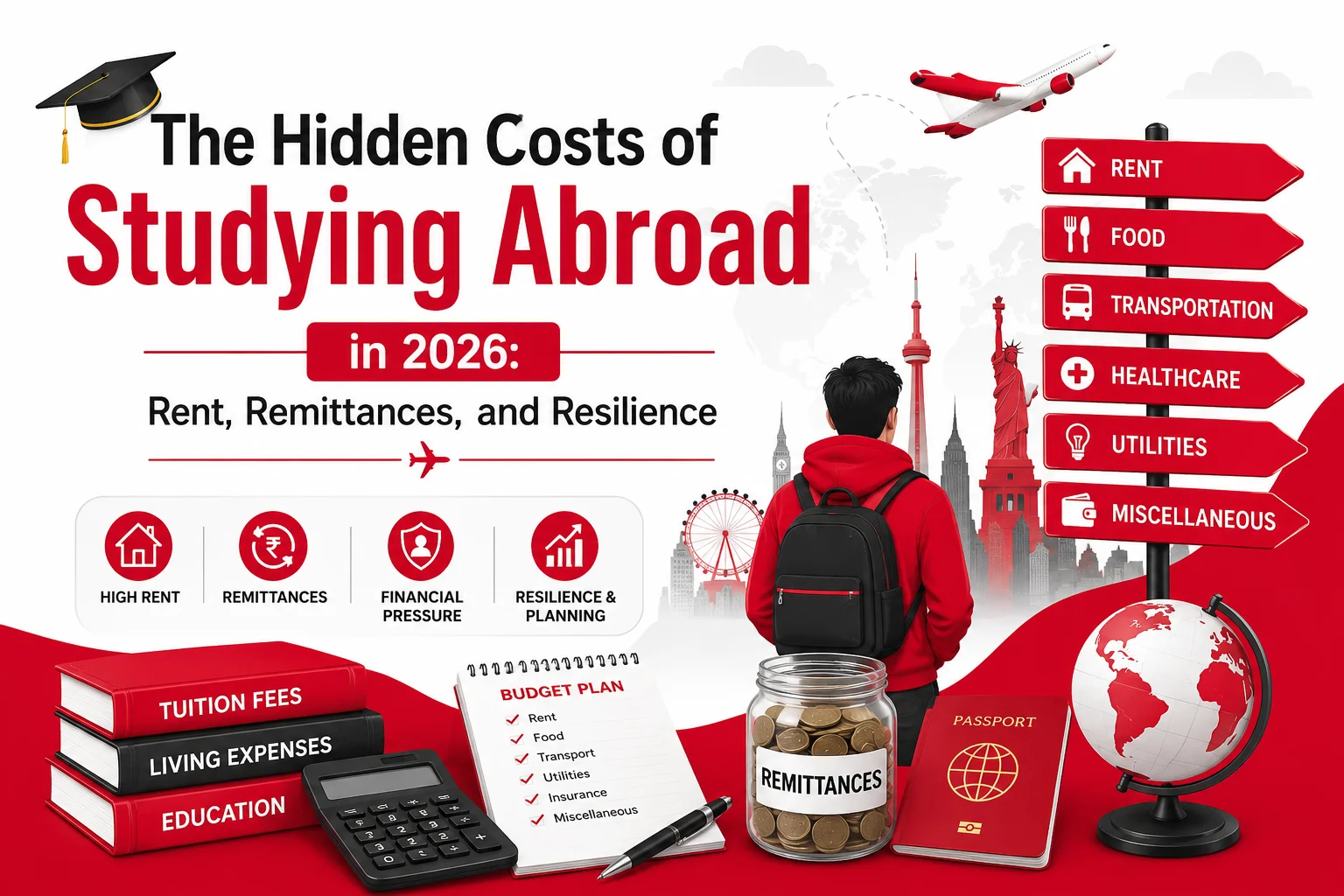
The Hidden Costs of Studying Abroad in 2026: Rent, Remittances, and Resilience
Aug 10, 2026
Categories
Have a question about Articles?
Want some help figuring out what kind of information you need?
Help and Support