
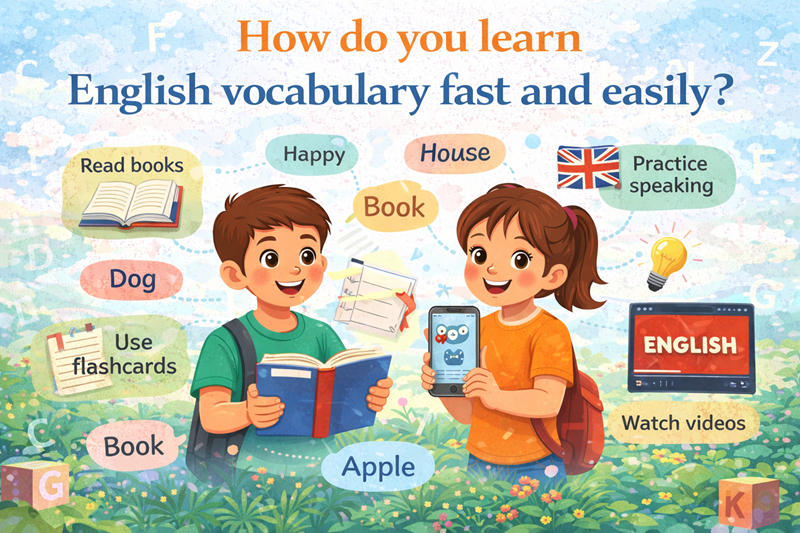
Learning English vocabulary is one of the most crucial parts of mastering the language. Whether preparing for exams, planning to study abroad, or simply improving your communication skills, a strong vocabulary empowers you to express yourself clearly and confidently.
But with thousands of words in the English language, how can you learn vocabulary quickly and effectively? This blog explores smart, proven methods to help you build your vocabulary fast without feeling overwhelmed.
Read more: learn top most vocabulary for study abroad
Why is vocabulary essential?
English vocabulary is crucial as it forms the basis of clear communication. The cornerstone to learning the four English language abilities of speaking, writing, listening, and reading is vocabulary. Your comprehension and understanding of others improve with the number of words you know. In this section, we will describe all the essential factors that show the significance of vocabulary in English-
- Improves communication skills- A rich vocabulary allows you to express your thoughts, feelings, and ideas clearly and accurately. Your ability to express yourself improves with the number of vocabulary words you know.
Example: Saying “I’m happy” is good, but saying “I’m thrilled” or “I’m delighted” adds depth and precision.
- Enhances listening and reading comprehension- When you know more words, you understand more of what you hear or read. This is crucial for grasping the meaning of conversations, lectures, books, emails, or exam passages.
- Boosts speaking and writing fluency- A strong vocabulary enables smoother and more confident speaking and writing. You may seem more genuine and expert, utilize better language, and avoid redundancy.
- Essential for academic and competitive exams- Tests like IELTS, TOEFL, GRE, and SAT heavily rely on vocabulary. A more expansive vocabulary improves your performance in reading comprehension, writing tasks, and even speaking sections.
- Builds confidence- When you know the right words, you don’t hesitate. You feel more comfortable in discussions, interviews, or public speaking situations.
- Allows cultural and emotional understanding- Vocabulary includes idioms, slang, and expressions that reflect culture. Understanding these helps you connect better with native speakers and grasp emotional tones in conversations or media.
- Supports career success- In professional environments, a good vocabulary helps you write emails, reports, and presentations more effectively and speak confidently in meetings or interviews.
What should be the strategy for learning English Vocabulary?
- Set clear vocabulary goals- Start by deciding-
§ How many words do you want to learn per day/week?
§ Why do you want to learn them (for speaking, exams, writing)?
§ Which type of vocabulary is most relevant (academic, business, conversational)?
Example: If you are preparing for a job interview, learn 10 new words daily, focusing on business English.
- Use the power of spaced repetition (SRS)- The brain forgets new information fast if it’s not repeated. Spaced Repetition Systems (SRS) help review words just before you're about to ignore them.
Use Tools Like:
- Anki
- Quizlet
- Memrise
These apps allow you to create flashcards and repeat them at optimal intervals.
- Learn Vocabulary in Context- Instead of memorizing isolated words, learn them in sentences or phrases. This helps you understand usage, tone, and structure.
- Wrong: “Aloof = distant.”
- Better: “He remained aloof even when others tried to include him in the conversation.”
- Read, Read, Read- Reading regularly introduces you to new words in natural contexts. Focus on-
- News articles (BBC, The Hindu, NY Times)
- Novels or short stories
- Blogs and magazines
- English subtitles in videos
Highlight unknown words and write them in a notebook or flashcard app.
- Use new words in speech and writing- Practice makes permanent. Try to use the newly learned vocabulary in:
- Conversations
- Emails
- Journals
- Social media posts
Example- If you learned the word "meticulous," try using it: "She is meticulous about her project details."
- Categorize words thematically- Group vocabulary by topics such as
- Travel
- Health
- Technology
- Education
- Emotions
This makes it easier to remember and connect words.
Example- Under Travel, learn: itinerary, departure, passport, customs, backpack.
- Learn word families and roots. Many English words share the same root or base, which helps you understand and guess the meaning of new words.
Example-
- Act → action, active, actor, react, deactivate
- Cred (believe) → credible, credit, incredulous
- Use visual memory aids- Our brains process images faster than text. Link words with pictures or use visualization techniques.
Example- For the word "serene" (calm, peaceful), imagine a quiet lake at sunset.
Use mind maps or infographics to connect vocabulary.
- Practice with games and apps- Make learning fun and interactive with vocabulary games.
Try-
- Scrabble
- Wordle
- Boggle
- Crossword puzzles
- Vocabulary Builder apps (Magoosh, Elevate, WordUp)
- Review regularly- Vocabulary is like a muscle; it needs regular use. Create a weekly review schedule:
- Revisit the previous word list
- Quiz yourself
- Reflect on how many new words you used
Dedicate 15–30 minutes daily just for vocabulary practice.
- Use synonyms and antonyms- Understanding similar and opposite words deepens comprehension.
|
Word |
Synonym |
Antonym |
|
Happy |
Joyful |
Sad |
|
Rapid |
Fast |
Slow |
- Maintain a personal vocabulary Journal- Keep a notebook or digital file with-
- Word
- Meaning
- Example sentence
- Pronunciation guide
- Picture or memory hook
This becomes your dictionary.
What are the common mistakes to avoid while learning vocabulary?
- Memorizing words without understanding their context.
- Trying to learn too many words at once.
- Not reviewing or revising learned vocabulary regularly.
- Ignoring correct pronunciation.
- Skipping grammar usage and word forms.
- Using only one learning method or tool.
- Failing to use new words in writing or speaking.
- Ignoring synonyms, antonyms, and word relationships.
- Relying too heavily on translation from the native language.
- Being inconsistent with vocabulary practice.
Conclusion-
Learning English vocabulary fast isn't about cramming but innovative strategies, regular practice, and context-based learning. You can build a strong vocabulary quickly and effectively by setting clear goals, using tools like spaced repetition, reading extensively, and actively using new words. Start small, stay consistent, and turn vocabulary building into a daily habit. The more words you learn and use, the more confident and fluent you will become in English.
Explore More:
FAQs on how to learn English vocabulary fast-
Q.1 How many English words should I learn in a day?
Ans- Aim for 5–10 new words daily, depending on your schedule and retention ability.
Q.2 What is the fastest way to memorize vocabulary?
Ans- Use spaced repetition, learn in context, and practice regularly in speech and writing.
Q.3 Can watching English movies help?
Ans- Yes, especially with subtitles. It helps with word usage, tone, and pronunciation.
Q.4 Are flashcards helpful for vocabulary building?
Ans- Yes. Flashcards with images, meanings, and examples are excellent for quick review.
Q.5 What are some good apps for vocabulary learning?
Ans- Anki, Quizlet, Memrise, WordUp, and Magoosh Vocabulary Builder.






Leave a Comment
Your email address will not be published.