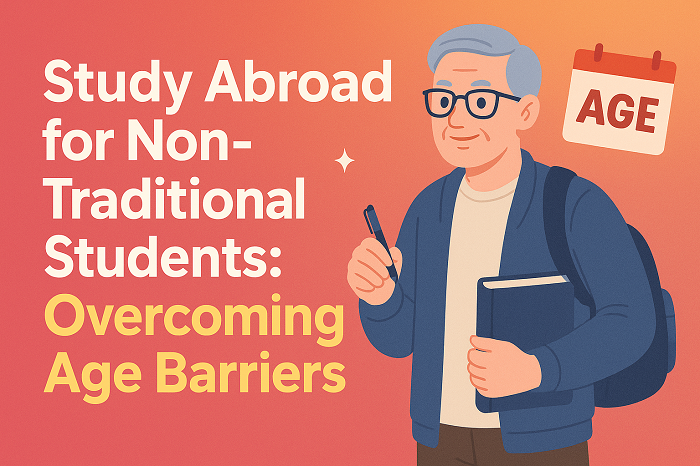
Non-traditional students are increasingly choosing to study abroad since it offers a variety of advantages, such as job progression and intercultural competency. Language hurdles and cultural adjustment are two obstacles that some people may encounter, but they may be addressed with preparation, optimism, and asking for help from peers or university resources. The idea that only recent high school graduates should pursue courses abroad is outdated. More and more older students, those over 25 who frequently have families, careers, or prior degrees, are taking advantage of overseas learning possibilities. Mature learners provide life experience, concentration, and stability that can enhance their study abroad experience, whether for professional changes, personal development, language learning, or intellectual curiosity.
What are the distinct advantages of mature students?
- Clarity, motivation, and focus: With years of professional or personal life behind them, mature learners often enter programs with clear objectives—career advancement, new skills, or meaningful exploration.
- Financial preparedness: Unlike many traditional students, mature students may have savings, financial backing, or stable income—empowering them to embrace the experience fully. However, for students who need additional financial support, exploring education loans for study abroad can help cover tuition, living expenses, and other study-related costs.
- Richer classroom perspective: Life experience allows mature students to offer deep insights and context in discussions and projects, benefiting peers and professors.
- Personal development and confidence: Stepping outside comfort zones builds resilience, adaptability, and independence, which are especially significant for adult learners.
- Cognitive and well-being benefits: Rigorous study abroad programs have been linked to enhanced mental agility, memory, life satisfaction, and even a delay in cognitive decline.
- Expanded networks and career leverage: Studying abroad enables mature learners to form international networks, gain soft skills, and grow competitive in global job markets—even at later career stages.
What are the common challenges of studying abroad for non-traditional students in overcoming age barriers?
Here are the common challenges faced by non-traditional (mature) students studying abroad, along with strategies to overcome them.
Balancing family, work, and financial responsibilities
- Conflicting obligations: Mature students juggle jobs, mortgages, dependents, and caregiving duties simultaneously.
- Cost concerns: They face elevated financial burdens from tuition, living costs, visas, and travel, with fewer grants aimed at non-traditional ages.
Academic reintegration and digital skills gap
- Study shock: Adapting from professional life to an academic environment can feel intimidating, especially with younger peers and new formats.
- Technological literacy: Adjusting to online platforms, digital libraries, and collaborative tools after years away poses a challenge.
Age-related social and psychological barriers
- Feeling out of place: The generational gap can lead to social isolation or imposter syndrome in group settings.
- Bias and stereotypes: Some may face negative attitudes implying incompetence or awkwardness based on age.
Cultural and language adaptation
- Barriers to integration: Learning a new language, adjusting to norms, and overcoming social segregation, especially in a non-English environment, can impact well-being.
- Homesickness and stress: Managing psychological strain, adjusting to an unfamiliar culture, and missing family add to the mental load.
Housing and institutional support mismatches
- Housing compatibility: Traditional dorms may cater to typical-age students, but not adult needs like family accommodation.
- Lack of tailored services: Organizational processes (financial aid, counseling, credit transfer) often don't reflect mature student realities.
| Barrier | Challenges | Strategies |
|---|
| Family & Responsibilities | Childcare, partner support, estate duties | Plan family support, travel when children are away, share tasks |
| Finances | Tuition, living costs, travel expenses | Early budgeting, tap grants, work study, loans, and scholarships |
| Academic Reintegration | Shifting from full-time work back to the classroom | Refresh through online courses, and acquaint yourself with new teaching styles |
| Cultural/Language Barriers | Learning a language, acclimating to customs | Immersion via homestays, pre-departure training, tutoring |
| Peer Integration | Feeling isolated among younger classmates | Join mature student unions, mixed-age social clubs, and expat meetups |
| Housing Access | Student housing rules may exclude older students | Mix homestays, adult housing, and early applications |
| Health & Safety | Health coverage, possible mobility issues | Use travel insurance, research host country systems |
What about the support systems for non-traditional students studying abroad?
Here are the key support systems that help non-traditional (mature/older) students overcome age-related barriers when studying abroad.
- Dedicated academic advising and mentoring: University staff and study abroad coordinators understand mature students' unique needs and offer:
- Pre-departure and on-site guidance tailored to schedules, family, and academic expectations.
- Peer mentoring and support structures, such as peer-assisted sessions (PASS) or near-peer mentoring, enhance academic adjustment and retention.
- Mature student networks and community building: Many institutions foster communities that connect older learners through:
- Mature-student groups, meet-ups, and social events that ease social integration and combat imposter syndrome.
- Age-Friendly University Global Network initiatives that promote engagement across the lifespan.
- Flexible program design: To accommodate external responsibilities, universities offer:
- Flexible timetables (evening/weekend classes), part-time study, and online/hybrid ("blended mobility") models.
- Customized arrangements like childcare scheduling adjustments, extended deadlines, and asynchronous participation options.
- Academic / digital skills support: Reintegration is smoother with:
- Workshops on academic writing, referencing, digital literacy, time management, and exams.
- Access to Study Zones, tutoring centers, and learning labs providing structured assistance.
- Financial support and scholarships: Targeted funding helps ease cost pressures:
- Scholarships for mature students (e.g., Jeannette Rankin Fund, ASIST, Osher Foundation re-entry, government bursaries).
- Hardship funds and grants acknowledging family or caretaking responsibilities.
- Emotional and social well-being resources: Well-being is supported through:
- Counseling services mindful of imposter feelings and adult returnee stress, especially in international contexts.
- Peer communities and interest groups (like U3A – University of the Third Age) that foster shared identity abroad.
- Inclusive institutional policies: Successful inclusive policies include:
- Accessibility audits and inclusive pedagogy training for staff.
- Collaboration between universities and host-country resources to support mature students' unique needs.
How do these support systems collaborate?
- Before departure: Advisors review housing, visas, family logistics, and funding.
- At arrival: Induction and mature-student orientation ease the transition.
- During the study: Ongoing mentoring, flexible scheduling, academic support, and counseling keep students on track.
- Post-program: Networks and alumni groups maintain connections and support career transitions.
Which kinds of programs are ideal for non-traditional students?
Short-term and faculty-led programs
- Duration: Often 1–8 weeks, usually during breaks (summer, winter, spring).
- Highlights: Minimal time away from work/family, highly structured with professor-guided support.
- Why it's ideal: Over 50% of non-traditional students choose this format for its flexibility and guidance.
Hybrid/online and short on-campus blended programs
- Format: Primarily online coursework complemented by brief in-person residencies or trips.
- Example: Online MBA with periodic campus sessions at top business schools.
- Why it's ideal: Enables continued work-family care and reduces uprooting life—a professional favorite.
Executive education and EMBA programs
- Design: For mid-to-senior professionals, delivered via intensive cohorts with global residencies.
- Example: Executive MBAs averaging age ~39+, providing career rejuvenation and skills refreshment.
- Why it's ideal: Honors life experience, boosts leadership, and minimizes disruption.
Combined/direct-enrollment programs
- Structure: Mix of "island" programs (program-specific courses) and full enrollment in local universities.
- Features: Academic immersion with support and borrowing from host institution systems.
- Why it's ideal: Flexibility to engage with campus life while balancing other commitments.
Internship, service-learning, and field-based programs
- Format: Hands-on experiences abroad, internships, volunteer work, and research field programs.
- Example: SIT Study Abroad for cultural/field-rich education; Semester at Sea for global exposure.
- Why it's ideal: Practical, career-boosting, and customizable around adult priorities.
Independent and customized programs
- Approach: Build your study across courses, projects, and field experience via your university or provider.
- Option: Self-designed under home institution approval.
- Why it's ideal: Maximum autonomy to align duration, location, and content with personal commitments.
Lifelong learning and non-credit enrichment
- Audience: Adult learners over 50 often lack academic credit but focus on interest, not degree.
- Examples: Osher Lifelong Learning Institutes, Harvard Extension, Chicago's Graham School.
- Why it's ideal: Stress-free, socially engaging, and intellectually stimulating for mature learners who stay curious.
Program comparison table
| Program Type | Duration | Flexibility | Academic Credit | Ideal Audience |
|---|
| Short-Term (Faculty-Led) | Weeks | High | Usually | Professionals, parents, busy adults |
| Hybrid / Online & Residency | Months | Very High | Yes | Working adults balancing careers |
| Executive Education / EMBA | Months–Year | Moderate | Certificate/Degree | Mid-career professionals |
| Combined / Direct Enrollment | Semester+ | Moderate | University credit | Those wanting full immersion |
| Internship / Field-Based | Weeks–Semester | High | Yes | Career-driven learners |
| Independent Customized Programs | Varies | Very High | Yes (if credited) | Self-directed, flexible learners |
| Lifelong Learning (Non-Credit) | Ongoing | Very High | No | Intellectual seekers of all ages |
Which are the best destinations and programs for non-traditional students to study abroad?
- Europe
- Scotland: One-year Master's programs suitable for older adults
- Erasmus+: Offers adult programs, grants, and month to year durations.
- Cultural cities (Paris, London, Berlin, Barcelona): Rich cultural life and adult-friendly environments.
- United States
- Diverse options through Fulbright, AAUW, and community-university courses make the United States an appealing destination for non-traditional students, often with flexible academic calendars that can better accommodate work, family, and other responsibilities.
- Other Regions
- Countries with intensive English programs, shorter semesters, and unique cultural experiences (e.g., Canada, Australia, Japan).
- Digital/Hybrid Reach
- Virtual programs enable global exposure without uprooting, which is ideal for highly committed learners.
What should be the perfect plan for non-traditional students when studying abroad?
Here is a structured and practical step-by-step planning guide tailored for non-traditional (mature) students preparing to study abroad and overcome age-related barriers.
1. Start planning 12–18 months ahead
- Begin researching destinations, program types, and universities early—ideally 12 to 18 months before departure.
- Clarify your academic goals, career objectives, and personal responsibilities to guide your program selection and funding search.
2. Research and shortlist programs (15–12 months before)
- Explore options for adult learners: short-term faculty-led, hybrid/online, executive, or direct-enroll programs.
- Investigate support services like mature-student housing, family-inclusive student visa, and flexible scheduling.
- Review cost factors such as tuition, living expenses, and insurance with comparison tools or insights from current/former students.
3. Begin application process and gather documents (12–9 months before)
- Prepare transcripts, SOPs, LORs, and required standardized test scores (IELTS, TOEFL, GRE, GMAT).
- Ask letter-writers at least 6–12 months in advance to allow time for thoughtful recommendations.
- Start your Statement of Purpose early; refine it with feedback from mentors.
- Plan and take standardized exams no later than 9–12 months ahead to allow retakes if needed.
4. Secure funding and scholarships (12–6 months before)
- Identify mature-student and age-specific scholarships (e.g., Jeannette Rankin Fund, Osher Foundation).
- Apply for multiple funding options: university grants, external bursaries, crowdfunding, or employer sponsorship.
- Prepare necessary financial proofs for visa requirements (bank statements, sponsorship letters).
5. Confirm admission, apply for a visa, and secure housing (6–4 months before)
- Upon acceptance, reserve your spot via deposits; evaluate accommodation that suits family or mature needs.
- Apply for the student visa early, enabling enough time for biometrics and supporting documentation.
- Arrange housing—consider private rentals, family homestays, or adult-specific residences.
6. Plan travel, insurance, and pre-departure orientation (4–2 months before)
- Buy health and travel insurance that covers adult health needs; complete any required vaccinations or check-ups.
- Attend orientations tailored to mature students or families to learn about local culture, campus services, and community resources.
- Book travel, arrange airport pickup, and set up overseas communication plans.
7. Pack and final checklist (2–1 months before)
- Create packing lists that include academic materials, comfort items, and documents (passport, visa, health records).
- Ensure you have a contingency and orientation plan—for family coverage, emergency funds, and digital accessibility abroad.
8. Arrival and initial integration
- Attend mature-student or family-focused on-campus orientation sessions.
- Register for classes, join support groups, and connect with academic advisors to finalize course and credit plans.
9. While abroad: maintain balance
- Use academic resources: tutoring, writing labs, and digital workshops.
- Cultivate social networks: join mature-student clubs, expat meetups, and local community groups.
- Address mental wellness: counseling, peer mentoring, and stress management sessions.
10. Prepare for return and beyond
- Attend re-entry sessions to process reverse culture shock and articulate study abroad experiences in CVs and interviews.
- Keep in touch with mentors and alumni groups; reflect on how this journey shaped your next career or life step.
What about the financial aid and scholarship program for non-traditional students studying abroad?
Here is a thorough rundown of study abroad scholarship possibilities that are particularly appropriate for older or non-traditional students studying overseas, highlighting age-appropriate choices, award numbers, and application advice.
1. Age-focused / mature student scholarships
- Goldsmiths Mature Students Scholarship (UK) – £3,000/year for undergraduates aged 25+, up to 10 awards
- Loughborough University Mature Student Scholarship – Offers support for students aged 21+ pursuing undergraduate studies.
- Royal Holloway Mature Students Bursary – £1,000/year for UK undergraduates aged 21+ with household income <£25k.
- Women's Careers Foundation (UK) – Grants available to women 21+ in financial need, aiming to continue university studies
- Jeannette Rankin Women's Scholarship Fund (USA) – For low-income women aged 35+, it covers varied costs
- Osher Reentry Scholarship (USA) – Supports re-entry to education after a 5+ year break; covers tuition at affiliated colleges
2. Global scholarships open to all ages (including mature students)
These highly prestigious programs welcome applicants regardless of age:
- Fulbright Foreign Student Program – Covers tuition, stipend, living & travel costs; open to doctoral/postgraduate candidates, including those 40+
- Rotary Peace Fellowships – Fully funded master's/certificate programs in peace/conflict studies
- Joint Japan–World Bank Graduate Scholarship – For developing-country professionals pursuing development-related master's with full support
- DAAD Scholarships (Germany) – Over 100,000 scholarships annually for graduates and researchers of any age
- Gates Cambridge Scholarships – Full funding for postgraduate study at Cambridge, available to all ages
- Chevening Scholarships (UK) – Fully funded master's scholarships, open to mature candidates
- Commonwealth Scholarships – UK funding for postgraduate study is open to Commonwealth citizens of any age.
- Australian Awards Scholarships – Fully funded postgraduate awards for applicants from developing nations
- Erasmus Mundus Joint Master's/Doctorates – EU scholarships covering full costs for international students across ages
3. Adult-learner and non-traditional student grants
- ASIST (Adult Students in Scholastic Transition, USA) – $2,000–$10,000 for adult students facing socio-economic challenges
- Alpha Sigma Lambda (USA) – $2,500–$3,000 for adult learners with strong academic performance
- American Legion Auxiliary Non-Traditional Scholarship – $2,000 for veterans or spouses returning to study
- Imagine America Foundation Adult College Grant (USA) – $1,000–$2,500 to support adult learners at career colleges
4. Women-centric scholarships supporting mature learners
- SWE Re-entry Scholarships (Society of Women Engineers, USA) – $1,000–$2,000 for women returning to engineering studies
- P.E.O. Program for Continuing Education (USA/Canada) – Up to $3,000 for women resuming education after ≥2 years
- Soroptimist Live Your Dream Awards – Up to $16,000 for women aged 25+ pursuing higher education
5. Regional and other useful scholarships
- Bernard Osher Reentry Scholarship Program (USA) – For students aged 25–50 restarting undergraduate study
- Adult Skills Education Program (Canada) – Covers tuition/living costs for students aged 25+, upgrading skills
- Learner Fund Bursaries (UK) – For students 21+ obtaining new qualifications
- Pinnacle Foundation (Australia) – Supports mature students from marginalized backgrounds, including LGBTQIA+
- Scottish Government Adult Learners' Bursary – Grants for mature students returning to full-time study
What are the quick tips for non-traditional applicants?
- Choose programs with mature student-friendly housing.
- Check visa rights for working abroad.
- Build a "personal connect" budget for emergencies.
- Pack pantry staples and familiar comforts.
- Enroll in pre-departure language/cultural boot camps.
- Use apps for commutes & social meetups.
- Keep family rituals alive via video calls.
- Plan wellness breaks: walks, culture, fitness.
- Journal your cross-cultural learning.
- Create a post-return plan to apply your new skills.
Final words
Studying abroad as a non-traditional student is not only possible but also highly recommended. It is often insider smart. The journey of studying abroad as a non-traditional student is transformative professionally, personally, and intellectually. Yes, it requires extra preparation—balancing roles, ensuring finances, navigating new cultures—but the rewards are unparalleled. You'll return with sharpened skills, enhanced confidence, global connections, and profound memories.
By reframing age as a strength, embracing deliberate planning, and seeking the right opportunities and networks, non-traditional learners don't just participate—they excel.
FAQs on Study Abroad for Non-Traditional Mature Students
Q.1 Is there an age limit for studying abroad?
Ans: Most universities and visa programs don't impose strict age limits. Many mature learners, even those in their 40s–60s, successfully enroll in undergrad, master's, and semester abroad programs.
Q.2 What defines a 'mature' or 'non-traditional' student?
Ans: Typically, individuals aged 21–25+ returning to education often balance work, family, and other commitments, which falls under this category.
Q.3 Can you still fit in socially if you are significantly older?
Ans: Absolutely. Many host societies and university cultures value diverse age groups.
Q.4 What are common challenges you might face?
Ans: Expect to juggle financial responsibilities, refresh academic skills, adapt to culture/tech, and sometimes feel out of place socially.
Q.5 What advantages come with studying later in life?
Ans: Mature students bring clarity, motivation, and a real-world perspective. They can immediately apply their learning, enhancing their experience and the classroom dynamic.
Q.6 Will scholarships or visas pose problems because of my age?
Ans: Scholarships often exist specifically for mature students, and visa offices may ask for stronger study plans for older applicants, but age itself isn't typically a barrier.
Q.7 Can you bring dependents, like a child or partner, with you?
Ans: In many cases, yes. Partner or child visas are available for qualified programs. University advisors can guide you through this process.
Q.8 Are housing and student discounts affected by age?
Ans: Some student discounts and housing geared to younger students may exclude older participants, so plan early and explore housing beyond typical dorms.
Q.9 How can you overcome academic re-entry challenges?
Ans: Refresh via online courses, hone digital literacy, use university support services (tutors, writing labs), and communicate proactively with advisors.





Leave a Comment
Your email address will not be published.