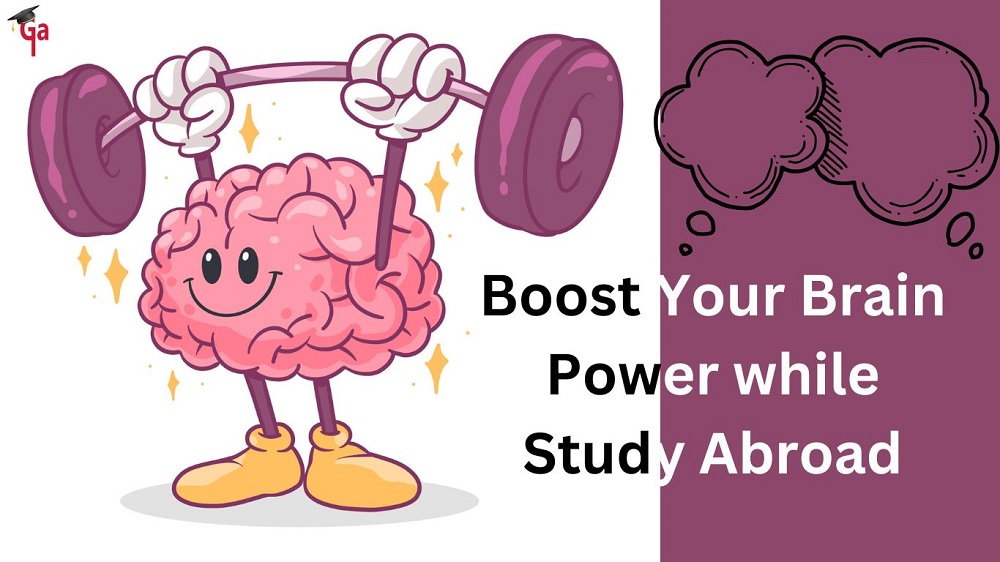
As the global education sector starts to bounce back from the epidemic, a lot of students have been able to go back to school and take courses overseas. Things are gradually returning to normal for them as students at a worldwide university.
Studying overseas presents a number of challenges for students, from being self-sufficient to bearing the cost of their education, housing, and other obligations. Students studying abroad must use strategies to increase their brain power to stay attentive, manage stress and homesickness, and perform daily chores with vigor and ease. This article can assist students in discovering their strengths and developing their Brain Power-Boosting Techniques for Students Studying Abroad.
The generic term brain power describes the brain's capacity for thinking or mental abilities. Learning, reasoning, problem-solving, memory, and concentration are just a few of the many intellectual abilities and skills it includes. The components of brain power are broken down as follows-
Healthy lifestyle choices and ongoing education can help build and maintain brain power, which is not fixed.
Increasing mental capacity is necessary for other tasks as well as for learning when living overseas. Techniques to increase brain power are needed-
Increasing mental capacity is necessary for other tasks as well as for learning when living overseas. Techniques to increase brain power are needed-
Students can use a number of brain power-boosting techniques to maximize their cognitive abilities while studying overseas. Students can succeed in their coursework, internships, and other endeavors by putting these strategies into practice. Check out these tips for improving memory and brain power-
A student's ability to concentrate when studying overseas can be greatly impacted by homesickness, which frequently causes tension, worry, and trouble concentrating. These mental health issues may impair decision-making processes, retention of knowledge, and mental performance. Students may become distracted from their studies and become less productive as a result of their yearning for comfortable surroundings and support networks. But if handled properly, homesickness may also be a motivator for personal development. Emotional intelligence can be improved by accepting emotion as a natural part of the adjustment process and utilizing it to strengthen resilience. Its effects can be lessened and general mental clarity increased by maintaining relationships with loved ones, learning about the host culture, and engaging in self-care.
As the name implies, mindfulness meditation involves allowing any ideas to enter the mind without stopping their flow. The flow of ideas helps to relax the body and mind and let go of negative energy. The method is inhaling and exhaling while tracking the air's journey through your nostrils and out of your body.
This method can be used to increase cognitive function in people who like intense exercise and find it easier to release their everyday stress. One of the best brain stimulants is exercise, which lowers stress, improves blood circulation, and keeps students in shape.
Benefits of regular exercise for brain health to boost cognitive function-
Students who are studying overseas can benefit from exercise in some ways, including the following-
A balanced diet is crucial for both academic achievement and general well-being, yet adjusting to living overseas can be difficult. Students who want to improve their memory and focus should concentrate on foods that boost brain power, like fatty fish high in omega-3 fatty acids. Add avocados, almonds, and seeds for good fats that help with brain function. Spinach and other leafy greens enhance brain function, while fresh fruits like oranges and blueberries offer antioxidants. Dark chocolate, eggs, and whole grains provide long-lasting energy and mental clarity. Maintaining proper hydration and eating well-balanced meals helps kids succeed academically overseas by nourishing their bodies and minds.
Give mental and physical health priority if you want to improve your cognitive abilities. Frequent exercise increases blood flow and lowers stress, which enhances brain function. Practice mindfulness meditation to improve your ability to concentrate, remember things, and control your emotions. For optimum mental performance, include brain-boosting foods like leafy greens, almonds, and fatty fish in a balanced diet. To promote brain clarity and memory consolidation, make sure you get enough sleep. Challenge your cognitive powers by reading, solving puzzles, or picking up new skills. Stay organized to lower stress and mental clutter, which improves focus and productivity, and socialize frequently to preserve emotional well-being.
Prioritizing mental health is essential to ensuring both academic and personal success because studying abroad might provide special challenges. Here are some crucial pointers regarding mental health for students abroad-
For students studying abroad to succeed academically and adjust to unfamiliar surroundings, mental acuity is essential. Here are some tips for preserving and enhancing Mental Sharpness -
For students studying abroad to succeed both academically and personally, self-development is essential. Here are some pointers-
By stimulating cognitive processes, boosting memory, and halting cognitive decline, mental games are important for preserving and enhancing brain health. By encouraging neuronal connections and increasing cognitive flexibility, these games excite the brain. Frequent engagement in intellectually taxing tasks enhances critical thinking, attention span, and problem-solving skills all of which are necessary for both everyday life and academic performance.
Puzzles, chess, memory tests, and strategy games are examples of activities that improve a variety of cognitive abilities, including spatial awareness, logical reasoning, and pattern identification. By encouraging neuroplasticity, the brain's capacity to rearrange itself by creating new neural connections, these games help the brain adjust to novel situations.
The sense of achievement that comes from addressing a puzzle or winning a game improves psychological health, elevating mood, and lowering stress. Regularly playing mental games can help students retain information and focus, which are important for academic performance. Additionally, mental games can help avoid the mental decline that comes with aging, keeping the brain agile and sharp.
Maintaining a good sleep schedule while studying overseas might be challenging due to time zones and environmental changes. However, both general health and cognitive performance depend on getting enough sleep. The following tips will help you sleep better as a student while studying abroad -
· Establish a regular sleep timetable: To manage your body's internal clock, try to go to bed and wake up at the same time every day, even on the weekends.
· Avoid coffee and heavy meals: Because they can interfere with sleep, avoid coffee, nicotine, and heavy meals right before bed.
· Establish proper sleeping conditions: Keep your bedroom quiet, dark, and cool to promote relaxation. If needed, think about wearing an eye mask or earplugs.
Sleep is essential for improving IQ and cognitive function. The brain integrates information and solidifies memories during deep sleep, improving learning and problem-solving skills. Focus, concentration, and decision-making abilities are all enhanced by getting enough sleep, and these abilities are essential for academic achievement. Over time, improved cognitive function and a higher IQ result from a restful night's sleep, which fortifies neural connections and promotes brain health.
Mnemonics are memory enhancers that link complicated knowledge to easily remembered, straightforward stimuli. Common forms include visual imagery, which connects ideas to clear mental images, and acronyms, which are phrases made up of the initial letters of words. Chunking divides vast volumes of data into more manageable chunks. Songs and rhymes also help people recall knowledge. By lowering cognitive load, improving memory retention, and making learning more interesting, these strategies aid pupils in better remembering and retaining material.
Students can improve their academic performance, enhance their personal lives, and lay a solid foundation for lifetime learning by developing a reading habit. Students can gain much from reading on both a personal and academic level. Here are a few main benefits
Making the most of a student's study area is a good way to increase mental capacity. Students studying overseas can make the most of their study areas in any way they see fit, which will help them concentrate better and spark interest in their studies overseas without putting a lot of strain on them. How can you make the most of your study area to sharpen your mind? Take a look at these guidelines:
As they overcome scholastic obstacles and acclimatize to unfamiliar surroundings, international students need to be able to solve problems. Important abilities for solving problems include-
It takes flexibility and creativity to survive as an international student. To facilitate daily contact, pick up the local tongue or work on your communication abilities. Budgeting and being aware of the cost of living in your new nation will help you manage your money effectively. Look for inexpensive alternatives to shopping and ask for student discounts. To prevent misunderstandings and feel more at ease in your new surroundings, familiarize yourself with local laws and customs. To fight homesickness and get emotional support, maintain relationships with family and friends, and create a network of advisers, mentors, and other students who can help you both academically and socially, additionally, put your health and well-being first by leading a balanced lifestyle and, if necessary, getting professional assistance.
The process of increasing brainpower is complex and involves mental and physical health as well as operational habits. Students studying abroad can overcome obstacles with resilience and achieve academic success by prioritizing sleep, healthy eating, exercise, mindfulness, and a supportive network. These techniques not only improve mental efficiency but also lead to a rewarding and improving study abroad experience.
Ans- Frequent exercise enhances mood, memory, focus, and blood flow to the brain. It also lowers stress, which improves cognitive function.
Ans- Nuts, seeds, leafy greens, berries, eggs, whole grains, and fatty fish (omega-3) are among the foods that promote mental clarity and cognitive function.
Ans- To fight homesickness and stay focused, stay in touch with loved ones, take part in local events, establish a routine, and take care of yourself.
Ans-Concentration, memory consolidation, and cognitive function all depend on getting enough good sleep. To maintain mental acuity, aim for 7 to 9 hours of sleep every night.
Ans- Indeed, mindfulness meditation calms the mind and promotes emotional control, which lowers stress and anxiety, increases focus, and improves memory retention.
Ans- To lower stress and improve cognitive function, try deep breathing, exercise, time management, mindfulness, and eating a balanced diet.
Ans- To enhance cognitive abilities, keep your brain engaged by doing mental exercises like reading, solving puzzles, and trying out new things.
Ans- Make time for self-care, get enough sleep, strike a balance between work and play, and ask for help when you're feeling overwhelmed.
Ans- To keep organized and clear your mind so you can concentrate better on your studies, use planners, task management applications, and clear goals.
Ans- Socializing improves emotional intelligence, fights loneliness, and lowers stress—all of which are good for mental and cognitive health.
Author
Content Writer & International Education Specialist
Sakshi Taneja is a content writer specializing in international education, study abroad opportunities, university admissions, student visas, scholarships, and career guidance. She creates accurate, research-driven, and student-focused content to help aspiring international students make informed decisions about their global education journey.
No comments yet
Be the first to share your thoughts!
Please provide your contact information
Free Counselling

9/21/2026

2/26/2026

11/3/2025

11/3/2025
10/27/2025
Want some help figuring out what kind of prep service is right for you?
Help and Support

Leave a Comment
Your email address will not be published.