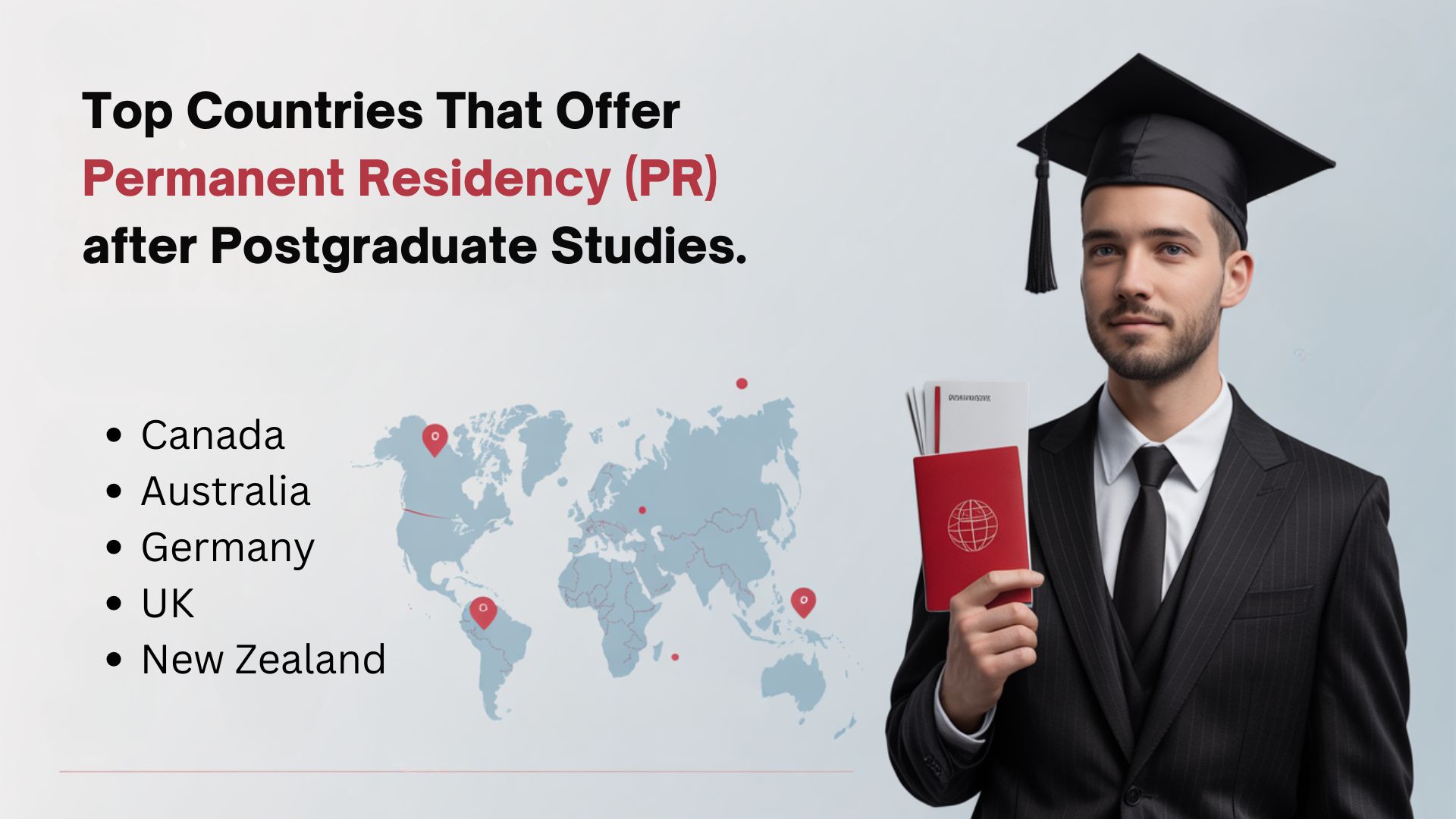
For many international students, pursuing a master’s degree abroad isn’t just about academics—it's also about opening doors to permanent residency (PR) and long-term career opportunities. Countries around the world are making efforts to retain global talent, offering graduates pathways to stay, work, and eventually become permanent residents or even citizens.
In this blog, we explore the best countries for PR after a master's degree, analyzing their immigration policies, post-study work options, and permanent residency benefits in 2025.
Why Consider PR After a Master's?
Pursuing Permanent Residency (PR) after completing a master’s degree abroad offers more than just an extended stay; it is a life-changing decision that opens up long-term career, personal, and social opportunities. Here's why PR is worth considering-
- Career stability and growth- PR allows you to work full-time without visa restrictions, enabling access to better job opportunities. You can switch employers freely and pursue promotions or entrepreneurship. In many countries, PR holders are preferred for government and public sector jobs.
- Pathway to citizenship- PR is often the first step toward citizenship. Moreover, after holding PR for a set number of years (e.g., 3–5 years), you may be eligible to apply for naturalization and a passport.
- Access to social benefits- PR holders enjoy government benefits such as
§ Healthcare subsidies
§ Unemployment support
§ Pension schemes
§ Public education for children
- Lower education and healthcare costs- As a permanent resident, you often pay domestic fees for education, which are lower than international rates. You gain access to universal healthcare in countries like Canada, Australia, and the UK.
- Family sponsorship rights- PR allows you to sponsor your spouse, children, or even parents for residency. Family reunification becomes much easier and faster.
- Freedom of Movement- PR often comes with multiple-entry privileges and less paperwork. In some cases (e.g., EU countries), it allows free movement within other member states.
- No need for visa renewals- Unlike student or work visas, PR status is long-term or indefinite, freeing you from frequent renewals, interviews, or sponsorships.
- Stronger legal rights- PR gives you greater protection under labour laws and civil rights. You can own property, access legal aid, and participate in community programs.
- Better financial access- PR holders often qualify for
- Home loans and personal financing
- Student loan schemes (for dependents)
- Improved lifestyle and peace of mind- With legal residency, you can settle down, plan a long-term life, and integrate into society with confidence. It reduces the stress of immigration uncertainty and job insecurity.
Top countries for PR after a master's
1. Canada-
Why it's top-ranked:
Canada has one of the most immigrant-friendly systems in the world, especially for international graduates.
PR Pathways:
- Post-Graduation Work Permit (PGWP) up to 3 years
- Canadian Experience Class (CEC) under Express Entry
- Provincial Nominee Programs (PNPs)
- Quebec Experience Program (PEQ)
Highlights:
- Points awarded for Canadian education and work experience
- No job offers required for Express Entry
- Healthcare and social benefits
- Dual citizenship allowed
Best Provinces for PR:
- Ontario, British Columbia, Nova Scotia, Alberta
2. Australia-
Why is it attractive?
Australia offers multiple visa pathways and points-based systems that reward education, work experience, and age.
PR Pathways:
- Temporary Graduate Visa (Subclass 485)
- Skilled Independent Visa (Subclass 189)
- Skilled Nominated Visa (Subclass 190)
- Regional Visas (Subclass 491)
Highlights:
- Up to 5 years stay post-study (depending on location)
- State nomination adds PR points
- Graduate Occupation List (GOL) priority
Cities With Better PR Chances:
- Adelaide, Perth, Hobart (regional cities offer longer post-study stays)
3. Germany-
Why is Germany popular?
Known for its tuition-free or low-cost education, Germany offers a clear path from student to skilled worker.
PR Pathways:
- 18-month Job Seeking Visa after graduation
- Residence permits for employment (Blue Card EU)
- PR after 33 months (or 21 months with B1 language)
Highlights:
- Low cost of education and living
- High demand for STEM professionals
- Strong job market in engineering, IT, and healthcare
4. New Zealand-
Why choose NZ?
With a relaxed lifestyle, good quality of life, and skill shortages, New Zealand welcomes qualified graduates.
PR Pathways:
- Post-study work visa (up to 3 years)
- Skilled Migrant Category Resident Visa
- Employer-Assisted Visa
Highlights:
- Points-based immigration system
- Recognizes NZ education in PR applications
- Shortage of skilled professionals in IT, engineering, and agriculture
5. United Kingdom-
Recent developments make it appealing-
The UK’s Graduate Route and new visa policies favor international students staying long term.
PR Pathways:
- Graduate Route Visa (2 years, 3 for PhD)
- Skilled Worker Visa (requires job offer)
- Indefinite Leave to Remain (after 5 years of legal stay)
Highlights:
- Fast PR route for high-demand occupations
- The health and care worker visa offers easier access
- PR leads to British citizenship
6. Ireland-
A rising star in PR opportunities-
Ireland offers an accessible pathway from studies to residency, especially in the tech and pharma sectors.
PR Pathways:
- Third Level Graduate Scheme (1-2 years)
- Critical Skills Employment Permit
- Stamp 4 visa (long-term residency)
Highlights:
- No language tests required
- Easy transition from student to skilled worker
- Direct route to citizenship after 5 years
7. Sweden-
Why Sweden stands out?
With its progressive policies and emphasis on innovation, Sweden attracts tech and research professionals.
PR Pathways:
- 12-month job seeker visa after graduation
- Work permit leading to PR (after 4 years of work)
Highlights:
- English-taught programs
- Growing tech and AI industry
- PR leads to Swedish citizenship and EU access
8. United States-
Still a top destination despite immigration challenges-
Though not as straightforward, PR in the U.S. is possible through employment-based routes.
PR Pathways:
- Optional Practical Training (OPT) for up to 3 years in STEM
- H-1B Visa (employer-sponsored)
- EB-2/EB-3 Green Card (employment-based)
Highlights:
- High earning potential
- Innovation and entrepreneurship-friendly
- The green card backlog exists, but the EB-2 National Interest Waiver helps
9. Netherlands-
A hub for international students and tech jobs:
The Netherlands offers a streamlined transition from study to work to PR.
PR Pathways:
- Orientation Year Visa (zoekjaar) for job search
- Work permit and Highly Skilled Migrant Visa
- PR after 5 years of legal stay
Highlights:
- High standard of living
- Booming tech, business, and logistics industries
- English widely spoken
10. France-
An emerging favorite in Europe:
France is working to retain international talent in engineering, IT, and business.
PR Pathways:
- APS (Temporary Resident Permit) for job search (12-24 months)
- Talent Passport for skilled professionals
- PR after 5 years of stay
Highlights:
- Subsidized education and healthcare
- Path to citizenship with French language skills
- Attractive for research and innovation roles
What are the key factors to consider when choosing a country for PR?
When planning to settle abroad after your master’s degree, choosing the correct country is crucial. Each country has its immigration system, job market, and lifestyle. To make an informed decision, consider the following key factors-
Post-Study Work Visa Duration-
- This determines how much time you will have to find a job after graduation.
- Longer post-study visas give you more flexibility and security.
Ease of PR Transition-
- Check if the country has a clear and straightforward path from student to permanent resident.
- Some countries have points-based systems that favour international graduates.
Job Market and Skill Demand-
- Choose countries that need professionals in your field (STEM, healthcare, business, etc.).
- High demand increases your employability and PR chances.
Language Requirements-
- Some countries require language proficiency for PR or citizenship applications.
Recognition of Foreign Degrees-
- Make sure your master’s degree will be recognized and valued in the country’s job market.
Cost of Living and Tuition Fees-
- Consider the affordability of staying long-term.
- High living costs might make it hard to sustain yourself during the PR process.
Quality of Life and Social Benefits-
- Evaluate healthcare, education, infrastructure, public safety, and overall living conditions.
Immigration Quotas and Processing Times
- Some countries have caps or long waiting periods for PR applications.
Family Sponsorship Opportunities
- Check if you can bring or sponsor family members on your PR visa.
Path to Citizenship-
- Look at how long you need to live in the country before applying for citizenship and whether dual citizenship is allowed.
Political and Economic Stability-
- A stable government and economy are essential for long-term planning, job security, and personal safety.
Cultural Compatibility and Diversity-
- A multicultural society is often more welcoming to international residents.
- Think about how well you’ll adapt socially and culturally.
Taxation Policies-
- Some countries have high taxes, which can affect your net income and savings.
- Consider whether PR status includes access to tax benefits or deductions.
|
Factor
|
Importance
|
|
Post-study work visa duration
|
Longer durations provide more time to find a job
|
|
Ease of transitioning to PR
|
Clear and simple immigration policies are a big plus
|
|
Job market demand
|
Countries with skill shortages are more likely to offer PR
|
|
Language requirements
|
Some countries require proficiency in local language
|
|
Cost of living and education
|
Affordability affects your financial sustainability
|
|
Healthcare and social benefits
|
A strong welfare system is a huge advantage
|
Which techniques should you follow to maximize PR chances?
- Choose a master’s program aligned with the country’s skill shortage list
- Study in regional or high-demand areas for bonus PR points (e.g., Australia, Canada)
- Gain local work experience during or after studies (internships, part-time jobs)
- Apply for post-study work visas immediately after graduation
- Build a professional network through career fairs and university events
- Achieve high scores in language proficiency tests (e.g., IELTS, TOEFL, or local language)
- Maintain a clean legal and immigration record throughout your stay
- Secure a job offer in a recognized or priority occupation
- Apply for provincial or regional nomination programs (PNPs or state nomination)
- Stay informed on immigration policy updates and changes
- Keep documentation ready: transcripts, reference letters, work experience proofs
- Take advantage of PR application consultants or university career services
- Pursue advanced certifications relevant to your profession
- Improve your age and education points (a younger age often earns more points)
- Demonstrate community involvement or volunteering, if applicable
- Prepare a strong statement of purpose or expression of interest (EOI) for PR applications
Conclusion-
Choosing the correct country for permanent residency after a master’s degree is a significant decision that shapes your future. While Canada, Australia, and Germany remain top choices due to their straightforward PR pathways, emerging options like Ireland, Sweden, and the Netherlands offer unique opportunities for those in tech, healthcare, and research.
Your success in securing PR depends not only on the country's policies but also on your field of study, language skills, work experience, and willingness to adapt. With the right strategy and planning, your international degree can be the stepping stone to a globally rewarding life.
FAQs on Best Countries for PR After Masters
Q.1 Which country is easiest for PR after a Master's?
Ans- Canada is considered the easiest due to its clear Express Entry system and points awarded for Canadian education.
Q.2 How long does it take to get a PR after a master's in Canada?
Ans- Typically 1–3 years after gaining Canadian work experience.
Q.3 Can you get a PR in Australia after a 1-year master’s degree?
Ans- Yes, especially if you meet the point requirements and choose regional universities.
Q.4 Do you need a job offer to apply for PR?
Ans- Not always. Canada and Australia offer PR without a job offer via points-based systems.
Q.5 Which countries offer PR without language tests?
Ans- Ireland and the Netherlands may not require language tests for some routes.
Q.6 Is the USA good for PR after a master's degree?
Ans- It's possible, but slower and more competitive due to the H-1B and green card process.
Q.7 Can you apply for PR immediately after graduation?
Ans-Most countries require work experience post-study before PR eligibility.
Q.8 Does studying in a regional area improve PR chances?
Ans-Yes, especially in Australia and Canada, where regional points or more extended stays are offered.
Q.9 Is PR the same as citizenship?
Ans-No. PR allows you to live and work indefinitely, but citizenship requires an additional process.
Q.10 Can you bring your family on a PR visa?
Ans-Yes, most PR pathways allow for spouse and children sponsorship.



Leave a Comment
Your email address will not be published.