

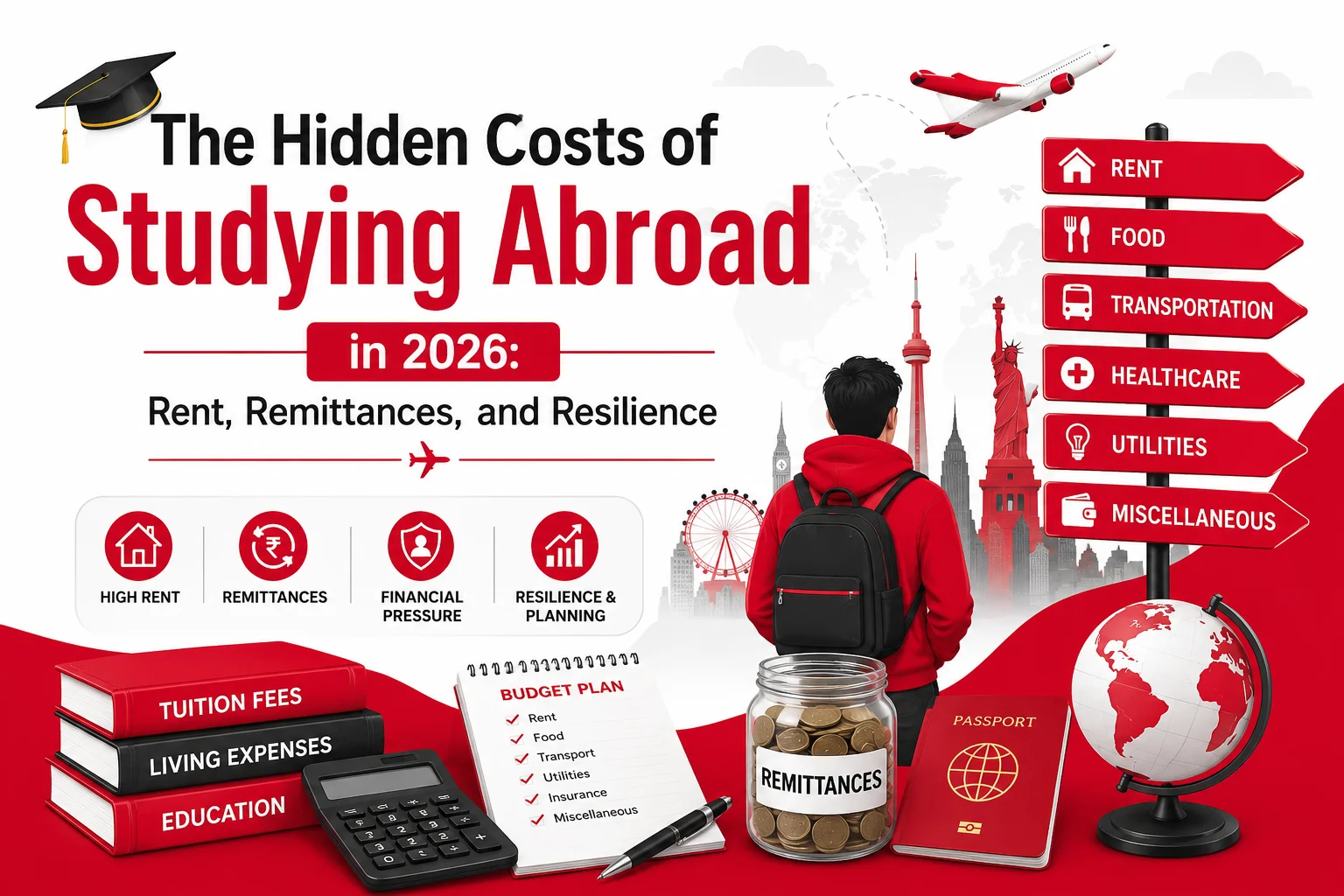
Studying abroad is often seen as a golden ticket to better career opportunities, cultural exposure, and personal development. However, with the global rise in the cost of living from housing and groceries to tuition fees and healthcare, students are asking a crucial question: Is the rising cost of living abroad really worth it?
The short answer is yes, but only if planned wisely. The benefits of studying abroad can far outweigh the expenses, provided students make informed decisions and adopt strategic budgeting techniques. This blog explores the rising costs, evaluates whether it's still worth it, and offers practical budgeting tips to help students thrive without burning through their savings.
Why is the cost of living abroad rising?
Several global and local economic factors influence the rising cost of living abroad. Before we explore whether it is worth it, understanding why costs are rising is essential. Here are some of the key reasons:
- Global Inflation- Inflation is one of the primary reasons. Post-pandemic recovery, supply chain disruptions, and geopolitical tensions (like the Russia-Ukraine war and conflicts in the Middle East) have pushed up the prices of essential goods and services worldwide. This includes:
o Food
o Fuel
o Housing
o Utilities
- Increased demand for student housing- With more students choosing to study abroad post-pandemic, demand for student accommodation has skyrocketed, especially in popular cities. Limited housing availability leads to higher rents and related living expenses.
- Higher tuition and university fees- Many universities have increased tuition for international students to compensate for reduced government funding or higher operational costs. This indirectly raises the overall cost of studying abroad.
- Rising healthcare costs- Healthcare costs in many countries, especially where insurance is mandatory (like the USA, UK, Australia), are rising sharply. Health insurance premiums and medical service fees contribute significantly to the overall living costs.
- Currency fluctuations- If your home currency weakens against the Dollar, Euro, or Pound, the cost of living abroad increases even if local prices remain stable. For example, Indian Rupee or Nigerian Naira depreciation means students must pay more in local currency to meet the same expenses abroad.
- Utility and energy price hikes- Energy crises in parts of Europe and other regions have caused substantial increases in electricity, heating, and water bills, directly affecting student accommodation costs.
- Higher transportation costs- Public transport fares, fuel prices, and vehicle-related costs have risen in many cities due to increased fuel prices and operating costs.
- Lifestyle and technology dependence—Modern students rely more on paid digital services (streaming platforms, apps, cloud storage, etc.) that cumulatively increase their monthly living expenses.
- Impact of government policies- Some governments impose new taxes or reduce subsidies (on education, housing, utilities), making life more expensive for international students.
Is it still worth it to study abroad in light of growing costs?
For the majority of students, the answer is still yes if addressed wisely, even with the growing expenses of living and studying overseas. Here are some reasons why, despite financial difficulties, studying abroad is still worthwhile:
- Return on Investment (ROI) is still high. Top global universities offer degrees that are widely recognized and respected. Graduates from these institutions often:
o Secure better job opportunities.
o Command higher salaries
o Have faster career progression
· Access to better opportunities- Studying abroad can open doors to
o Global job markets
o Specialized industries
o Post-study work permits (e.g., Canada, Australia, Germany)
- Skill development beyond academics- Living and studying in a foreign country enhances:
o Communication skills
o Adaptability
o Problem-solving abilities
o Cultural awareness
o Independence
o Employers globally highly value these soft skills.
- Global networking benefits- International education connects you with-
o Diverse peers
o Industry professionals
o Alum network
- Personal growth and exposure- Experience with new cultures, languages, and ideas fosters-
o Broader perspectives
o Greater confidence
o Increased resilience
o This personal development is often considered just as valuable as academic achievements.
- Scholarships and financial aid can offset costs. Many universities and governments offer-
o Scholarships
o Grants
o Research assistantships
o These can significantly reduce the financial burden.
- Better quality of life and infrastructure- Countries like Canada, Germany, and Australia offer-
o Safer environments
o Superior healthcare systems
o Advanced educational infrastructure
Check Living cost in Dubai as a Students
Breakdown of Living Costs for Students Abroad (2025 Estimate)-
|
Expense Category |
USA (USD/month) |
UK (GBP/month) |
Australia (AUD/month) |
Germany (EUR/month) |
|
Rent |
$800 - $1500 |
£500 - £1200 |
AUD 700 - 1500 |
€400 - €900 |
|
Food |
$200 - $400 |
£150 - £300 |
AUD 200 - 400 |
€150 - €300 |
|
Transport |
$50 - $100 |
£50 - £100 |
AUD 50 - 150 |
€50 - €100 |
|
Utilities |
$50 - $100 |
£30 - £60 |
AUD 60 - 120 |
€80 - €150 |
|
Health Insurance |
$50 - $200 |
£50 - £150 |
AUD 100 - 150 |
€80 - €120 |
|
Miscellaneous |
$100 - $300 |
£50 - £200 |
AUD 100 - 200 |
€50 - €150 |
What are the budgeting tips for managing the rising costs abroad?
Here are practical, actionable budgeting strategies to ensure the rising costs don’t overwhelm your finances-
Research and plan meticulously-
Before you even apply-
- Compare the cost of living in different cities and countries.
- Evaluate tuition fees alongside living expenses.
- Consider universities offering scholarships or lower fees for international students.
Create a Realistic Monthly Budget-
Draft a detailed budget covering-
- Rent
- Utilities
- Groceries
- Transport
- Academic costs (books, software)
- Entertainment
- Savings
Use apps like Mint, YNAB (You Need a Budget), or Revolut to track spending.
Explore scholarships and grants-
Look beyond university scholarships-
- Government-funded schemes (e.g., Erasmus+, Chevening, Fulbright)
- Private foundations
- Subject-specific grants (STEM, Arts, etc.)
- Need-based financial aid
Choose affordable housing options-
Housing will be your most significant expense. Save by-
- Choosing university dormitories over private apartments.
- Sharing accommodation.
- Living slightly outside city centers with good transport links.
Cut transportation costs-
- Use student travel discounts (bus, rail, metro).
- Invest in a bicycle or walk where possible.
- Avoid expensive ride-shares for daily commutes.
Save on food expenses-
- Cook at home instead of eating out.
- Shop at budget-friendly grocery stores (Lidl, Aldi, Walmart).
- Look for student discounts at restaurants and cafes.
Work part-time legally-
Most countries allow international students to work part-time:
- UK: 20 hours per week during term-time
- Canada: Up to 20 hours per week
- Australia: Up to 48 hours per fortnight
- Germany: 120 full days or 240 half-days per year
Choose on-campus jobs or roles that enhance your CV.
Optimize healthcare expenses-
- Understand what your student health insurance covers.
- Use free or subsidized campus medical services.
- Avoid unnecessary ER visits unless it's a real emergency.
Take advantage of free university resources-
- Libraries for books instead of buying.
- Campus events for free entertainment.
- Career centres for free workshops and counselling.
Limit luxuries-
While abroad, it’s tempting to travel frequently or buy gadgets:
- Set boundaries for luxury spending.
- Prioritise experiences with long-term value.
How to Do Long-Term Financial Planning for Studying Abroad?
- Set clear academic and career goals. To help you estimate the total financial requirements accurately, you should first decide on the course you want to study, the country and university you are targeting, and the duration of the program.
- Research total costs in detail—To create a realistic budget, it is essential to break down all possible expenses, such as tuition fees, living expenses, and additional costs like visa fees, flight tickets, and health insurance.
- Start saving early. To accumulate funds in advance, you should create a disciplined savings plan with a monthly target and a separate education savings account.
- Cut down unnecessary expenses- You must reduce spending on non-essential luxuries and prioritize saving for your education abroad over unnecessary costs.
- Explore scholarships and grants- You should research and apply early for scholarships and grants, including merit-based, need-based, and country-specific options, to reduce your financial burden.
- Consider education loans wisely. Before committing, you need to evaluate various loan options, such as government loans, bank loans, and private lenders, keeping in mind interest rates, repayment periods, and collateral requirements.
- Build a contingency fund- You should maintain an emergency fund equal to at least six months of your living expenses to handle unexpected financial situations.
- Monitor currency exchange rates- You must stay updated on currency fluctuations and consider using forex accounts or prepaid cards to avoid sudden increases in expenses.
- Plan for part-time work (if allowed): You should explore part-time work opportunities permitted by local regulations to support minor living expenses, but avoid relying on them for significant financial needs.
- Get proper financial documentation ready- You need to prepare necessary documents like bank statements, income tax returns, proof of savings, and loan sanction letters for visa and university requirements.
- Invest for the long-term (If planning)- You should consider safe investments like mutual funds, SIPs, and fixed deposits if you are planning 3-5 years to grow your savings steadily.
- Budget for post-graduation plans- You need to budget for expenses beyond your course, including living costs during the job search, immigration fees, and any professional certifications required.
- Involve family in planning-You should openly discuss financial responsibilities with your family to align contributions and ensure transparency about the funding structure.
- Regularly review and adjust your plan- You must review your financial plan at each key stage of your study abroad journey and make adjustments for inflation, currency shifts, or unexpected changes.
- Use financial planning tools—To manage your finances effectively, you should utilize online tools such as education loan calculators, cost-of-living estimators, budgeting apps, and forex rate trackers.
- Consult financial and study abroad experts- You can seek advice from study abroad consultants, financial planners, and alums to gain practical insights and ensure your financial planning is thorough and realistic.
Explore More: The Ultimate Guide to International Student Life: Education, Culture & Beyond
Sample Monthly Budget Plan for a Student Abroad (USA Example)-
|
Expense |
Budget (USD) |
|
Rent |
$1000 |
|
Groceries |
$300 |
|
Utilities |
$75 |
|
Transport |
$75 |
|
Health Insurance |
$150 |
|
Phone/Internet |
$50 |
|
Entertainment |
$100 |
|
Miscellaneous |
$100 |
|
Total |
$1850 |
Income (Part-time job, 20 hours/week @ $15/hour)-
Approx. $1200/month can cover over half your expenses.
What are the additional strategies to thrive financially while studying abroad?
- Create and follow a strict monthly budget.
- Open a local bank account to avoid extra fees.
- Take advantage of student discounts everywhere possible.
- Manage currency exchange smartly and avoid frequent transactions.
- Reduce accommodation costs by sharing or choosing budget housing.
- Use public transportation and student travel passes.
- Cook your meals to save on food expenses.
- Utilise free campus resources like libraries and gyms.
- Find on-campus jobs or internships for extra income.
- Apply for additional scholarships and local grants.
- Avoid unnecessary debts and limit credit card usage.
- Build an emergency fund gradually from savings.
- Network locally for financial tips and affordable options.
- Plan holidays and travel during off-peak seasons.
- Review and adjust your financial goals regularly.
What challenges can you face from not budgeting properly to leaving for study abroad?
- Financial shortage midway through studies- Running out of money before completing your course due to poor financial planning.
- Difficulty managing daily expenses- Struggling to cover basic needs like rent, food, transportation, and utilities.
- Increased debt and loan burden- Relying heavily on high-interest loans or credit cards to manage shortfalls.
- Stress and mental health issues- Facing anxiety and stress due to ongoing financial instability abroad.
- Inability to participate in academic opportunities- Missing out on workshops, seminars, and networking events due to a lack of funds.
- Compromising on quality of life- Settling for poor living conditions or unhealthy food because of money problems.
- Limited social and cultural activities- Avoiding social gatherings, travel, or cultural experiences to save money.
- Risk of dropping out- Being forced to discontinue studies and return home due to financial exhaustion.
- Damaged credit history- Failing to manage finances can lead to unpaid bills and bad credit abroad.
- Difficulty transitioning to post-study plans- Struggling with expenses after graduation while searching for jobs or applying for visas.
Case Study: Two Students, Two Different Approaches
Student A: Poor Planning
- Chooses the most expensive city without research.
- Lives alone in a costly apartment.
- Eats out frequently.
- Relies solely on funds from home.
- Ends up financially strained, seeks help mid-semester.
Student B: Smart Planning
- Selects a city with moderate living costs.
- Shares accommodation with other students.
- Cooks at home, uses student discounts.
- Works part-time to supplement income.
- Leaves with savings and valuable experience.
How to Maximize ROI (Return on Investment) on Your International Education?
- Choose the right course and university—Select courses with strong global demand and high employability. Prefer universities with excellent academic reputations, rankings, and industry ties.
- Research future career opportunities- To analyze job markets and industries in your chosen destination and globally. Focus on sectors that offer high salaries and growth potential post-graduation.
- Leverage scholarships and financial aid- Apply for merit-based, need-based, and country-specific scholarships. Utilize grants, fellowships, and assistantships to reduce your tuition burden.
- Gain relevant work experience- Pursue internships, part-time jobs, or volunteer opportunities related to your field. Build practical skills and gain industry exposure while studying.
- Network effectively—Engage with professors, alums, and industry professionals. Attend seminars, workshops, and networking events to expand your opportunities.
- Focus on skill development- Learn in-demand technical, digital, and soft skills alongside your academic studies. Obtain certifications that strengthen your resume and increase employability.
- Optimize post-study work opportunities- Choose countries with favourable post-study work visas and graduate pathways. Plan to secure job opportunities that lead to permanent residency or long-term employment.
- Manage finances smartly while studying- Follow a strict budgeting to avoid unnecessary debt and overspending. Save money through student discounts, affordable housing, and cost-effective living.
- Build a strong personal brand- Maintain an updated LinkedIn profile and professional online presence. Showcase projects, internships, and achievements to attract employers.
- Be strategic about job applications- Apply to companies and roles aligned with your long-term career goals. Customize your applications and prepare well for interviews to improve your chances.
- Follow industry news, emerging technologies, and skill requirements to stay updated with industry trends. Adapt your learning and career strategies to current and future market needs.
- Consider ROI beyond salary- Evaluate long-term benefits such as global exposure, personal growth, and expanded networks. Recognize how your education abroad opens doors to international careers and experiences.
Countries offering affordable education and cost of living (2025 Trends)-
If the UK, USA, or Australia seem financially overwhelming, consider these more budget-friendly alternatives:
1. Germany-
- No tuition fees for many courses.
- Moderate living costs.
- Strong post-study work opportunities.
2. France-
- Affordable tuition at public universities.
- Discounts on housing, transport for students.
3. Netherlands-
- Scholarships for international students.
- English-taught programs are in abundance.
4. Canada (Outside Major Cities)-
- Lower cost of living in smaller towns.
- Work-study options available.
5. Spain-
- Affordable education and lifestyle.
- Great climate and cultural exposure.
Explore more: Top Countries for Study Abroad destinations for January Intake 2026
Conclusion-
In conclusion, while the rising cost of living abroad presents real challenges, it doesn’t necessarily diminish the overall value of an international education. Students may still enjoy their study abroad experience to the fullest without experiencing financial difficulties if they plan, create an efficient budget, and adopt wise financial practices. Careful management of expenses, exploring scholarships, part-time work, and making informed choices can help balance the high costs. Beyond finances, studying abroad offers lifelong benefits such as global exposure, improved career opportunities, and personal growth. Ultimately, if students are well-prepared financially and realistic about their goals, the investment in studying abroad remains worthwhile despite higher living costs. Planning wisely today ensures a smoother, more rewarding academic journey tomorrow.
Frequently Asked Questions
Q.1 Is studying abroad still worth it despite rising living costs?
Ans- Yes, if you plan well financially and focus on long-term career and personal growth benefits.
Q.2 How can you manage high living costs while studying abroad?
Ans- The answer is to establish a rigorous spending plan, monitor expenditures, and prioritize necessities.
Q.3 What are the most significant expenses while studying abroad?
Ans- Transportation, lodging, food, tuition, and insurance.
Q.4 Can scholarships help reduce the financial burden?
Ans- Yes, scholarships may drastically lower living and tuition costs.
Q.5 Is part-time work recommended for students abroad?
Ans- Yes, if allowed, part-time work can help cover small expenses.
Q.6 How important is a monthly budget?
Ans- A monthly budget is crucial for avoiding unnecessary debt.
Q.7 Is it advisable to create a local bank account overseas?
Ans- Yes, to avoid high international transaction fees.
Q.8 How can you save money on daily expenses?
Ans- Cook at home, use student discounts, and share accommodations.
Q.9 Is financial planning necessary before going abroad?
Ans- Absolutely, it helps you prepare for expected and unexpected costs.
Q.10 Can living abroad improve your career prospects?
Ans- Yes, it offers global exposure, skills, and better job opportunities.




Leave a Comment
Your email address will not be published.