
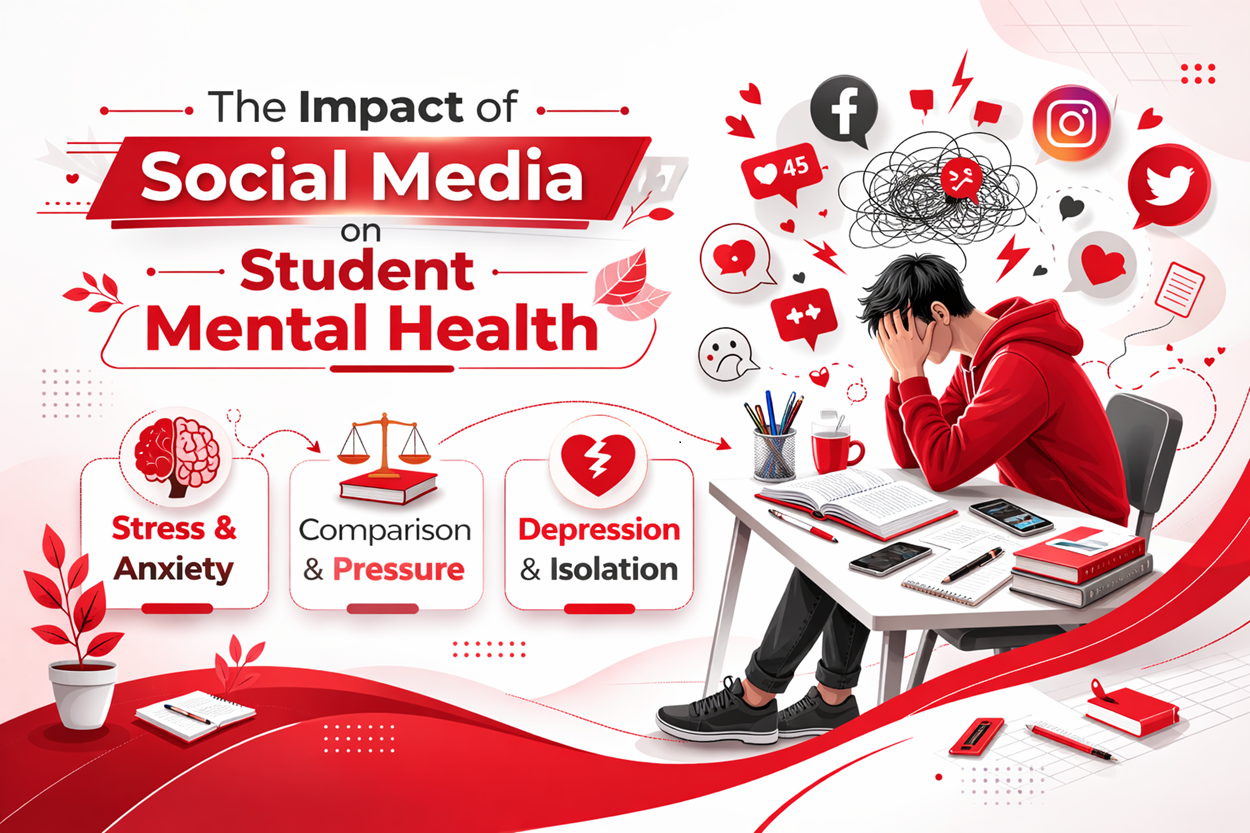
Social media has become a central part of student life in today's digital world. Platforms like Instagram, Snapchat, TikTok, and X (formerly Twitter) are entertainment tools and spaces where students connect, learn, express, and even shape their identities.
However, while social media offers incredible opportunities for learning, communication, and self-expression, it also brings significant mental health challenges. Constant exposure to curated lifestyles, online comparison, and digital overload can profoundly and lastingly affect students’ emotional well-being. This blog explores social media's positive and negative impacts on student mental health, the psychological mechanisms behind these effects, and strategies for healthy, mindful usage.
What is the role of social media in student life?
Social media plays a multifaceted role in modern student life, shaping how learners connect, communicate, and engage with the world. It is both a powerful educational tool and a social platform, influencing students academically, emotionally, and socially.
- Educational resource- Students use social media to access study materials, join academic groups, follow educational pages, and collaborate on projects. Platforms like YouTube, LinkedIn, and Reddit offer valuable learning opportunities beyond textbooks.
- Social connection- social media helps students stay connected with friends, family, and peers, especially when studying away from home. It fosters belonging and community through shared experiences and discussions.
- Self-expression and identity—Platforms like Instagram, TikTok, and X (Twitter) allow students to express their creativity, opinions, and individuality. They give students a voice to share their passions and showcase their talents.
- Awareness and activism- social media empowers students to participate in social causes, spread awareness, and stay updated on global issues. It nurtures civic responsibility and empathy.
- Career and networking- LinkedIn and professional groups help students build networks, find internships, and explore career paths early.
- Challenges and balance—While social media offers many benefits, overuse can lead to distractions, comparisons, and stress. Maintaining balance is key to ensuring social media remains a positive influence in student life.
A 2024 Statista survey reported that over 90% of students aged 16–24 use at least one social media platform daily, with the average student spending 3–4 hours per day online. This constant presence has both enriching and concerning implications for mental health.
What about the positive impacts of social media on student mental health?
Although social media often gets blamed for its adverse effects, it also offers several mental health benefits when used wisely.
- Emotional support and belonging- Online communities can help students feel connected and supported, especially those far from home or studying abroad. Platforms like Reddit, Discord, and Facebook groups allow students to anonymously discuss academic stress, loneliness, or personal struggles and find encouragement from others who understand.
- Peer connection and friendship maintenance- social media helps students maintain relationships across distance. For example, international students can keep in touch with family and friends back home through video calls and messages, reducing homesickness.
- Awareness and advocacy- Platforms like Instagram and TikTok have become hubs for mental health awareness. Students can access information about therapy, mindfulness, and coping strategies while engaging in mental health campaigns that reduce stigma.
- Creative expression and identity formation- social media allows students to share their art, writing, photography, and ideas. This creative outlet helps them express emotions and build self-esteem through positive feedback and recognition.
- Academic collaboration- Students often use platforms for educational purposes, forming study groups, sharing notes, or learning new skills through YouTube tutorials and LinkedIn Learning. When learning feels collaborative, these communities can improve motivation and reduce stress.
What are the negative impacts of social media on student mental health?
Despite its advantages, excessive or unregulated social media use has been linked to rising anxiety, depression, and self-esteem issues among students.
- Social comparison and low self-esteem—Students are often exposed to the “highlight reels” of others' filtered photos, achievements, and luxury lifestyles. Comparing one’s real life to these idealized images can lead to feelings of inadequacy, jealousy, and low self-worth. Research from the American Psychological Association (APA, 2023) found that students who spent more than 3 hours daily on social media were 2.5 times more likely to experience depressive symptoms than those who used it moderately.
- Fear of Missing Out (FOMO)—Seeing friends attend parties, travel, or achieve milestones can create FOMO, a feeling that one is being left behind. This can trigger anxiety and compulsive social media feed checking, reinforcing the cycle of insecurity and distraction.
- Sleep disruption- Scrolling late into the night or constantly checking notifications disrupts sleep patterns. The blue light emitted from screens delays melatonin production, leading to insomnia and fatigue. Poor sleep further affects mood, memory, and concentration.
- Academic distraction and procrastination- Social media notifications are designed to grab attention, often pulling students away from studying. Continuous distraction can increase stress, lower educational performance, and reduce focus during crucial study hours.
- Cyberbullying and online harassment- Unfortunately, many students face cyberbullying, body shaming, or hate comments online. This can result in severe psychological harm, including anxiety, depression, and even suicidal ideation.
- Validation dependence—Many students equate self-worth with likes, comments, or followers. This external validation cycle can cause emotional instability. Happiness rises with engagement and plummets when attention fades.
- Information overload- The endless flow of news, memes, and opinions can overwhelm students. Constant exposure to distressing content, such as global conflicts or social issues, may heighten stress and emotional fatigue.
Psychological Mechanisms Behind the Impact
Understanding the psychology behind social media’s influence helps explain its powerful effects.
- The Dopamine Loop- Each notification or “like” releases dopamine, the brain’s pleasure chemical, similar to how gambling rewards work. This creates addictive behaviour, making students crave the next “hit” of validation.
- The Spotlight Effect- social media amplifies the feeling that everyone is watching or judging, making students hyper-aware of their appearance and actions. This constant self-monitoring contributes to anxiety and self-doubt.
- Cognitive Distortions- Students often fall into distorted thinking patterns like “Everyone else is happier than I am” or “I must be perfect to be liked.” These irrational thoughts worsen stress and depression.
- Emotional Contagion- Emotions are contagious. Online constant exposure to negative or anxious posts can subtly shape one’s own mood, leading to shared digital anxiety.
Social Media Impact on Different Age Groups of Students
Social media affects students differently depending on their age, maturity, and stage of education. While it can enhance learning and social interaction, its influence varies across age groups from school children to university students.
- Primary School Students (Ages 6–12)- Children are curious and impressionable at this early stage. Exposure to social media can help them learn through educational videos and creative content. However, excessive screen time may lead to reduced physical activity, shorter attention spans, and early exposure to unrealistic standards. However, positive for learning but risky for mental and emotional development if not supervised.
- High School Students (Ages 13–18)- Teenagers experience social media's most substantial emotional and social impact. Platforms like Instagram, Snapchat, and TikTok shape their identity, friendships, and self-worth. Constant comparison and the desire for validation can lead to anxiety, low self-esteem, and body image issues. Yet, these platforms also promote creativity, activism, and awareness of global topics. However, double-edged, encouraging self-expression and connection, but increasing mental pressure and peer comparison.
- College Students (Ages 18–24)- social media becomes a tool for networking, learning, and self-promotion for college students. LinkedIn, YouTube, and professional forums help them explore career opportunities, internships, and academic resources. However, excessive use can cause procrastination, sleep issues, and stress due to online competition and performance anxiety. Although it is helpful for career growth and collaboration, it can negatively affect focus and emotional well-being when misused.
- Postgraduate Students (Ages 25 and above)- At this stage, students often use social media for professional networking, research sharing, and staying updated in their fields. Platforms like LinkedIn, ResearchGate, and X (Twitter) are valuable academic and professional growth tools. Still, dependency on digital validation and comparison may lead to burnout. Moreover, it enhances professional visibility and research exposure but requires mindful use to maintain mental balance.
|
Explore More: |
Research and Statistics of Various Universities- A Global Perspective
Several studies highlight the close connection between social media use and mental health among students:
- The University of Pennsylvania (2022) found that limiting social media use to 30 minutes daily significantly reduced anxiety and loneliness among college students.
- A Pew Research Centre (2023) report showed that 67% of students admitted that social media negatively impacted their concentration and productivity.
- According to the World Health Organization (WHO), screen overexposure among youth has been linked to increased stress, sleep problems, and depressive tendencies.
- A NIMHANS India study (2024) revealed that nearly 35% of Indian college students experience social media-related anxiety or depression symptoms.
The Dual Reality: Connection vs. Comparison
Social media creates a fascinating dual reality for students, connecting and isolating them simultaneously. On one hand, it offers endless communication, collaboration, and self-expression opportunities. Conversely, it silently fuels comparison, insecurity, and emotional exhaustion.
· Connection: Building Bridges-
Social media enables students to stay in touch with friends, family, and classmates regardless of distance. It allows them to collaborate on projects, join global discussions, and participate in online communities that share their interests or academic goals. For many, it’s a source of emotional support, motivation, and belonging. These digital connections can offer comfort and understanding in times of loneliness or academic pressure.
· Comparison: The Hidden Trap-
However, the platforms connecting students also expose them to constant comparison. Perfectly curated photos, academic achievements, or lifestyle updates can make students feel inadequate or left behind. This “highlight reel” culture often leads to anxiety, self-doubt, and a distorted perception of success and happiness. The pressure to maintain a flawless online persona can become mentally exhausting, reducing authenticity and self-worth.
· Finding the Balance-
To navigate this dual reality, students must cultivate digital mindfulness by using social media intentionally, not impulsively. Following inspiring, educational, and supportive content while limiting exposure to toxic comparison can transform social media from a source of stress into one of growth.
Which strategies should students use for healthy social media use?
Students don’t have to quit social media; they must use it wisely. Here are science-backed strategies to maintain mental balance:
- Set time limits—Use app timers or “digital well-being” settings to restrict daily usage. Even a one-hour reduction can improve focus and sleep quality.
- Digital detox days- Take short breaks a day or weekend offline to recharge and reconnect with the physical world.
- Curate your feed- Follow positive, educational, or inspirational accounts. Unfollow pages that promote unrealistic body standards or negativity.
- Practice mindful scrolling- Pause before reacting or posting. Ask: Why am I sharing this? How does this make me feel? Mindful engagement reduces emotional reactivity.
- Prioritize real-life connections—Spend time with friends at offline coffee meetups, study groups, or outdoor activities to strengthen genuine relationships.
- Avoid late-night scrolling- Establish a screen-free bedtime routine. Replace scrolling with journaling, reading, or meditation.
- Use social media for growth- Engage with communities that support your goals — language learning groups, career forums, or creative pages.
- Seek support when needed- If social media triggers anxiety or sadness, talk to a counsellor, mentor, or trusted friend. Recognizing emotional impact is the first step toward healing.
To understand the impact of social media, what should be the role of schools, colleges, and parents in a student's life?
Schools, universities, and parents are all crucial in addressing social media's adverse effects on students' mental health. They may provide a nurturing atmosphere, encouraging awareness, mental health, and digital balance.
- Role of Schools- Schools are often where students first encounter digital platforms, making them crucial spaces for building digital literacy.
o Education on responsible use: Teachers can introduce workshops and classroom discussions on online safety, privacy, and healthy social media habits.
o Counselling support: School counsellors can guide students struggling with online bullying, peer pressure, or digital addiction.
o Encouraging offline engagement: Promoting extracurricular activities, sports, and group projects helps students find joy beyond screens.
- Role of Colleges and Universities- social media becomes a robust academic and networking tool in higher education. Colleges must help students use it productively while minimizing its psychological downsides.
o Digital wellness campaigns- Hosting seminars or awareness drives on the mental health impact of social media encourages mindful use.
o Peer support programs- Student-led wellness groups can offer open discussions about stress, anxiety, and online pressures.
o Career-focused guidance- Faculty can effectively guide students using LinkedIn, research platforms, and digital portfolios, balancing professional growth with personal well-being.
Colleges, therefore, are responsible for helping students leverage digital tools while nurturing their emotional resilience.
- Role of Parents and Guardians- Parents play the most personal role in shaping a student’s online behaviour and mindset.
o Open communication- Instead of restricting, parents should talk openly about the emotional side of social media likes, comparisons, and peer pressure.
o Setting healthy boundaries- Encouraging screen-free times, especially during meals or before bed, helps students develop digital discipline.
o Being role models- Children mirror adult behaviour. When parents model balanced technology use, students naturally follow.
o Recognizing warning signs- Mood changes, isolation, or irritability may indicate social media stress. Early recognition allows timely support.
- Collective Responsibility—Together, schools, colleges, and parents form a support network that helps students navigate the digital world safely. Combining education, empathy, and open dialogue can ensure that social media becomes a tool for connection, creativity, and learning, not a source of anxiety or isolation.
The Future of Social Media and Student Mental Health
As technology advances, the connection between social media and student mental health will deepen. The main challenge is ensuring that digital platforms empower rather than overwhelm students.
- The Rise of AI and Personalized Algorithms- AI-driven algorithms will shape online experiences, offering tools like mood tracking and mindfulness prompts to support healthier digital habits when used responsibly.
- Increasing Awareness of Digital Well-Being- Digital wellness education is expected to become part of school programs, promoting screen-time balance, mindfulness, and awareness of emotional triggers.
- Integrating social media into Learning Environments will continue to merge with education, providing interactive, collaborative spaces. However, balancing academic engagement with emotional health will remain vital.
- Mental Health Support Through Technology- AI chatbots, virtual counselling, and online peer groups will make mental health support more accessible and stigma-free.
- The Shift Toward Authenticity Over Perfection—Trends toward authenticity, such as the #NoFilter movements, will encourage genuine self-expression and reduce social comparison.
- Balancing Innovation and Responsibility- The future depends on ethical tech design and student awareness, ensuring social media fosters connection, learning, and well-being rather than stress or comparison.
Conclusion-
The impact of social media on student mental health is complex, blending benefits and challenges. While it offers opportunities for connection, learning, and self-expression, excessive use can lead to anxiety, depression, and reduced self-esteem. Balancing online engagement with real-world interactions is essential for emotional well-being. Schools, parents, and students must promote mindful digital habits, encouraging positive use of technology. Ultimately, social media should serve as a tool for empowerment, not comparison. By fostering awareness and moderation, students can enjoy the advantages of social media while protecting their mental and emotional health in the digital age.
Q1. How does social media affect student mental health?
Ans- Excessive use can lead to stress, anxiety, depression, and feelings of loneliness among students.
Q2. Can social media have positive effects on students?
Ans- When used mindfully, it can promote connection, self-expression, learning, and community support.
Q3. Why do students feel anxious after using social media?
Ans- Constant comparisons, fear of missing out (FOMO), and online validation pressures can cause anxiety.
Q4. How much screen time is healthy for students?
Ans- Experts recommend limiting non-academic screen time to 1–2 hours daily.
Q5. What are the signs that social media is affecting mental health?
Ans- Mood swings, sleep problems, low self-esteem, and difficulty focusing are common warning signs.
Q6. Can social media cause depression in students?
Ans- While not the sole cause, overuse and cyberbullying can contribute to depression and emotional distress.
Q7. How can students use social media positively?
Ans- Follow inspiring pages, engage in educational content, and set healthy boundaries online.
Q8. What role do parents and teachers play?
Ans- They can guide students in balancing online time and encourage open conversations about mental health.
Q9. How can students reduce social media stress?
Ans- Take digital breaks, mute negative accounts, and focus on offline hobbies or social activities.
Q10. Is deleting social media the only solution?
Ans- No. Moderation, self-awareness, and mindful engagement are more effective than total disconnection.





Leave a Comment
Your email address will not be published.