
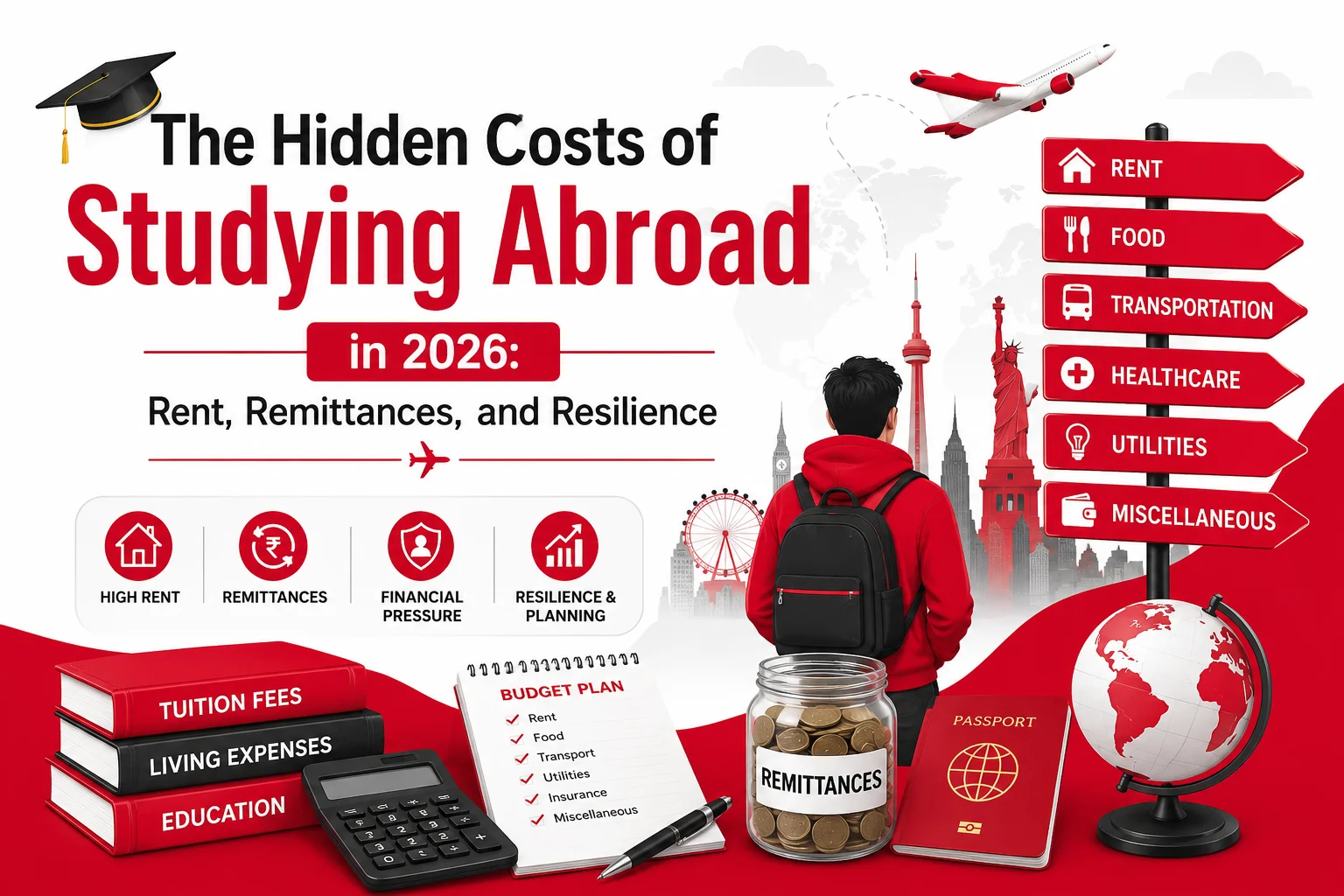
Studying abroad remains a dream for thousands of students who hope to earn international degrees, build successful careers, and gain valuable global exposure through study in USA. However, many students soon realize that tuition fees represent only a portion of the actual cost of overseas education. Living expenses such as rent, food, transportation, healthcare, and utility bills often place unexpected pressure on both students and their families.
Moreover, currency fluctuations and rising inflation can make financial planning even more difficult throughout the study period. Families frequently adjust household budgets, delay personal goals, and send additional financial support when unexpected expenses arise. As housing shortages and living costs continue increasing in major study destinations during 2026, students must prepare carefully for challenges beyond academics. Therefore, understanding the true cost of studying abroad is essential for making informed and sustainable decisions.
What do you understand by the growing gap between expectations and reality?
The growing gap between expectations and reality refers to the difference between what students believe their study-abroad experience will cost and what they actually face after arriving in a foreign country. Before departure, many students prepare budgets based mainly on tuition fees and estimated living expenses. However, reality often brings unexpected costs such as higher rent, utility bills, transportation expenses, healthcare charges, and rising food prices.
Students may also encounter housing shortages, currency fluctuations, and additional administrative fees that were not part of their original plans. As a result, their actual spending frequently exceeds initial expectations. This gap can create financial stress for both students and their families, who may need to provide additional support. Therefore, understanding this difference helps students prepare more realistically and manage the financial challenges of studying abroad more effectively.
Many students arrive expecting affordable student housing, only to discover limited availability and long waiting lists. Therefore, they must rent private accommodations that cost significantly more than anticipated. In several major education destinations, rental prices have increased steadily over recent years.
Students also face expenses related to setting up a new life. They must purchase bedding, kitchen supplies, winter clothing, study materials, and mobile phone plans. Although each expense may appear small, together they create a substantial financial burden during the first few months.
Furthermore, students often encounter administrative costs, including visa renewals, residence permits, health insurance requirements, and bank account fees. These expenses rarely receive the same attention as tuition costs during initial planning. As a result, many students realize that their original budget cannot fully support their actual living conditions.
Rent: The Largest Hidden Expense
Among all living expenses, rent often creates the greatest financial challenge for international students. Housing markets in popular study destinations have become increasingly competitive, making affordable accommodation difficult to secure.
Cities that attract large numbers of international students frequently experience housing shortages. Consequently, landlords can charge higher rents while offering limited choices. Students sometimes spend weeks searching for suitable accommodation after arriving in a new country.
In many cases, rent consumes nearly half of a student's monthly budget. Students who choose accommodation near universities usually pay premium prices because of convenience and reduced transportation costs. Meanwhile, those who live farther away save on rent but spend more time and money commuting.
Security deposits create another challenge. Many landlords require deposits equal to one or two months of rent before allowing students to move in. Therefore, students need substantial funds immediately after arrival.
Shared housing can reduce costs, but it introduces different difficulties. Students must adapt to varying lifestyles, schedules, and cultural expectations among roommates. While shared accommodation provides financial relief, it may also require compromise and patience.
Additionally, utility bills often increase overall housing expenses. Electricity, heating, internet, and water charges sometimes remain separate from rent agreements. During the winter months, heating expenses can significantly raise monthly living costs.
Consequently, rent remains one of the most underestimated and financially demanding aspects of studying abroad.
Food Costs Continue to Rise
Food represents another major expense that students frequently underestimate. Many arrive believing they can manage expenses through careful budgeting. However, local food prices often exceed expectations, especially in large metropolitan areas.
Eating at restaurants regularly can quickly drain a student's budget. Therefore, most international students learn to cook their own meals shortly after arrival. Home cooking generally reduces expenses, but grocery prices have increased in many countries during recent years.
Students also face challenges in finding familiar ingredients from their home countries. Imported products often cost more than locally available alternatives. As a result, students either spend additional money or adjust their eating habits.
Moreover, academic schedules sometimes limit opportunities for meal preparation. During examination periods, students may rely on convenience foods or takeout meals, increasing monthly spending.
Unexpected dietary requirements can further affect budgets. Students with allergies, religious dietary restrictions, or specific nutritional needs may spend more on specialized food products. Therefore, food costs require careful planning and consistent monitoring throughout the study period.
Transportation Adds Up Faster Than Expected
Transportation expenses may appear manageable at first glance, but they accumulate steadily over time. Students often underestimate how frequently they will need to travel within their host cities.
Daily commutes to universities, libraries, internships, and part-time jobs create recurring expenses. Although student discounts help reduce costs, transportation still represents a significant portion of monthly budgets.
Students living farther from campus often save money on rent but spend more on transportation. Consequently, they must balance housing affordability against commuting expenses and travel time.
In addition, many students explore nearby cities and tourist destinations during weekends and academic breaks. These experiences enrich their international education, but they also increase overall spending.
Unexpected transportation disruptions can create additional costs. Students sometimes rely on taxis or ride-sharing services when public transportation becomes unavailable or unreliable. Therefore, transportation expenses require realistic budgeting rather than rough estimation.
Healthcare Costs Often Surprise Students
Healthcare systems vary significantly across countries, and many international students struggle to understand these differences. While some destinations require mandatory health insurance, coverage levels often vary considerably.
Students sometimes assume that insurance will cover all medical expenses. However, certain treatments, medications, dental services, and specialist consultations may involve additional costs. Consequently, even insured students can face unexpected medical bills.
Mental health support has become increasingly important among international students: many experiences homesickness, academic pressure, and cultural adjustment challenges. Although counseling services exist in many institutions, access and coverage differ substantially.
Prescription medications can also create financial challenges. Students who require ongoing treatment may discover that medications cost more in their host countries than at home.
Furthermore, emergency medical situations can quickly generate significant expenses. Therefore, comprehensive financial preparation should always include healthcare considerations.
The Hidden Weight of Currency Fluctuations
Exchange rates rarely receive sufficient attention during study-abroad planning. Nevertheless, currency fluctuations can significantly affect family finances throughout a student's education.
Many families budget based on current exchange rates when students receive admission offers. However, exchange rates often change during multi-year degree programs. A weaker home currency can increase education costs substantially.
Families may find themselves sending larger amounts of money simply to maintain the same standard of living abroad. Consequently, financial pressure grows even when students maintain disciplined spending habits.
Students from developing economies often experience this challenge more intensely. Small changes in exchange rates can create considerable differences in monthly expenses.
Moreover, international money transfers may involve service charges and banking fees. These costs gradually increase the overall financial burden over time. Therefore, families should prepare for possible currency fluctuations rather than assuming stable exchange rates.
Remittances: The Family Sacrifice Behind Every Student
Behind many international students stands a family making extraordinary sacrifices. Parents frequently adjust their financial priorities to support educational goals abroad. Their contributions extend beyond tuition payments and often involve regular remittances for living expenses.
Some families reduce household spending to create additional funds for their children. Others postpone home renovations, business investments, or retirement plans. These sacrifices rarely appear in discussions about international education, yet they remain central to many student journeys.
Students often feel emotional pressure because they understand the financial commitment their families have made. Consequently, they work hard to succeed academically while managing financial responsibilities carefully.
In some cases, students take part-time jobs to reduce dependence on family support. While employment provides valuable experience, balancing work and academics can become challenging.
The emotional dimension of financial support deserves greater recognition. Remittances represent more than money. They reflect trust, hope, and collective family ambition. Therefore, studying abroad often becomes a shared achievement involving the efforts of entire families.
Part-time work is helpful but not always enough
-
Many students plan to offset living expenses through part-time employment. While this strategy can provide valuable support, reality often proves more complex than expected.
-
Finding suitable employment takes time, especially for newcomers unfamiliar with local labor markets. Students may face language barriers, limited work experience, or scheduling conflicts related to academic commitments.
-
Even when students secure jobs, earnings rarely cover all expenses. Rent alone can consume a substantial portion of monthly income in many study destinations. Therefore, employment often supplements family support rather than replacing it.
-
Work restrictions attached to student visas can further limit earning opportunities. Students must comply with regulations regarding working hours and employment conditions.
-
Moreover, balancing work and study requires discipline and effective time management. Excessive working hours can affect academic performance and overall well-being. Consequently, students should view part-time work as financial assistance rather than a complete solution.
The emotional cost of financial pressure
-
Financial challenges affect more than bank accounts. They also influence mental health, academic performance, and overall quality of life.
-
Students frequently compare their financial situations with those of their peers. Some can travel extensively, dine out regularly, and participate in social activities without concern. Others must monitor every expense carefully.
-
This difference can create feelings of isolation or frustration. Students sometimes decline social invitations because they cannot justify additional spending. Over time, these decisions may affect social integration and emotional well-being.
-
Financial stress can also reduce academic focus. Students worried about rent payments, upcoming bills, or family finances often struggle to concentrate fully on their studies.
-
Additionally, many students hesitate to discuss financial difficulties openly. They fear judgment or worry about burdening family members who are already making sacrifices. Therefore, financial resilience requires emotional resilience as well.
Building financial resilience abroad
-
Although hidden costs create challenges, students can take practical steps to manage them effectively. Preparation remains the most powerful tool for financial success abroad.
-
Students should research realistic living costs rather than relying solely on university estimates. Speaking with current students often provides more accurate insights into daily expenses.
-
Creating detailed monthly budgets helps track spending patterns and identify unnecessary expenses. Small savings achieved consistently can produce meaningful long-term benefits.
-
Emergency funds also play an important role. Unexpected expenses inevitably arise during international education journeys. Therefore, financial flexibility reduces stress and improves decision-making.
-
Students should learn basic financial skills, including banking, budgeting, and responsible credit management. These skills remain valuable long after graduation.
-
Furthermore, seeking support when challenges arise can prevent small problems from becoming larger crises. Universities often provide financial guidance, counseling services, and student support programs. Resilience grows through preparation, adaptability, and informed decision-making.
Looking beyond the price tag
-
The financial realities of studying abroad in 2026 are more complex than many students initially expect. Students can also explore practical guidance on the cost of studying abroad and budgeting before making their plans. Tuition fees represent only one part of a much larger picture. Rent, food, transportation, healthcare, currency fluctuations, and family remittances all contribute to the true cost of international education.
-
Nevertheless, students continue choosing this path because they value the opportunities that global education can provide. They gain academic knowledge, cultural understanding, professional networks, and personal growth that often shape their futures profoundly.
-
However, success requires realistic expectations. Students and families must understand the full financial commitment before making decisions. Honest planning allows them to prepare for challenges and avoid unnecessary stress.
-
The story of studying abroad involves more than classrooms and degrees. It includes family sacrifices, personal determination, and countless everyday decisions about managing limited resources wisely.
-
In the end, resilience becomes just as important as academic achievement. Students who learn to navigate financial challenges often develop confidence, independence, and problem-solving skills that serve them throughout their lives. Those lessons frequently become some of the most valuable outcomes of the entire international education experience.
Conclusion
Studying abroad in 2026 remains a valuable investment in education and personal growth, but students must understand that the actual cost extends far beyond tuition fees. Rising rent, increasing living expenses, healthcare costs, transportation charges, and currency fluctuations can place significant financial pressure on both students and their families. Moreover, regular remittances from home often reflect the sacrifices parents make to support their children's ambitions.
Despite these challenges, international students continue to demonstrate resilience by adapting to new environments, managing budgets, and balancing academic responsibilities with financial realities. Therefore, realistic planning, careful budgeting, and a clear understanding of hidden expenses are essential before beginning an overseas education journey. Proper preparation can help students make informed decisions and successfully navigate the financial challenges of studying abroad.
FAQs
Q.1 What are the hidden costs of studying abroad?
Ans. Hidden costs include rent, food, transportation, healthcare, insurance, utility bills, and currency exchange losses.
Q.2 Why is rent considered the biggest hidden expense?
Ans. Rent often consumes the largest portion of a student's monthly budget, especially in major study destinations.
Q.3 How do currency fluctuations affect international students?
Ans. Exchange rate changes can increase education and living costs for students and their families.
Q.4 What are remittances in the context of studying abroad?
Ans. Remittances are funds sent by families to support students living and studying overseas.
Q.5 Do part-time jobs cover all living expenses?
Ans. No, part-time jobs usually supplement income but rarely cover all expenses.
Q.6 Why do students often exceed their planned budgets?
Ans. Unexpected expenses such as housing deposits, healthcare costs, and higher living expenses increase spending.
Q.7 How can students reduce food expenses abroad?
Ans. Students can save money by cooking meals at home and planning grocery purchases carefully.
Q.8 Why is financial planning important before studying abroad?
Ans. Financial planning helps students prepare for both expected and unexpected expenses.
Q.9 How do hidden costs affect students emotionally?
Ans. Financial pressure can cause stress, anxiety, and difficulties in balancing academic and personal life.
Q.10 What is the key lesson from studying abroad in 2026?
Ans. Success requires not only academic preparation but also financial awareness, adaptability, and resilience.




Leave a Comment
Your email address will not be published.