
National Education Day: Honoring Maulana Abul Kalam Azad and India's Educational Journey
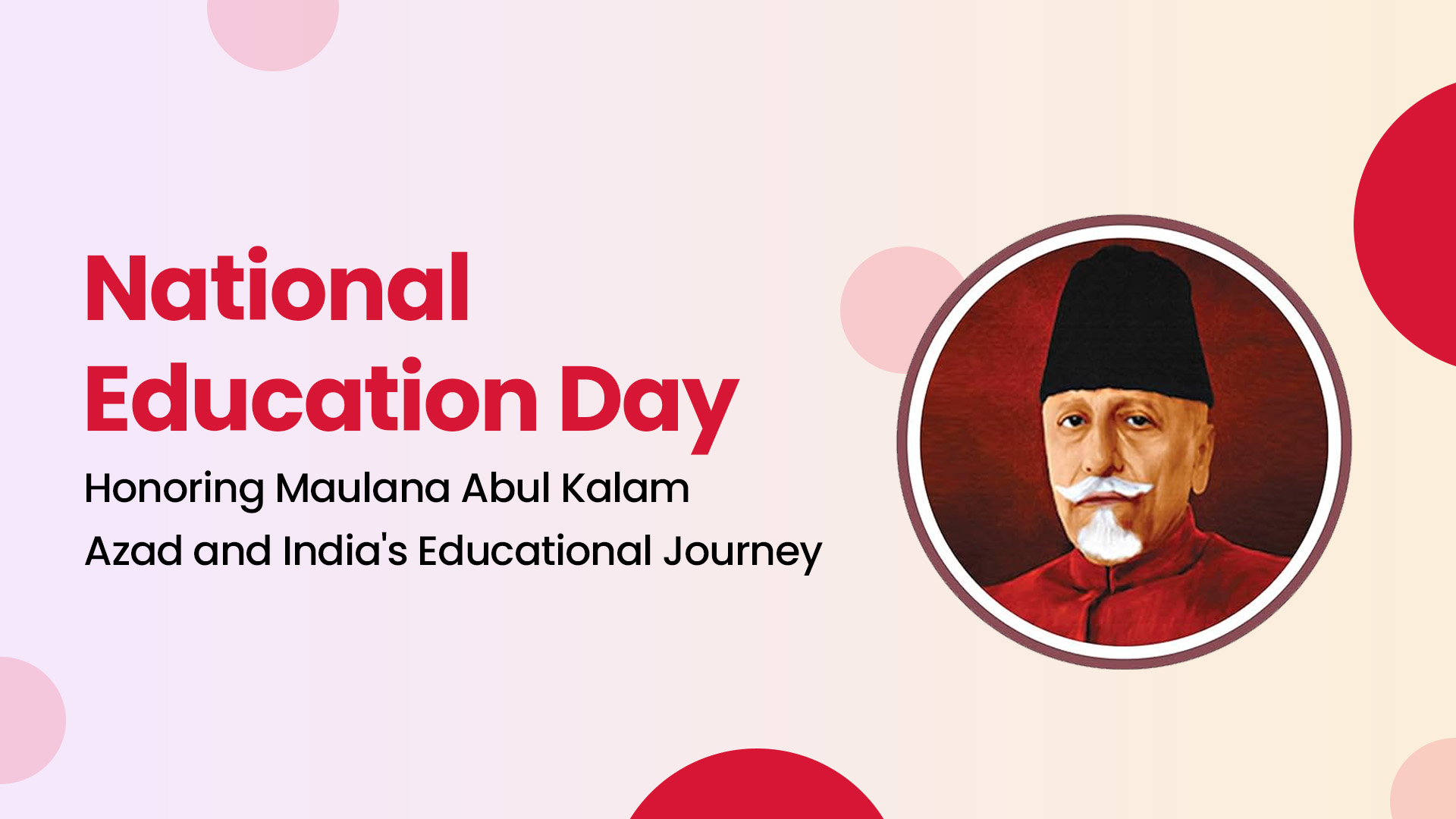
Education is the cornerstone of any progressive society. India's cultural and historical background strongly influences the role that education will play in determining the country's destiny. Every year on November 11, National Education Day is observed to commemorate the accomplishments of India's first Minister of Education, Maulana Abul Kalam Azad. This day serves as a reminder of the importance of education and the need to strengthen the nation's educational foundations.
The following blog explores Maulana Azad's legacy, the historical importance of National Education Day, and the changing face of the Indian educational system.
Who was Maulana Abul Kalam Azad?
Maulana Abul Kalam Azad (1888–1958) was an eminent freedom fighter, scholar, writer, and senior leader of the Indian National Congress. He was a key figure in the fight for Indian independence and served as the country's first minister of education from 1947 to 1958.
Azad was a strong supporter of women's schooling. inclusive elementary education, and an analytical mindset. He believed that no nation could progress without an educated population. He coordinated the establishment of several important educational bodies and initiatives, many of which still have an impact on India's educational system today.
Why is National Education Day celebrated?
To commemorate Maulana Azad's birth anniversary and his enormous impact on the creation of nations via higher education, the Ministry of Human Resource Development, which is currently the Ministry of Education, designated November 11 as National Education Day in 2008.
Key Objectives of National Education Day:
- To honour Maulana Azad's contributions as a trailblazing educator.
- To highlight the importance of education in national development.
- To reflect on educational policies, achievements, and challenges.
- To promote literacy, awareness, and innovation in educational practices.
Who Inaugurated the Celebration?
The inaugural celebration of National Education Day was held at Vigyan Bhawan, New Delhi, in 2008. It was ceremoniously inaugurated by then-President Pratibha Patil marking a formal acknowledgment of Azad’s foundational role in shaping post-independence education.
Year‑Wise Themes
Here’s a glimpse into the evolving themes that have steered the focus of National Education Day celebrations year after year-
|
Year |
Theme |
Focus Area |
Inaugurated By |
|
2022 |
Changing Course, Transforming Education |
Adapting the education system to modern times |
Dharmendra Pradhan, Union Education Minister |
|
2023 |
Embracing Innovation |
Encouraging creative and progressive teaching |
President Droupadi Murmu |
|
2026 |
Celebrating 4 Years of NEP 2020 |
Reflecting on progress and strengthening implementation |
Prime Minister Narendra Modi (via video message); Dharmendra Pradhan (officially led the event) |
Highlights of each year-
· The 2026 theme highlighted the 4-year milestone of NEP 2020 with a focus on reviewing its achievements and pushing forward digital transformation, teacher training, and multilingual education.
· From 2023 onwards, there's no single national theme mandated every year, so schools, colleges, and universities often create their own contextual themes in alignment with NEP goals.
· In 2026, the NEP anniversary celebrations included exhibitions, seminars, and workshops organized under the Ministry of Education in collaboration with AICTE, NCERT, and UGC.
Significance of the National Education Day-
- Honoring a Visionary: Maulana Azad was a formidable champion of universal primary education, especially for girls, and a driving force behind free and compulsory education for children under 14.
- Legacy of Institution‑Building: He laid the groundwork for institutions such as the University Grants Commission (UGC), All India Council for Technical Education (AICTE), Indian Institutes of Technology (IITs), and others.
- Renewal & Reflection: It serves as a moment to assess progress and envision transformative educational policies that can drive India forward.
Maulana Azad's contribution to Indian Education-
Founding Educational Institutions
Maulana Azad had a key role in the founding of prestigious educational establishments, including-
- Indian Institute of Technology (IIT)
- University Grants Commission (UGC)
- Indian Council for Cultural Relations (ICCR)
- Sahitya Akademi
These institutions laid the groundwork for India's focus on technical, cultural, and literary education.
Universal Primary Education
Azad strongly advocated for compulsory and free primary education for children up to the age of 14. He believed that an uneducated population would be a hindrance to democratic governance.
Emphasis on Women's Education
He pushed for increased access to education for girls and women, recognizing the role of women in shaping future generations.
Encouragement of Scientific Temperament
In order to make India independent and successful on a worldwide scale, Azad promoted science and technology education. He emphasized research, innovation, and modernization in curricula.
Adult Literacy Campaigns
He launched several campaigns to combat adult illiteracy and bring the light of knowledge to all strata of society.
What is the celebration of National Education Day?
To commemorate National Education Day, educational institutions in India host a variety of activities and events.
These include:
- Seminars and workshops- Topics often focus on educational reforms, digital learning, the National Education Policy (NEP), and Maulana Azad's contributions.
- Debates and essay competitions- Students participate in inter-school and college-level debates, quizzes, and essay competitions related to education and Azad’s legacy.
- Cultural programs- Schools and colleges showcase plays, songs, and skits inspired by Azad’s life, promoting awareness and patriotic values.
- Teacher felicitation- Outstanding educators are honoured for their contributions to the teaching profession and innovation in pedagogy.
- Awareness campaigns- NGOs and local authorities conduct literacy drives and campaigns in rural and underprivileged areas.
A look over India's education journey since independence-
Since gaining independence in 1947, India has made significant strides in expanding and improving its education system. Here’s a snapshot of the progress:
- Growth in institutions- India now boasts:
- Over 1,000 universities
- Around 42,000 colleges
- More than 15 lakh schools
This growth reflects the nation’s commitment to making education more accessible.
- Literacy rate improvement- From a literacy rate of 18% in 1951, India has grown to approximately 77.7% (as per the 2022 NSO data).
- Right to Education (RTE) Act- The RTE Act (2009) guarantees free and compulsory education for children aged 6 to 14, a milestone in making education a fundamental right.
- Digital learning revolution- Government initiatives like Diksha, SWAYAM, and PM eVIDYA have accelerated digital learning, especially post-COVID-19.
What difficulties does the Indian educational system still face?
Despite advancements, some obstacles still exist:
- Access and equity- Students from rural, tribal, and marginalized communities still struggle with access to quality education.
- Dropout rates- High dropout rates at the secondary level remain a concern, especially among girls.
- Teacher shortages- India faces a shortage of trained teachers, affecting the quality of education.
- Infrastructure gaps- Many schools lack basic infrastructure like clean toilets, libraries, and digital facilities.
- Learning outcomes- Despite increased enrollment, learning levels remain low in basic literacy and numeracy, as seen in various ASER reports.
Vision for the Future of Indian Education
India is poised to become a global leader in education with the right mix of policy, innovation, and public-private partnerships. The future vision includes:
- Universal digital access to bridge the urban-rural divide.
- The use of AI and other technologies in the classroom.
- Global collaborations with foreign universities.
- Increased investment in research and development.
- A strong focus on value-based education, blending tradition and modernity.
Maulana Abul Kalam Azad's quotes on education reveal his strong conviction in the transformational potential of learning-
“Education imparted by heart can bring revolution in society.”
“Climbing to the top demands strength, whether it is to the top of Mount Everest or to the top of your career.”
“You have to dream before your dreams can come true.”
Conclusion
National Education Day is more than a tribute to a great leader; it's a reaffirmation of our collective responsibility to ensure that every child in India receives quality education. National Education Day honours Maulana Abul Kalam Azad's groundbreaking commitment to the development of Indian education. Celebrated on November 11, it honours his unwavering belief in inclusive, quality education for all. This day reminds us of the transformative power of education in nation-building and inspires students, educators, and policymakers to continue striving for an enlightened, progressive India. Let us uphold his legacy by fostering knowledge, equity, and innovation in every classroom across the nation.
FAQS on National Education Day-
Q.1 When does India commemorate National Education Day?
Ans- The annual National Education Day is observed on November 11.
Q.2 Why is November 11 observed as National Education Day?
Ans- The very first Education Minister of India, Maulana Abul Kalam Azad, was born on this day.
Q.3 Who was Maulana Abul Kalam Azad?
Ans- He was a freedom fighter, scholar, and the first Minister of Education in independent India (1947–1958).
Q.4 What was Maulana Azad’s major contribution to Indian education?
Ans- He laid the foundation for IITs, UGC, and cultural institutions and promoted universal education and women’s literacy.
Q.5 When was National Education Day officially declared?
Ans- A formal announcement was made in 2008 by the Ministry of Human Resource Development, which is currently the Ministry of Education.
Q.6 How is National Education Day celebrated in schools and colleges?
Ans- In schools and colleges, this day is celebrated through conducting debates, essay competitions, seminars, cultural programs, and awareness drives on education.
Q.7 What was Maulana Azad's vision for education?
Ans- He believed in universal, inclusive, and quality education for all, especially emphasizing girls' and adult education.
Q.8 What institutions did Maulana Azad help establish?
Ans- He helped establish IITs, UGC, Sahitya Akademi, ICCR, and the Indian Institute of Science development.
Q.9 How does National Education Day connect to the National Education Policy (NEP) 2020?
Ans- Both emphasize accessibility, quality, innovation, and holistic education, aligning with Azad’s ideals.
Q.10 What is the significance of National Education Day for students?
Ans- It reminds students of the power of education, inspires them to learn and lead, and honours India’s educational heritage.
Author
Sakshi Taneja
Content Writer & International Education Specialist
Sakshi Taneja is a content writer specializing in international education, study abroad opportunities, university admissions, student visas, scholarships, and career guidance. She creates accurate, research-driven, and student-focused content to help aspiring international students make informed decisions about their global education journey.
Comments (0)
No comments yet
Be the first to share your thoughts!
Contact Details
Please provide your contact information
Free Counselling
Similar Blogs

Top 10 Universities in Germany
9/21/2026

How to become a great Communicator?
2/26/2026

Preparing for TOEFL Speaking Scoring section: Key Skills and Practice Techniques
11/3/2025

Educational loan for study abroad: Everyone Should Know in 2026
11/3/2025

Form I-20 Explained: Start Your U.S. Study Journey with Confidence
10/27/2025
Have a question about GMAT?
Want some help figuring out what kind of prep service is right for you?
Help and Support
Leave a Comment
Your email address will not be published.