
The University of Melbourne
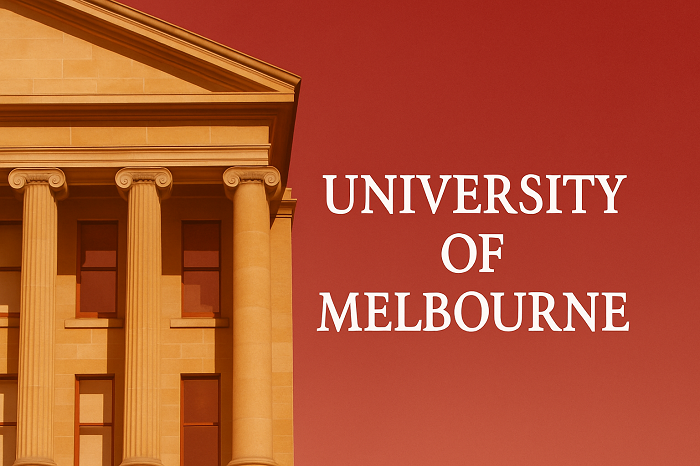
The University of Melbourne, located in the heart of Australia’s cultural capital, stands as one of the most prestigious institutions of higher education in the world. Founded in 1853, it has grown into a vibrant hub of academic excellence, cutting-edge research, and global partnerships. Whether you're planning to pursue undergraduate or postgraduate studies, the University of Melbourne offers a diverse range of courses across numerous disciplines.
In this blog, we will explore everything you need to know about the University of Melbourne — including subject details, a list of colleges under the university, required documents, and entrance exams for admission.
Overview of the University of Melbourne-
The University of Melbourne is one of Australia’s most prestigious and oldest higher education institutions, globally recognized for its academic excellence, impactful research, and vibrant campus culture. It is located in Parkville, a suburb north of Melbourne’s Central Business District. Moreover, the University of Melbourne is Australia's second-oldest university. It is a member of the Group of Eight (Go8), a coalition of Australia’s leading research-intensive universities.
Highlights of the University of Melbourne-
- It is ranked among the top 50 universities globally.
- #1 in Australia for academic reputation and graduate employability.
- The University of Melbourne is popular for its research excellence and innovative teaching.
- It comes under the public university.
- This university is known for the Melbourne Model, a unique, internationally aligned degree structure.
- It is home to Nobel Laureates, Rhodes Scholars, and global thought leaders.
- It has been made partnership with top institutions like Oxford, Cambridge, Stanford, and Harvard.
Why Choose the University of Melbourne?
- World-class education and globally ranked programs.
- Globally diverse student body; significant focus on critical thinking, creativity, and research.
- Financial assistance and scholarship opportunities for overseas students.
- Beautiful urban campus in one of the world’s most livable cities.
Whether you’re an aspiring scientist, artist, entrepreneur, or global leader, the University of Melbourne offers the perfect environment to challenge yourself, grow academically, and make a global impact.
Global Rankings and Reputation-
The University of Melbourne consistently ranks among the top universities worldwide and is recognized for its strong research output and high-quality teaching. Its strong academic and research performance, global outlook, and employer reputation make it a prestigious choice for students around the globe.
Global Rankings (2026):
- QS World University Rankings: #14
- Times Higher Education (THE): #34
- AWRU (Academic Ranking of World Universities): #35
The institution is especially well-known in fields including finance, engineering, law, healthcare, and artistic endeavors.
Academic Structure and Degree Programs-
The unique "Melbourne Model," which divides undergraduates and graduate schooling, is provided by the University of Melbourne. Students begin with a broad undergraduate degree and specialize through graduate studies.
Undergraduate Degrees:
- Bachelor of Arts
- Bachelor of Biomedicine
- Bachelor of Commerce
- Bachelor of Design
- Bachelor of Science
- Bachelor of Fine Arts
- Bachelor of Music
Graduate Degrees:
- Doctor of Medicine (MD)
- Juris Doctor (JD)
- Master of Engineering
- Master of Architecture
- Master of Teaching
- Master of Business Administration (MBA)
Research Degrees:
- Master of Philosophy (MPhil)
- Doctor of Philosophy (PhD)
A list of universities affiliated with the University of Melbourne-
There are 10 residential colleges affiliated with the university, such as Trinity College, Ormond College, and Queen’s College. These provide not just accommodation but also academic support, cultural activities, and a strong sense of community.
Residential Colleges:
- Ormond College
- Trinity College
- Janet Clarke Hall
- Queen's College
- University College
- International House
- St. Hilda’s College
- Medley Hall
- Whitley College
- Newman College
Academic Faculties and Graduate Schools:
- Faculty of Architecture, Building and Planning
- Faculty of Arts
- Faculty of Business and Economics (Melbourne Business School)
- Melbourne Conservatorium of Music
- Melbourne Graduate School of Education
- Melbourne Law School
- Faculty of Engineering and Information Technology
- Medical, Dental, and Medical Sciences Institute
- Faculty of Science
- Faculty of Veterinary and Agricultural Sciences
Subject Details and Popular Courses-
Here’s a closer look at the core subjects and their associated programs.
Arts and Humanities-
- Literature, History, Philosophy
- Languages and Linguistics
- Cultural Studies, Political Science
- Popular Course: Bachelor of Arts
Business and Economics
- Finance, Marketing, Economics, Accounting
- MBA, Master of Management, Master of Finance
- Popular Course: Master of Business Administration (MBA)
Engineering and IT-
- Civil, Mechanical, Electrical, and Software Engineering
- AI, Cybersecurity, Data Science
- Popular Course: Master of Engineering
Health and Medicine-
- Biomedicine, Dentistry, Public Health, Nursing
- Doctor of Medicine (MD), Doctor of Dental Surgery
- Popular Course: Doctor of Medicine
Law-
- Juris Doctor (JD)
- Master of Laws (LLM), Legal Research
- Popular Course: Juris Doctor
Science-
- Physics, Chemistry, Mathematics, Environmental Science
- Bachelor and Master of Science
- Popular Course: Master of Science in Data Science
Architecture and Design-
- Urban Planning, Architecture, Design Thinking
- Popular Course: Master of Architecture
Eligibility Criteria for International Students to get admission to the University of Melbourne-
International students must meet academic, language proficiency, and program-specific requirements to gain admission to undergraduate or postgraduate programs at the University of Melbourne.
Academic Qualifications-
For Undergraduate Programs-
- Completion of Year 12 or equivalent from a recognized board or institution.
- Accepted qualifications include:
- International Baccalaureate (IB)
- A-Levels (Cambridge/Edexcel)
- Advanced Placement (AP)
- Indian CBSE/ICSE or State Boards (with specific minimum scores)
- Australian Year 12 or equivalent
Note: Minimum academic scores vary by program. Competitive courses such as Law, Medicine, and Commerce require higher scores.
For Postgraduate Programs-
- The corresponding function of a bachelor's degree from an accredited university.
- A minimum GPA is equivalent to Australian standards (usually 65% or higher).
- Some programs may require:
- Relevant work experience
- Research proposal
- Portfolio (for design or arts-based courses)
English Language Proficiency-
Students from other countries must take one of the recognized examinations listed below to prove their English proficiency-
|
Test |
Minimum Overall Score |
|
IELTS (Academic) |
6.5 (no band below 6.0) |
|
TOEFL iBT |
79–94 (depending on the course) |
|
PTE Academic |
58–64 (no communicative skill below 50) |
|
Cambridge C1 Advanced |
176–185 |
|
Cambridge C2 Proficiency |
180–185 |
Moreover, some courses, such as Law, Education, and Health Sciences, may require higher English scores.
Course-Specific Prerequisites-
Many programs have additional subject requirements. For example-
- Engineering: Advanced Math and/or Physics
- Biomedicine: Biology and Chemistry
- Commerce: Mathematics
- Fine Arts: Portfolio or audition
Additional Requirements (If Applicable)-
Program-specific requirements may also require students to submit-
- Resume/CV
- Statement of Purpose (SOP)
- Letters of Recommendation (LORs)
- Research proposal (for PhD/MPhil)
- Interview or portfolio (for Fine Arts, Music, Design)
Visa Requirements-
After receiving the Confirmation of Enrolment (CoE), students must apply for an Australian Student Visa (Subclass 500).
Visa requirements include:
- Valid passport
- CoE from the university
- English language proof
- Financial documents
- Overseas Student Health Cover (OSHC)
Age Requirements-
- Students must be at least 17 years old at the time of course commencement.
- Some graduate programs may have age-related restrictions or work experience criteria.
Required Documents for Admission-
Undergraduate Application:
- Academic transcripts from high school
- English proficiency test scores (IELTS, TOEFL, or PTE)
- Passport copy
- Statement of purpose or personal statement
- Letters of recommendation (optional)
- Portfolio (for design/music applicants)
- Application fee receipt
Graduate Application:
- Bachelor’s degree certificate and transcripts
- CV/Resume (especially for MBA, JD, MD)
- Statement of purpose
- Letters of recommendation (2-3)
- IELTS/TOEFL/PTE scores
- GRE/GMAT scores (required for some courses like MBA)
- Work experience documents (if applicable)
Application Process to get admission in the University of Melbourne-
- Choose Your Course: Browse the University of Melbourne course finder on their official website.
- Check Eligibility: Confirm academic and English language requirements for your selected program.
- Prepare Documents: Collect academic records, test scores, and supporting documents.
- Apply Online: Submit your application via the university’s online portal or through an authorized agent.
- Pay the Application Fee: $100 (subject to change)
- Wait for Outcome: You will receive an offer letter (conditional/unconditional) if selected.
- Accept Offer: Fulfill any conditions and accept your offer.
- Subclass 500 Student Visa Application: Apply for a student visa using your Confirmation of Enrolment (CoE).
Scholarships and Financial Aid-
Merit-Based Scholarships:
- Melbourne International Undergraduate Scholarship.
- Melbourne Graduate Scholarship.
- Research Training Program (RTP) Scholarship.
- Melbourne Chancellor’s Scholarship.
Need-Based and Regional Scholarships:
- International PG Scholarship for ASEAN Students.
- Humanitarian Access Scholarship.
Funding Coverage May Include:
- Full or partial tuition.
- A living expense that can reach $34,400 annually.
- Relocation grants.
- Overseas Student Health Cover (OSHC).
International Opportunities-
As a truly international institution, the university offers numerous exchange programs, global internships, and joint research initiatives with universities across Europe, Asia, and North America.
Research and Innovation-
The University of Melbourne is a research powerhouse, producing breakthrough discoveries in medicine, technology, social sciences, and environmental science. It partners with governments, NGOs, and private industry to address global challenges.
Career Outcomes-
Graduates are highly sought after by employers worldwide. The university’s career services, internships, and networking opportunities give students a competitive edge in the global job market.
Campus Life and Facilities at the University of Melbourne-
The University of Melbourne offers a vibrant and enriching campus life that extends far beyond academics. Students can join over 200 clubs and societies, engage in cultural festivals, and access state-of-the-art facilities, including libraries, labs, studios, and sports centers. With its beautiful architecture, diverse community, and world-class facilities, students have access to everything they need to thrive academically, socially, and personally.
- Campus locations- The university has multiple campuses, with the Parkville Campus being the main one located just minutes from Melbourne's central business district. Each campus is well-connected and has modern infrastructure, green spaces, and a lively atmosphere. Other campuses include-
§ Southbank – For Fine Arts and Music (Victorian College of the Arts)
§ Burnley – Specializing in horticulture
§ Creswick and Dookie – For agricultural and environmental research
§ Werribee – Veterinary sciences
- Student Housing: The university provides a range of partner and on-campus housing options, including-
§ University-affiliated colleges (e.g., Trinity, Ormond, Queen’s)
§ University Apartments and Residential Halls
§ Fully furnished options with meal plans, 24/7 support, and community events
v Features include accommodation facilities-
o Study lounges and communal kitchens
o Fitness centers
o Social spaces and game rooms
o Events to promote student bonding
- Libraries and Study Spaces- The University of Melbourne boasts 11 libraries, including:
§ Baillieu Library (main library with extensive resources)
§ Giblin Eunson Library (Business and Economics)
§ Brownless Biomedical Library
v Facilities include:
o Quiet and collaborative study zones.
o Group project rooms.
o Printing and scanning stations.
o Extended exam-time hours.
o Millions of books, periodicals, and online databases are available.
- Labs, Workshops, and Innovation Hubs- State-of-the-art facilities for hands-on learning and research:
§ Science and Engineering labs.
§ Medical training simulators.
§ FabLab and Maker Spaces for prototyping and design.
§ Melbourne Accelerator Program (MAP) for student entrepreneurs.
§ Innovation District: Collaboration hub with industry leaders and startups.
- Sports and Recreation- The university supports a healthy, active lifestyle through-
§ Melbourne University Sport (MU Sport): Gym, pool, courts, and classes.
§ More than 40 sports clubs, from cricket and soccer to fencing and ultimate frisbee.
§ Participation in inter-university and international sports competitions.
v Facilities:
o Indoor and outdoor courts.
o Fitness classes (yoga, pilates, HIIT).
o Personal training and wellness services.
- Catering and Coffee shops: There are several restaurants spread around each campus.
§ Cafés, juice bars, salad bars, and multicultural food options
§ Vegan, vegetarian, halal, and gluten-free choices
§ Union House food court – central hub for student meals
§ Farmer’s markets and pop-up food trucks during special events
- Arts, Culture, and Events-
§ The campus's Ian Potter Museum of Art and Melbourne Theatre Company.
§ Weekly events, open lectures, film screenings, and cultural showcases.
- Student Clubs and Societies- Over 200 student-run clubs and societies, including-
§ Academic clubs (Law, Engineering, Economics).
§ Cultural clubs (Indian Students’ Society, Chinese Students and Scholars Association).
§ Photography, chess, anime, and technology are examples of social and recreational organizations.
§ Advocacy groups (Environmental activism, LGBTQIA+ support).
§ Melbourne University Student Union (UMSU) hosts major events and offers student representation.
- Career and Academic Support-
§ Stop 1 Student Services Hub – One-stop support for enrolment, finance, visas, and academic queries.
§ Academic Skills Hub: Workshops on writing, research, and time management
§ Careers and Employability Service-
§ Resume reviews
§ Interview prep
§ Industry networking events
§ Internship placements and job boards
- International Student Support-
§ Orientation Week (O-Week) is specifically designed for international students.
§ Language and academic bridging programs.
§ Visa and immigration assistance.
§ Buddy programs and mentoring schemes.
§ Multicultural events that help ease the transition and build global friendships.
- Transport and Accessibility- Located in the heart of Melbourne, well-connected by
§ Trams and buses (University has its tram stop.
§ Bike paths and secure parking.
§ Students enjoy discounted public transportation with Myki cards.
Conclusion-
The University of Melbourne offers a world-class education backed by top-tier faculty, state-of-the-art facilities, and a robust international community. With its distinctive Melbourne Model, the university not only prepares students for academic success but also equips them with the skills necessary for a global career.
Whether you aim to study medicine, law, engineering, or the arts, the University of Melbourne provides the ideal environment to nurture your aspirations. International students are welcomed with comprehensive support, generous scholarships, and vibrant campus life, making Melbourne one of the best destinations for higher education. If you are planning to apply, make sure to prepare your documents early, meet all entrance requirements, and stay updated with deadlines. A bachelor's or master's degree from the University of Melbourne is a life-changing experience rather than merely a credential.
FAQs on the University of Melbourne-
Q.1 Where is the University of Melbourne located?
Ans- The University of Melbourne’s main campus is in Parkville, just north of Melbourne’s Central Business District in Victoria, Australia.
Q.2 How highly is the University of Melbourne ranked in the world?
Ans- As of 2026, it ranks #14 in the QS World University Rankings and consistently places among the top 40 universities globally.
Q.3 What courses is the University of Melbourne known for?
Ans- It is renowned for courses in Medicine, Law, Business, Engineering, Arts, and Science.
Q.4 Does the University of Melbourne offer scholarships for international students?
Ans- Yes, it offers a wide range of merit-based and need-based scholarships for both undergraduate and postgraduate international students.
Q.5 What is the minimum IELTS score required for admission?
Ans- In general, a total score of 6.5 is necessary, with no band falling below 6.0. Higher scores can be needed for some programs.
Q.6 How many colleges are under the University of Melbourne?
Ans- There are 10 residential colleges affiliated with the university, including Trinity College, Ormond College, and International House.
Q.7 What is the Melbourne Model of Education?
Ans- The Melbourne Model includes broad undergraduate degrees followed by specialized graduate programs, similar to systems in the U.S. and Europe.
Q.8 Is work experience required for admission into MBA or Law programs?
Ans- Yes, programs like the MBA and Juris Doctor typically require relevant work experience and strong academic performance.
Q.9 Can international students work while studying?
Ans- Yes, international students on a student visa (subclass 500) can work up to 48 hours per fortnight during the semester.
Q.10 How do you apply to the University of Melbourne?
Ans- You can apply online through the University of Melbourne’s application portal or via an authorized education agent.
Author
Sakshi Taneja
Content Writer & International Education Specialist
Sakshi Taneja is a content writer specializing in international education, study abroad opportunities, university admissions, student visas, scholarships, and career guidance. She creates accurate, research-driven, and student-focused content to help aspiring international students make informed decisions about their global education journey.
Comments (0)
No comments yet
Be the first to share your thoughts!
Contact Details
Please provide your contact information
Free Counselling
Similar Blogs

Top 10 Universities in Germany
9/21/2026

How to become a great Communicator?
2/26/2026

Preparing for TOEFL Speaking Scoring section: Key Skills and Practice Techniques
11/3/2025

Educational loan for study abroad: Everyone Should Know in 2026
11/3/2025
Form I-20 Explained: Start Your U.S. Study Journey with Confidence
10/27/2025
Have a question about GMAT?
Want some help figuring out what kind of prep service is right for you?
Help and Support
Leave a Comment
Your email address will not be published.