
Top Most English idioms that everyone should know
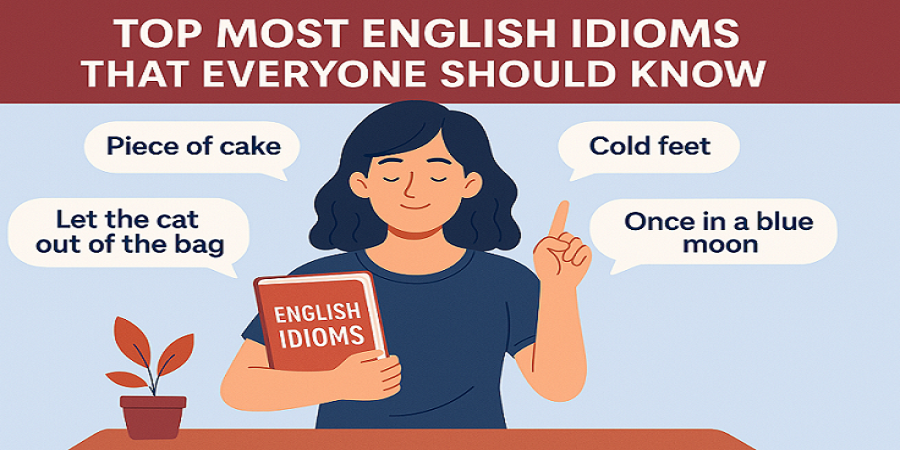
English phrases, proverbs, and idioms are significant in daily life. They are frequently encountered in both spoken and written English. You must become familiar with the meaning and usage of each idiom because they don't always make sense when taken literally.
Learning idioms is crucial to becoming proficient in any language, especially English. They give colour, expressiveness, and inventiveness to regular conversations. Knowing common English idioms can significantly increase your fluency, whether studying for tests, job interviews, or improving your communication abilities.
This blog will discuss the most common English idioms that everyone should be aware of, along with definitions, examples, and advice on how to use them correctly.
Which are the popular English Idioms?
1. Break the Ice-
- Meaning: Discuss in a social setting, particularly with people you don't know.
- Example: The host cracked a joke to break the ice at the party.
2. Hit the Nail on the Head-
- Meaning: To pinpoint the precise cause of a circumstance or issue.
- Example: When she said lack of communication was the reason for the failure, she hit the nail on the head.
3. A Piece of Cake
- Meaning: An effortless task.
- Example: The math test was a piece of cake for her.
4. Under the Weather-
- Describes- Feeling ill or ill.
- Example: I will skip the meeting because I'm feeling ill today.
5. Once in a Blue Moon -
- Meaning: An extremely uncommon occurrence.
- Example: He only visits his hometown once in a blue moon.
6. Spill the Beans-
- Meaning: To inadvertently divulge a secret.
- Example: She spilled the beans about the surprise party.
7. Cost an Arm and a Leg-
- Meaning: Something that is extremely costly.
- Example: The designer dress cost an arm and a leg.
8. Bite the Bullet
- Meaning: To put up with an unpleasant or difficult circumstance.
- Example: He decided to bite the bullet and accept the tough assignment.
9. Burn the Midnight Oil-
- Meaning: To work late into the night.
- Example: She burned the midnight oil to finish the project on time.
10. Miss the Boat-
- Meaning: To pass up a chance.
- Example: I wanted to apply for that job but missed the boat.
11. Kill Two Birds with One Stone-
- Meaning: Use a single action to complete two tasks.
- Example: By cycling to work, he kills two birds with one stone – staying fit and saving money.
12. Break a Leg-
- Significance: A method of wishing someone luck.
- Example: Have a great time before tonight's big show.
13. Bite Off More Than You Can Chew-
- Meaning: Taking on more duties than one is capable of managing.
- Example: He bit off more than he could chew by accepting two jobs simultaneously.
14. Hit the Sack-
- Meaning: To go to bed.
- Example: I am getting worn out; I must hit the sack now.
Conclusion
Learning idioms is an enjoyable way to enhance your English language skills. They add flavour to your speech and make you sound more like a native speaker. You can express yourself more creatively and confidently by practising these common idioms.
FAQs on Top Most English Idioms
Q.1 What is an idiom in English?
Ans- An idiom is a phrase or expression whose literal meaning differs from its word's meaning.
Q.2 Why are idioms essential in English?
Ans- Idioms make conversations more natural, expressive, and engaging, helping speakers sound more fluent.
Q.3 How can I learn idioms quickly?
Ans- Practice using idioms in daily conversations, write them down, and associate them with real-life situations.
Q.4 Are idioms used in formal writing?
Ans- Idioms are more common in spoken and informal writing but can be used appropriately in formal writing.
Q.5 What is the most common idiom in English?
Ans- "Break the Ice" and "A Piece of Cake" are among English idioms.
Q.6 Can idioms have different meanings in different cultures?
Ans- Yes, idioms can vary in meaning and usage across different cultures and languages.
Q.7 How many idioms should I learn to sound fluent?
Ans- Learning 50-100 commonly used idioms can significantly improve your fluency.
Q.8 Do idioms change over time?
Ans- Some idioms become outdated while new ones emerge with language evolution.
Q.9 Are idioms the same in British and American English?
Ans- Some idioms differ between British and American English, although many are used in both.
Q.10 Can idioms be used in business English?
Ans- Yes, idioms like "hit the nail on the head" and "bite the bullet" are frequently used in business communication.
Author
Sakshi Taneja
Content Writer & International Education Specialist
Sakshi Taneja is a content writer specializing in international education, study abroad opportunities, university admissions, student visas, scholarships, and career guidance. She creates accurate, research-driven, and student-focused content to help aspiring international students make informed decisions about their global education journey.
Comments (0)
No comments yet
Be the first to share your thoughts!
Contact Details
Please provide your contact information
Free Counselling
Similar Blogs

Top 10 Universities in Germany
9/21/2026

How to become a great Communicator?
2/26/2026

Preparing for TOEFL Speaking Scoring section: Key Skills and Practice Techniques
11/3/2025

Educational loan for study abroad: Everyone Should Know in 2026
11/3/2025

Form I-20 Explained: Start Your U.S. Study Journey with Confidence
10/27/2025
Have a question about GMAT?
Want some help figuring out what kind of prep service is right for you?
Help and Support
Leave a Comment
Your email address will not be published.