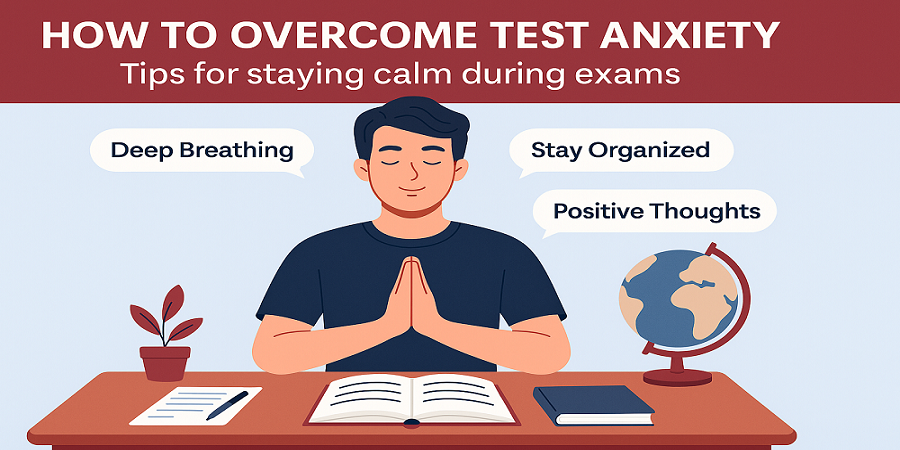
A prominent problem that impacts individuals of any age is test anxiety. The stressful environment of an exam setting, the expectation for doing well, and the worry of failing can all contribute to anxiety, poor focus, as well as physical signs like nausea and migraines. But you can control your test anxiety and do your best work if you use the correct techniques. This blog examines valuable strategies for reducing test anxiety and maintaining composure during examinations.
A psychological disorder known as test anxiety causes people to feel extremely distressed and anxious either before or during an exam. There are three primary ways it can appear-
Test anxiety usually shows up as a mix of mental and physical symptoms that might make it difficult to focus or perform effectively. The first step to successfully controlling test anxiety is identifying these signs.
It is expected to feel anxious before an exam, which can help you concentrate and sharpen your intellect. However, stress and insecurity can prevent you from performing well on examinations and leave you unhappy if you have test anxiety. Everyone can experience test anxiety, whether a high school or elementary school student, a college student, or an employer who must take tests to advance in their work or obtain certification. You can take the following steps to assist reduce your test anxiety-
Be well-prepared: The worry of being unprepared is a major contributor to test anxiety. Establishing a productive study schedule might help you feel more confident and less stressed.
This will help you feel less anxious while you take tests. A well-planned study timetable guarantees enough time to go over every subject without being overburdened.
Techniques for Time Management
Your school might have study skills courses or other materials that teach you test-taking strategies and study techniques. Regularly studying and practicing the content on an exam will help you feel more at ease.
It is far preferable to study gradually rather than all at once. Additionally, to help you remember the material you'll need on test day, spend your study time in the exact location of your test or somewhere similar. It can also be beneficial to study in different places.
Practice relaxation methods that may assist you in thinking better and reducing anxiety before and throughout tests.
Establish a reliable pretest schedule. Find what works for you and stick to it every time you prepare for an exam. This can help you feel less stressed and ensure that you're ready.
Consult your instructor- Make sure you know how to best prepare for each test and know what will be covered. Tell your teacher that you experience test anxiety as well. Your instructor might offer ideas to assist you succeed.
Your physical health significantly impacts your mental mood. Taking good care of your body can help you achieve effective stress management.
Healthy habits:
Negative thoughts can lower confidence and fuel worry. You can maintain your composure by learning to substitute encouraging words for negative ideas.
Reframing negative thoughts can be accomplished in the following ways-
Your behavior on test day might have a significant impact on how anxious you are.
Exam day advice:
Seek support
Ask a teacher, counselor, or mentor for assistance if your exam anxiety is terrible. Speaking about your anxieties can help you feel better and gain new perspectives.
Options for support:
Test anxiety can be challenging to control, but it can be controlled with proper planning, a positive outlook, and relaxation methods. Increase your self-confidence, maintain your composure, and give your best exam performance by implementing these ideas. Exams are only one aspect of your academic career, so remember that managing your anxiety is a skill that will help you in areas other than test-taking.
Ans- Test anxiety is excessive stress before or during an exam, leading to nervousness, lack of focus, and poor performance.
Ans- Prepare thoroughly, follow a study plan, practice relaxation techniques, and maintain a positive mindset.
Ans- Deep breathing, progressive muscle relaxation, meditation, and visualization can help reduce stress.
Ans- Organizing your study schedule prevents last-minute cramming, reducing stress and boosting confidence.
Ans- Sleep well, review key points, avoid last-minute cramming, and relax to stay calm.
Ans- Take deep breaths, read questions carefully, pace yourself, and stay focused.
Ans- Nutritious meals rich in protein, healthy fats, and complex carbs provide sustained energy and improve concentration.
Ans- Replacing negative thoughts with positive affirmations can boost confidence and reduce fear.
Ans- Pause, take deep breaths, refocus, and move to a more straightforward question to regain confidence.
Ans- If test anxiety severely affects your performance despite trying different strategies, consider speaking to a counselor or academic advisor.
Author
Content Writer & International Education Specialist
Sakshi Taneja is a content writer specializing in international education, study abroad opportunities, university admissions, student visas, scholarships, and career guidance. She creates accurate, research-driven, and student-focused content to help aspiring international students make informed decisions about their global education journey.
No comments yet
Be the first to share your thoughts!
Please provide your contact information
Free Counselling

9/21/2026

2/26/2026

11/3/2025

11/3/2025
10/27/2025
Want some help figuring out what kind of prep service is right for you?
Help and Support

Leave a Comment
Your email address will not be published.