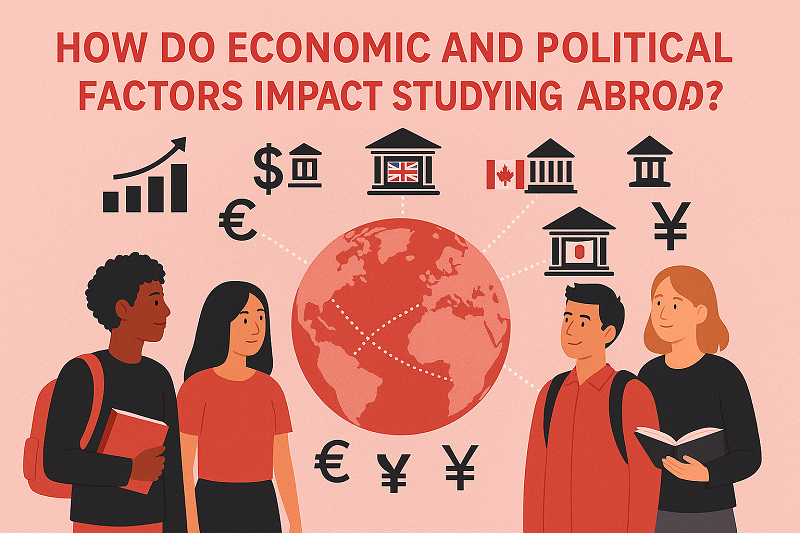
Studying abroad has long been considered a transformative experience for students, offering cultural immersion, diverse educational opportunities, and personal growth. However, the decision to study in a foreign country is significantly influenced by economic and political factors that shape the accessibility, affordability, and overall experience of international education. This blog delves into how these factors impact study-abroad trends and student choices.
Visa changes and immigration policies for students-
The core of overseas study programs is visa policy. International students are frequently the first to be impacted when nations change their immigration laws. Depending on domestic rules and diplomatic ties, student visa changes by 2026 may involve more stringent or simplified procedures.
For example, several countries are reevaluating their laws regarding education visas to strike a compromise between security and open borders. Political changes may lead to new study visa modifications in popular international student destinations, including the United States, the United Kingdom, and Australia, which could impact student visa patterns worldwide. Additionally, political sway over student visas may affect-
Government policies on study abroad programs-
Political changes are also likely to impact government regulations regarding study abroad programs; depending on national goals, these regulations may become more favorable or restrictive.
For instance, nations that prioritize economic development by drawing in foreign students may increase financial rewards, while some governments may restrict international scholarships to promote domestic study.
Financial consequences for students abroad-
Tuition, living fees, and insurance are among the high expenditures of studying overseas. Political shifts frequently impact the accessibility and affordability of overseas education. For example-
Foreign relations and a nation's economic stability also have an impact on-
Regulations and trends in student mobility-
Political and cultural considerations are likely to have an impact on student mobility trends in 2026. Examples include-
National governments may occasionally impose restrictions on study-abroad options to prevent the brain drain and the loss of a nation's highly educated workforce to other countries. This may impact student mobility trends, and some countries may even be inspired to upgrade their own educational infrastructure to provide competitive alternatives to foreign programs.
Effects of study abroad programs and educational partnerships-
Another noteworthy trend is the growth of international education partnerships, in which universities work with foreign organizations to provide dual degrees and exchange programs. In 2026, such policies for international students could spark political discussions about-
Political changes in study abroad regulations may, therefore, encourage or discourage international education strategies. For example, certain nations may decide to restrict collaborations with educational institutions located in politically unstable areas, which could affect students' selection of high-quality and reasonably priced study abroad options.
Impact of global economic conditions-
Global economic conditions frequently influence political agendas, which have a direct bearing on student outcomes and study abroad program funding. For example, changes in government funding in response to political unrest or inflation may cause tuition prices to fluctuate. Budgeting for study abroad becomes essential for students who intend to pursue foreign education by 2026.
As global financial conditions and economic regulations shift, students may encounter difficulties managing their funds while studying overseas. Some people might consider taking part-time jobs to save money for their education abroad. However, visa constraints occasionally limit the number of part-time job options for international students.
Potential Tax implications for international students-
The tax ramifications of studying overseas are less evident but significant. Political shifts that result in updated tax legislation may impact the financial situation of international students, mainly if host nations impose additional taxes on international students. Similarly, students who receive financial aid or scholarships may have to deal with tax issues in their native country.
Emergency savings and insurance for international students-
Lastly, insurance is crucial for international students because healthcare rules and costs differ significantly between nations. Comprehensive insurance plans that cover various medical demands and emergencies become essential for overseas students during politically unstable periods. To avoid unforeseen financial pressures, international students must provide emergency cash for study abroad expenditures as nations modify their safety and healthcare regulations.
Economic and political factors play a critical role in shaping the landscape of international education. From affordability and currency fluctuations to visa regulations and political stability, these factors collectively determine the accessibility and attractiveness of study-abroad destinations. For students aspiring to pursue education overseas, understanding these dynamics is essential for making informed decisions and effectively navigating potential challenges.
Ans- High tuition fees can limit access to international education, while affordable programs attract more students.
Ans- Fluctuations in exchange rates can increase or reduce the cost of tuition and living expenses.
Ans- Scholarships and financial aid reduce the financial burden, making education accessible to students from diverse backgrounds.
Ans- Countries with post-study work visas and part-time job opportunities attract students seeking work experience and financial support.
Ans- A stable economy ensures better infrastructure, job prospects, and quality education.
Ans-Stringent visa policies can deter students, while streamlined processes attract more applicants.
Ans-Political unrest and safety concerns can discourage students from choosing a particular destination.
Ans-Policies that promote international education and partnerships enhance the student experience and attract global talent.
Ans-Yes, strained relations can limit opportunities, while friendly partnerships encourage educational exchange.
Ans-Travel restrictions and health policies influenced student mobility and destination choices.
Author
Content Writer & International Education Specialist
Sakshi Taneja is a content writer specializing in international education, study abroad opportunities, university admissions, student visas, scholarships, and career guidance. She creates accurate, research-driven, and student-focused content to help aspiring international students make informed decisions about their global education journey.
No comments yet
Be the first to share your thoughts!
Please provide your contact information
Free Counselling

9/21/2026

2/26/2026

11/3/2025
11/3/2025
10/27/2025
Want some help figuring out what kind of prep service is right for you?
Help and Support

Leave a Comment
Your email address will not be published.