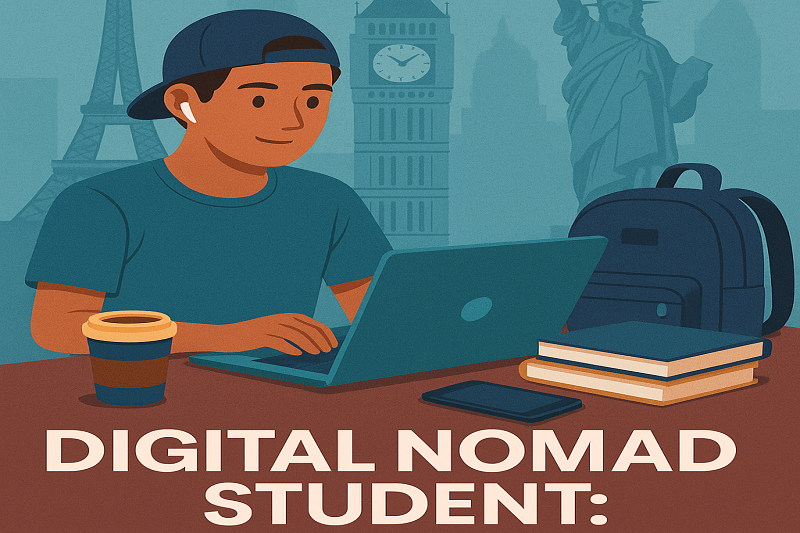
The 21st-century student is rewriting the rules of education, career, and lifestyle. Enter the digital nomad student: a dynamic, tech-savvy, globally mobile Gen Z individual who’s not only studying abroad but also earning income through remote work and side hustles. This generation is dismantling traditional boundaries between work, education, and travel to forge a new, flexible, and financially empowered path.
In this blog, we’ll explore how Gen Z is embracing the digital nomad lifestyle while studying abroad, the tools and platforms enabling this trend, benefits and challenges, and practical tips for making it work.
A digital nomad student is typically a university or graduate student who studies in a foreign country while working online. Unlike traditional international students, they combine education with remote jobs, freelancing, content creation, or even launching small businesses, all from laptops and co-working spaces across the world.
This lifestyle is particularly appealing to Gen Z, a generation known for valuing freedom, flexibility, and purpose-driven living. They have grown up in the gig economy, witnessed the rise of remote work post-pandemic, and prioritized experiences over possessions. The idea of earning while learning anywhere in the world is not only feasible but aspirational.
Here are some of the most popular ways students are earning money online while studying abroad-
While the digital nomad lifestyle offers flexibility and freedom, it comes with its own set of challenges, especially for students balancing academics with work.
Blending academics with remote work offers Gen Z students a dynamic and rewarding lifestyle. The following are the main advantages of being a digitally nomadic student-
Vartika Manasvi – From MBA Student to Digital Nomad Entrepreneur
Vartika embarked on her digital nomad journey during her MBA studies in 2008. To support her education and passion for travel, she engaged in freelance travel photography and content projects and even initiated her first startup, Top Talent. These endeavors not only funded her basic expenses but also laid the foundation for her future as a full-time digital nomad.
Dev Mitra – Transitioning from Corporate to Student Life in Canada
Dev left a lucrative corporate job in India, where he earned ₹14 lakh per annum, to pursue studies in Canada. His experience highlights how international students may balance education and employment while adapting to a new country. Students considering similar opportunities can explore what it takes to study in Canada, including university options and other important considerations.
Monika – Banking Professional Turned Digital Nomad
Monika transitioned from a banking career to embracing the digital nomad lifestyle. She has been exploring India while working remotely, emphasizing the country's rich culture, connectivity, and potential as a digital nomad hub. Monika is also passionate about promoting India as a prime destination for global digital nomads.
Fintech Professional Living the Nomad Life in Goa
Jay, a fintech professional, has been enjoying the digital nomad lifestyle in Goa. He left Canada in his early 20s to explore the world and has since been working remotely while immersing himself in different cultures. Jay's journey highlights the possibilities of combining professional work with a passion for travel.
These stories exemplify the diverse paths Indian students and professionals have taken to integrate education, remote work, and travel. Their experiences underscore the growing trend of digital nomadism among Indian youth, driven by a desire for flexibility, global exposure, and personal growth.
The future for digital nomad students looks incredibly promising as global education and work trends continue to shift toward flexibility, technology, and remote access. With more universities offering hybrid learning models and remote-friendly degrees, students will increasingly be able to study from anywhere in the world while earning income online.
As remote work becomes mainstream across industries like tech, design, marketing, and education, digital nomad students will have more opportunities to build meaningful careers while still in school. The rise of the “creator economy” also means that students can monetize their skills through YouTube, podcasts, e-books, or online courses, all while studying abroad.
Governments are catching up, too. Countries like Portugal, Estonia, and Bali are introducing special digital nomad visas, which could eventually be extended to students with remote work setups. In the long run, digital nomad students will likely be better equipped for the future of work. They will develop independence, adaptability, global networks, and real-world experience far earlier than traditional students. As technology evolves and borders become more fluid for remote professionals, digital nomadism is poised to become not just a trend but a sustainable and empowering lifestyle choice for the next generation of students.
The rise of the digital nomad student marks a powerful shift in how Gen Z approaches education, work, and personal freedom. By blending study abroad with remote work and side hustles, this generation is not just breaking traditional molds—they're redefining what it means to be a student in the 21st century. From managing time zones and freelancing projects to building global networks and exploring new cultures, digital nomad students are gaining real-world experience alongside their academic degrees.
This lifestyle, while not without its challenges, fosters adaptability, independence, and entrepreneurial thinking—traits that are increasingly valuable in today’s digital-first world. As more institutions support hybrid learning and companies embrace remote talent, the opportunities for students to learn, earn, and travel will only expand.
Ultimately, being a digital nomad student isn’t just about working on the go or studying from a laptop—it’s about creating a life that aligns with one’s passions, goals, and values. For Gen Z, the future isn’t something to wait for—it’s something to design, live, and experience on their terms.
Ans- A digital nomad student is someone who studies abroad while earning income through remote work, freelancing, or side hustles online.
Ans- Gen Z values flexibility, tech-enabled work, financial independence, and global experiences—all of which align with the digital nomad lifestyle.
Ans- Popular options include freelancing, online tutoring, social media management, content creation, e-commerce, and remote internships.
Ans- It depends on the country. Some allow limited work, while others restrict all forms of income. Always check local visa and labor laws.
Ans- They use tools like Google Calendar, Notion, and Trello to plan schedules, prioritize tasks, and maintain a balance between study and work.
Ans- Common issues include time zone conflicts, internet reliability, legal restrictions, burnout, and difficulty focusing.
Ans- Yes, many use co-working spaces for stable Wi-Fi, professional environments, and networking with other remote workers.
Ans- They can offset tuition and living expenses, reduce debt, and gain early financial independence through remote income streams.
Ans- Tools like Zoom, Upwork, Wise, Slack, Asana, and Canva help with communication, earning, payments, and productivity.
Ans- Absolutely. It builds real-world experience, enhances resumes, and develops essential skills like time management and cross-cultural communication.
Author
Content Writer & International Education Specialist
Sakshi Taneja is a content writer specializing in international education, study abroad opportunities, university admissions, student visas, scholarships, and career guidance. She creates accurate, research-driven, and student-focused content to help aspiring international students make informed decisions about their global education journey.
No comments yet
Be the first to share your thoughts!
Please provide your contact information
Free Counselling

9/21/2026
2/26/2026

11/3/2025
11/3/2025
10/27/2025
Want some help figuring out what kind of prep service is right for you?
Help and Support

Leave a Comment
Your email address will not be published.