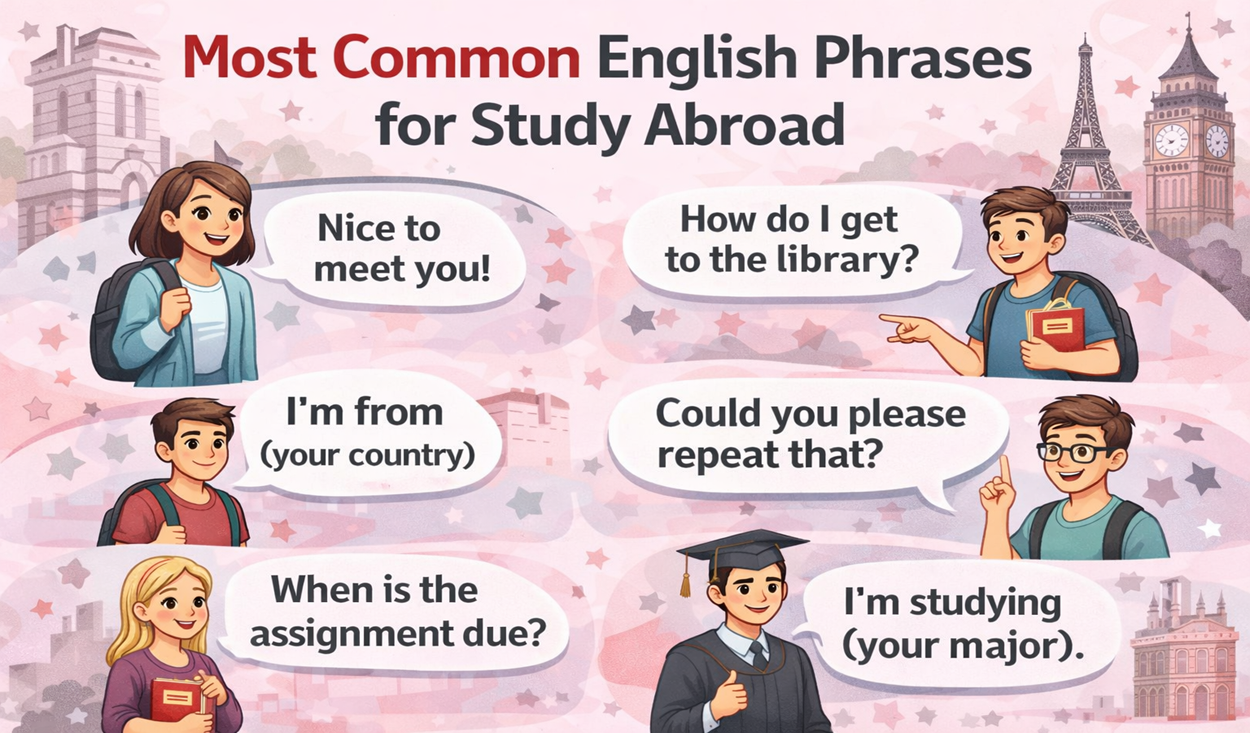
Studying overseas may be a thrilling and transformative experience. However, communicating effectively in English is one of the largest obstacles for many pupils. Learning English communication sentences is crucial for interacting with peers, taking classes, and navigating daily life. Especially if you are getting ready to study abroad, this site offers a thorough reference to frequently used English phrases, sentence patterns, and advice for enhancing spoken English.
Studying overseas is an exciting thing. One of the difficulties, though, is effectively communicating in English, particularly if it is not your first language. Here is a guide to popular English communication sentences that can help you feel more prepared and confident in a variety of circumstances you may face while studying abroad.
It's crucial to know how to introduce yourself when you meet new people properly. Here are a few crucial phrases
In educational environments, you will have to interact with instructors and fellow students
A significant aspect of studying overseas is forming friendships. You can establish connections with others by using these sentences
Being polite is important in any culture. When necessary, use these phrases:
It might be difficult for non native English speakers to communicate effectively. To prepare you to employ common English communication sentences in a variety of real-life situations overseas, spoken English classes are essential.
Increasing conversational confidence: The goal of spoken English sessions is to improve your fluency in spoken English. They emphasize conversational skills, teaching you how to ask for assistance, introduce yourself, and participate in conversations, all of which are crucial when you are studying or living overseas. You will pick up expressions like
· Could you help me find the library?
· Please bring this dish for me.
Customized words for studying abroad: Lessons designed to meet the needs of students getting ready to study abroad are frequently included in these classes. There is a lot of discussion on subjects like handling daily tasks, engaging with educators, and scholarly conversations. You will pick up phrases like
· I have a question regarding the assignment.
Enhancing hearing and pronunciation: Clear pronunciation and attentive listening are key components of spoken English classes, as they are essential for successful communication. The practice of role group conversations and conversational practice improves your ability to communicate properly and comprehend accents, making you more understanding overseas.
You can improve your communication abilities in English while studying abroad by phrasing words, using quotes appropriately, and developing language habits. With regular practice and thoughtful use, moreover, you will be able to convey yourself with ease and confidence in a variety of contexts, which will make your study abroad experience further fulfilling.
Phrasing terms evidently
To effectively communicate your ideas, choose language that is straightforward, courteous, and uncomplicated.
Both academic and informal conversations benefit from clear wording.
Your speech can be enhanced by adding quotes, which will make it more intelligent and interesting.
Over time, developing practice habits increases fluency.
For students who intend to study overseas, spoken English classes are extremely beneficial. They give you the skills you need to effectively construct everyday English communication phrases, which will help you succeed academically, professionally, and emotionally in a global context. Investing in spoken English instruction is the first stage of a fruitful study abroad experience.
Your adjustment to studying abroad can be made much easier by becoming familiar with and using basic English communication sentences. These phrases will help you speak fluently and effectively, whether you're meeting friends, navigating a new place, or doing well in school. Keep in mind that each interaction is an opportunity to improve your fluency.
Ans I'm (Your Name) from (Country), and hello. I attend (University Name) to study [Your Major].
Ans Pardon me, but I need your assistance with (task/location).
Ans I have a question regarding the assignment. Can I ask?
Will you please repeat that?
Ans Want to take a tour of the city with me?
What do you enjoy most about studying here?
Ans Keep a notebook, watch videos in English, and talk to your classmates regularly
Author
Content Writer & International Education Specialist
Sakshi Taneja is a content writer specializing in international education, study abroad opportunities, university admissions, student visas, scholarships, and career guidance. She creates accurate, research-driven, and student-focused content to help aspiring international students make informed decisions about their global education journey.
No comments yet
Be the first to share your thoughts!
Please provide your contact information
Free Counselling

2/26/2026

11/3/2025

11/3/2025
10/27/2025
10/13/2025
Want some help figuring out what kind of prep service is right for you?
Help and Support

Leave a Comment
Your email address will not be published.