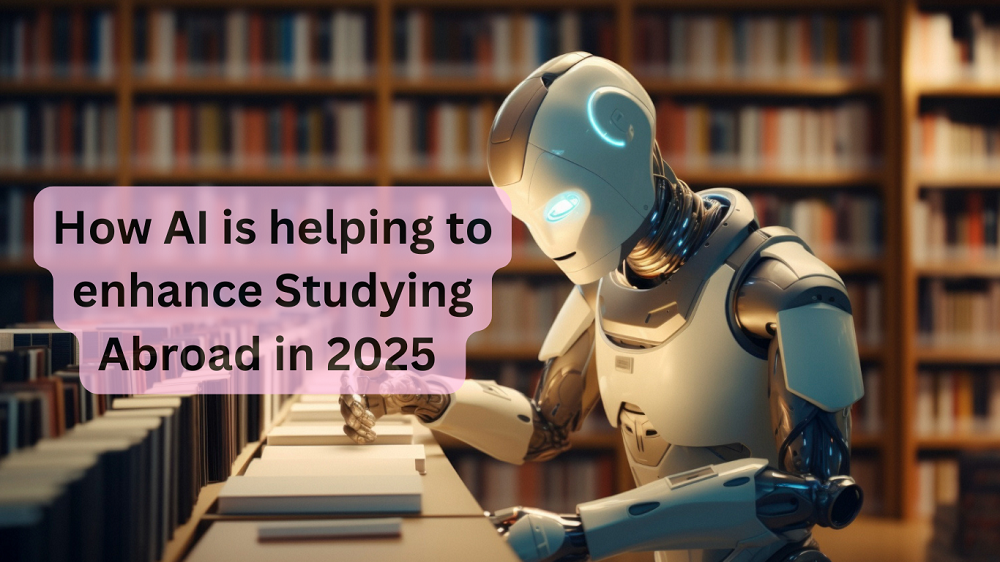
In the rapidly changing field of education today, artificial intelligence (AI) has become a game changer. Students can increase the effectiveness, accessibility, and personalization of their education by incorporating cutting edge AI technologies into their educational experience. AI is changing how students approach education by streamlining difficult ideas and offering individualized educational opportunities. This blog explores the potential benefits of artificial intelligence (AI) for education as well as its ramifications for the future.
Personalized Learning: AI has the power to transform this approach completely. Learning tools and tasks can be customized by educational platforms using algorithms powered by artificial intelligence to match each student's unique needs. To guarantee the best learning results for every student, artificial intelligence machines can modify the syllabus by evaluating data on their advancement, advantages, and limitations. This individualized strategy maximizes learning capacity, increases inspiration, and improves the involvement of students. For example
- Adaptive learning platforms: DreamBox and Smart Sparrow are examples of apps that employ artificial intelligence (AI) algorithms to modify the level of difficulty of questions according to a student's performance. This guarantees that students are not overburdened or understimulated.
- Customized feedback: AI programs give students immediate feedback on their work, enabling them to recognize their errors and keep becoming better.
24/7 Learning Resource Access
Students can study at any time and from any location thanks to AI driven educational platforms that are accessible 24/7. Those who are balancing academics with other obligations or who are subject to time zone and location restrictions will especially benefit from this flexibility. Among the examples are
- Online tutorials: AI powered platforms such as Coursera and edX give on demand instruction in a variety of areas, frequently enhanced by AI tutors who respond to questions and offer assistance.
- Chatbots and virtual administrative assistants: During midnight sessions of study, students can get real time assistance from tools like ChatGPT to answer questions, come up with project ideas, or explain difficult concepts.
Improved involvement with interactive resources
AI uses interactive features like gaming, digital modeling, and augmented reality (AR) to make education more fun and interesting.
- Gamified learning: By using artificial intelligence (AI), websites such as Duolingo make learning languages enjoyable and competitive while monitoring users' progress.
- Simulations: Without the need for tangible materials, students can practice coding, experiment with virtual labs, or investigate scientific phenomena using AI driven simulators in STEM education.
- Immersion experiences: AI powered augmented and virtual reality technologies offer immersive educational opportunities, like touring historical sites or studying human anatomy.
Effective organization and time management
AI improves time management by assisting students in prioritizing assignments and planning their study routines.
- AI Powered developers: AI is used by apps such as myHomework or Notion to remind users, track due dates, and recommend the best times to study.
- Task automation: Students can save time for more in depth study by automating repetitive chores like organizing tasks, organizing research materials, and summarizing notes.
Availability to all students
AI has greatly improved educational accessibility, especially for learners with limitations.
- Assistive technologies: AI powered speech to text converters, voice recognition programs, and screen readers of screens enable education for students who are illiterate or visually challenged.
- Real Time translation: AI programs like Google Translate and Duolingo help learners who are bilingual learn languages by offering immediate interpretation and assistance.
- Sign language recognition: AI powered technologies that can identify and convert sign language into voice or text enable deaf students to interact with one another in a conventional classroom setting.
Better ability to solve problems and think critically
By assisting them in analytical thinking, AI platforms frequently help students improve their capacity for solving problems.
- AI tutors: Instead of just offering solutions, programs like Socratic or Photo Math Walk students through difficult issues gradually. This encourages thinking critically and a more profound understanding.
- Scenario based learning: AI tools encourage students to realistically use what they have learned by simulating real world situations.
AI powered prompt assessment and performance monitoring
It makes sure that students get feedback right away, enabling them to pinpoint areas that need work.
- Analytics for performance: AI driven dashboards reveal a student's areas of weakness as well as strengths, enabling focused solutions.
- Automated grading: Artificial intelligence (AI) technologies, like Gradescope, automate grading procedures. This automation reduces evaluation time while ensuring uniformity and equity in grading.
Budget friendly education
AI democratizes education by offering affordable educational possibilities. Students can use AI-powered platforms. These platforms offer comparable advantages at a fraction of the price of private tutoring.
- Free resources: By offering free or reasonably priced resources, websites such as OpenAI, Duolingo, and Khan Academy make sure that everyone has access to high-quality education.
- Decreased reliance on physical resources: The use of expensive tangible assets is eliminated by computerized simulations and virtual laboratories.
Addressing the gaps in education
By serving impoverished and neglected populations, artificial intelligence (AI) plays a vital role in closing educational inequalities.
- Remote learning: Students in rural or isolated locations can now access top-notch instructional materials thanks to AI-powered systems.
- Language support: To ensure openness, AI tools assist non native speakers in understanding information in the language that they prefer.
Skills development and future preparation
As AI transforms sectors, incorporating AI into education gives students the skills they need to succeed in the future.
- AI literacy: It is the ability to communicate with AI technologies. It is a talent that is becoming more and more important in today's workforce.
- STEM opportunities: Students are encouraged to look for professions in STEM sectors through the practical learning options. However, AI technologies offer in programming, robotics, and data science.
Conclusion
By increasing accessibility, personalization, and efficiency, artificial intelligence is transforming education. The advantages for students are extensive and include immersive experiences, AI-powered tutors, and personalized education platforms. Education stakeholders need to resolve moral dilemmas.
They also need to encourage digital literacy and guarantee fair access to AI resources. AI can enable students to realize their full potential. Artificial intelligence can also help students embrace lifelong learning. AI is more than simply a tool for kids; it's a doorway to countless opportunities.
Leave a Reply
Your email address will not be published.
Search
Similar Blogs

Preparing for TOEFL Speaking Scoring section: Key Skills and Practice Techniques
11/3/2025

Educational loan for study abroad: Everyone Should Know in 2026
11/3/2025

Form I-20 Explained: Start Your U.S. Study Journey with Confidence
10/27/2025

How to Apply for a Master's Degree Abroad: Complete Application Checklist
10/13/2025

What is the difference between percentage and percentile
9/30/2025
Have a question about GMAT?
Want some help figuring out what kind of prep service is right for you?
Help and Support