
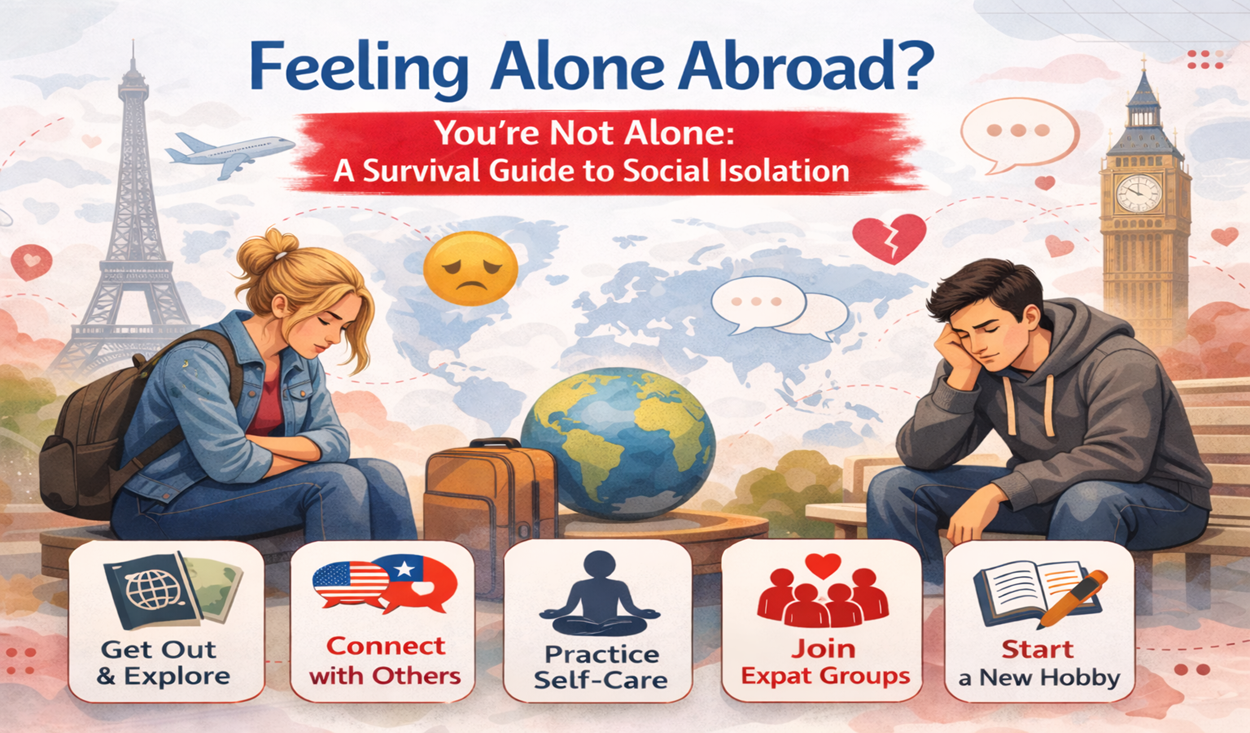
Studying or working abroad is often portrayed as an adventure with new friends, exciting travel, and cultural discovery. Yet for many people, the reality includes moments of profound loneliness. The thrill of landing in a foreign country can quickly give way to quiet evenings spent alone, missing familiar faces and routines. Feeling isolated is not a sign of failure; it is a typical human response to change.
In fact, social isolation is one of the top challenges international students, expats, and long-term travelers report during their first year abroad. Understanding why it happens and how to handle it is key to turning an overwhelming experience into an enriching one. This guide explores why social isolation occurs, its potential effects, and, most importantly, practical steps you can take to build connections and feel at home in your new country.
What about social isolation abroad?
Social isolation abroad refers to the feeling of being disconnected or lonely when living in a foreign country. It often happens when someone moves away from their familiar support system of family, friends, and cultural norms.
- Culture shock and adjustment curve- Moving overseas will undoubtedly cause you to suffer culture shock, which is the confusion that comes with adjusting to a new environment. Everything feels different, from customs to social standards to language and cuisine. This first "honeymoon phase" of enthusiasm is frequently followed by a decline in energy and mood, which is sometimes referred to as the "culture shock low." Feelings of isolation and retreat are typical during this phase.
- Lack of Immediate Support Networks- Back home, you may have had friends, family, or colleagues who understood your background and were available to meet at a moment’s notice. Abroad, you start from scratch. Building a social circle takes time and effort, and in the meantime, the absence of familiar companionship can feel overwhelming.
- Language and communication barriers—Even if you speak the local language, subtle cultural cues, humor, idioms, and gestures can be difficult to master. If you’re still learning the language, small tasks like shopping or asking for directions can feel intimidating, further isolating you.
- Different social norms- Social rituals vary widely. In some cultures, it’s normal to invite acquaintances to dinner; in others, such invitations are reserved for close friends. Misreading these signals can lead to misunderstandings or hesitation in making the first move.
What about the emotional and physical impact of isolation?
Feeling lonely abroad is not just uncomfortable; it can affect your mental and physical health. Studies show that prolonged isolation can lead to
Emotional impact-
- Loneliness and sadness- Missing familiar relationships can trigger feelings of emptiness or homesickness.
- Anxiety and depression- Prolonged isolation may increase stress hormones, heightening the risk of mood disorders.
- Low motivation- You might lose interest in exploring your new environment or engaging in work or studies.
- Reduced self-esteem- Struggling to connect socially can lead to self-doubt.
Physical impact-
- Sleep problems- Stress and worry often disturb healthy sleep cycles.
- Weakened immunity- Chronic loneliness is linked to higher inflammation and a weaker immune response.
- Fatigue and headaches- Emotional strain can manifest as physical discomfort and low energy.
Steps to overcome social isolation abroad
The good news is that isolation does not have to define your experience. Here are proven strategies to help you create meaningful connections and feel rooted in your new environment.
1. Take the initiative to meet people-
- Join student clubs or local groups- Universities and community centers often host clubs’ language exchange, hiking, cooking, sports, or debate societies where newcomers are welcome.
- Attend cultural events or meetups- Look for festivals, art shows, or volunteer opportunities where you can meet people with shared interests.
- Use digital platforms wisely- Apps like Meetup, Facebook Groups, or even LinkedIn often list social gatherings or professional networking events.
2. Learn the local language-
You don’t need fluency to start. Even basic phrases like greetings or ordering food build confidence and show respect for the local culture.
- Take language classes; many cities offer low-cost community courses.
- Use apps like Duolingo, Babbel, or Tandem to practice daily.
- Practice with locals; most people appreciate the effort and will help you improve.
3. Build a routine-
A structured daily schedule provides stability and purpose.
- Regular exercise joins a gym or a running club to meet like-minded people.
- Set study or work hours, followed by leisure time.
- Explore weekly rituals, a Saturday visit to a local market or café can become an anchor in your week.
4. Stay connected to home but in balance-
Maintaining ties with family and friends back home provides emotional support. Use video calls or messaging apps to check in. However, avoid spending all your time online. Too many virtual connections can deepen homesickness and prevent you from engaging locally.
5. Practice self-compassion-
Adjusting to a new culture takes time. Be patient with yourself.
- Accept that feeling lonely is normal; it does not mean you made the wrong decision.
- Keep a journal to process your emotions and track your progress.
- Celebrate small wins, like learning a new phrase or making a casual acquaintance.
6. Seek professional support if needed-
If loneliness starts affecting your mental health, consider counseling.
- Many universities and workplaces provide free or low-cost counseling services.
- International helplines or online therapy platforms allow you to speak to professionals in your own language.
Asking for help is a sign of strength, not weakness.
7. Explore your new environment-
Familiarity breeds comfort.
- Walk around your neighborhood to discover local shops, parks, and cafés.
- Take public transport to understand the city layout.
- Visit museums or cultural landmarks—these outings are conversation starters and help you feel connected to your new home.
8. Volunteer and give back-
Helping others can reduce feelings of loneliness and give you a sense of purpose.
- Volunteer at animal shelters, food banks, or community events.
- Offer language exchange sessions if you are fluent in a language others want to learn.
Volunteering fosters community connections and often leads to lasting friendships.
Cultural tips for making friends abroad
Each country has its own social etiquette. While you can’t learn everything overnight, a few universal strategies help:
- Be open-minded- Respect cultural differences and show curiosity about traditions, food, and customs without judgment.
- Share your culture- Offer stories, recipes, or festivals from your home country. People often enjoy learning about other cultures.
- Start small and stay consistent- Attend events regularly and follow up with acquaintances to turn casual meetings into friendships.
- Learn key phrases- Using local greetings or simple phrases shows respect and makes initial conversations easier, breaking the ice naturally.
Write about the long-term mindset from an outsider to an insider?
Overcoming isolation is not about replacing your home culture or forcing yourself to fit in. Instead, aim for cultural integration, where you maintain your identity while embracing aspects of the host culture.
- Embrace cultural integration- Blend your home traditions with local practices instead of abandoning one for the other.
- Create a “Third Culture”—Celebrate the holidays of your native and host country, or cook dishes from both cuisines.
- Be patient with relationships- Deep friendships take months or years; consistency matters more than quick results.
- Continue learning the language- Improving your language skills gradually deepens understanding and belonging.
- Stay curious and flexible- Treat each unfamiliar experience as a chance to grow rather than a barrier.
- Maintain self-identity- Value your roots while appreciating new cultural influences.
- Contribute to the community- Volunteer, mentor newcomers, or join local initiatives to feel invested in your new home.
- Reframe loneliness as growth- Periods of solitude can strengthen independence and resilience, helping you feel part of your adopted culture over time.
Conclusion
Feeling socially isolated abroad is a challenge many newcomers face, but it does not define your experience. Loneliness is often a temporary stage in the process of adapting to a new culture. By taking small, intentional steps such as joining local groups, learning the language, volunteering, and maintaining a healthy connection with loved ones back home, you can gradually build a meaningful support network. Remember to practice self-compassion and seek professional help if needed. Over time, what once felt foreign can become familiar, and the very journey that began in solitude can transform into one of personal growth and belonging.
FAQs on Social Isolation Abroad
Q1. How long does culture shock usually last?
Ans- It varies, but many people experience the most intense feelings within the first three to six months.
Q2. Is it normal to feel lonely even after making some friends?
Ans- Yes. Deep friendships take time; occasional loneliness is natural during adjustment.
Q3. Should you focus on making friends only from your own country?
Ans- Connecting with people from your culture can be comforting, but building relationships with locals enriches your experience.
Q4. How can you improve your language skills quickly?
Ans- Practice daily with apps, join language exchange groups, and talk to locals even with basic vocabulary.
Q5. What if you are an introvert and find social events exhausting?
Ans- Look for smaller gatherings, hobby clubs, or one-on-one meetups that match your energy level.
Q6. Can volunteering really help reduce loneliness?
Ans- Absolutely. Volunteering creates purpose and fosters natural connections.
Q7. When should you seek professional help for loneliness?
Ans- If you experience prolonged sadness, anxiety, or loss of motivation, it’s time to talk to a counselor or therapist.
Q8. How do you balance staying in touch with home and making local friends?
Ans- Schedule regular calls, but set aside time for local events and personal exploration.
Q9. What if you face discrimination or unwelcoming attitudes?
Ans- Seek supportive communities, report serious incidents to local authorities or your institution, and remember the problem is not your fault.
Q10. Can loneliness abroad lead to long-term mental health issues?
Ans- If unaddressed, yes. That’s why recognizing it early and taking proactive steps is crucial.





Leave a Comment
Your email address will not be published.