
The Procrastination Cure: A 5-Step System for College Students (2026)
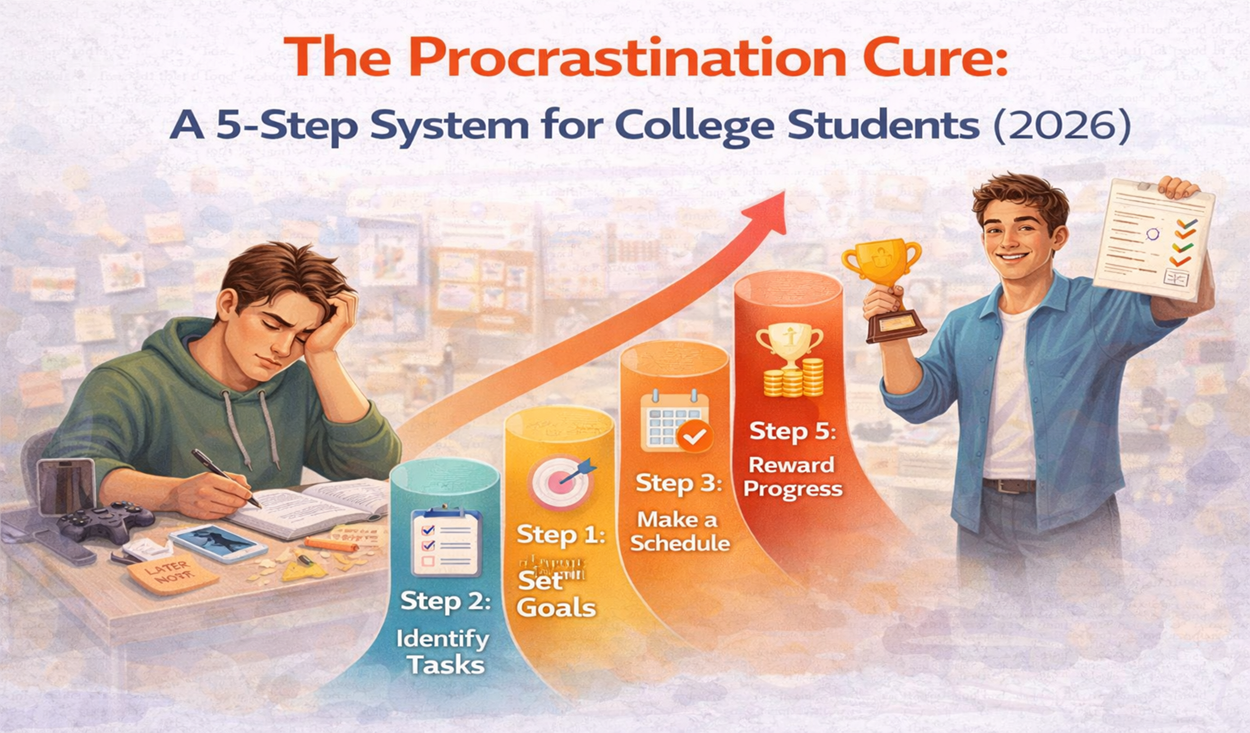
Table of Contents
Numerous chances, new connections, and much freedom are all part of college life. However, procrastination is a classic academic pitfall that can result from this flexibility. Procrastination may rapidly impair performance and mental health, whether by putting off daily reading tasks or putting off a big report until the last minute. The science underlying procrastination, the reasons college students are especially susceptible, and valuable techniques to combat it are all covered in this comprehensive book. You will have a detailed strategy to recover your time and increase your output by the end.
What is Procrastination?
The intentional act of delaying or postponing work even when one is aware that doing so might have unfavourable effects is known as procrastination. Procrastinators are not only lethargic; they frequently desire to finish the activity but find it challenging to get started or stay focused. Academic work, everyday tasks, or even significant life decisions may be avoided in this way.
The psychology of delaying tasks-
Procrastination, according to psychologists, is a self-regulation issue caused by
- Fear of failure- Avoidance stems from the fear that one's effort won't meet expectations.
- Perfectionism- Beginning might feel daunting due to unrealistically high expectations.
- Present bias- The brain prioritizes short-term gratification above long-term gains, such as when browsing social media.
- Low task value or motivation- Putting off a task when it seems pointless or dull is simpler.
- Inaccurate perception of time- When duties are underestimated, a deceptive sensation of "there's still time" is created.
These psychological elements work together to produce a cycle in which avoidance reduces stress temporarily but increases it over time.
Why are college students particularly at risk?
Due to the peculiar combination of personal, social, and intellectual demands they encounter, college students are especially prone to procrastination. Among the leading causes are-
- Flexible schedules—College offers more unstructured time than school. It's simple to put off things when there are no rigid deadlines.
- Multiple priorities- Students may put off challenging projects because juggling lectures, homework, part-time jobs, social events, and extracurricular activities can feel stressful.
- Newfound independence- Even though many students live away from home for the first time, they still learn time management and self-discipline techniques.
- Academic pressure- Beginning large undertakings can be frightening due to excessive standards and a fear of failing.
- Distractions abound- Digital recreation, online communities, and campus activities all vie for users' attention.
- Stress and fatigue- Putting things off can become a coping strategy for reducing stress when one's energy levels are low or mental health issues surface.
What are procrastination's hidden costs?
Although procrastination frequently seems like a temporary solution, there can be hidden costs.
- Poorer academic achievement- Last-minute, hurried effort typically results in subpar papers, inadequate test preparation, and worse grades.
- Increased stress and anxiety- As deadlines approach, pressure mounts, resulting in a vicious cycle of anxiety and mental strain.
- Missed opportunities- Postponing applications for employment, internships, or scholarships might result in missed opportunities.
- Reputational damage- Missed deadlines or persistent tardiness can damage connections with instructors, fellow students, and potential employers.
- Less learning and development- Cramming compromises in-depth comprehension and long-term memory.
- Harmful effects on health- Students who rush to meet deadlines frequently experience burnout, erratic eating patterns, and poor sleep.
- Bad habit formation- Procrastination at college might persist into the workplace, impeding personal and professional objectives.
What are the most critical, step-by-step methods that college students may use to eliminate procrastination and create enduring productivity habits?
Change your perspective –
- Recognize the behavior- Admit when you are putting things off. The loop of instinctive avoidance is broken by awareness.
- Reframe failure- See errors as teaching opportunities rather than things to be afraid of. More important than perfection is progress.
- Adopt the "Two-Minute Rule"- Complete tasks (like responding to emails) immediately if they take less than two minutes. Little victories create momentum.
- Develop a growth attitude, holding discipline and skill development with work. This kind of thinking turns issues into ones you can overcome.
Create a purposeful plan by-
- Establishing SMART goals- specific, measurable, achievable, relevant, and time-bound provides guidance. Say "review biology notes for 30 minutes tonight" rather than "study more."
- Divide up big chores- Assign tasks in smaller, more achievable segments. "Write a 10-page paper" turns into "draft introduction," "create outline," and so on.
- Plan study periods and breaks using a calendar—this is known as time-blocking. Dedicated blocks lessen decision fatigue.
- Use the Eisenhower matrix to prioritize your work-
- Important and urgent tasks should be completed first.
- Make time for them; they are essential but not urgent.
- Important but urgent: If at all feasible, delegate.
- Neither: Restrict or eradicate.
- Create a focused environment by minimizing distractions-
§ Turn off your phone's alerts or utilize applications like Freedom or Forest.
§ Make your desk clutter-free.
§ Use instrumental music or headphones that can block out sounds.
- Determine your busiest times.
§ Schedule difficult work for the morning, afternoon, or evening when you feel most awake.
§ Utilize the Pomodoro Method-
§ After 25 minutes of work, take five minutes to relax. Give yourself a more extended rest after four workouts. This maintains constant energy levels.
- Strengthen your habits-
§ Start with the fundamentals—getting enough sleep, exercising, and maintaining a good diet enhances concentration and lessens weariness.
§ Do daily reviews—At the conclusion of each day, note your accomplishments and make plans for the following day.
§ Celebrate modest victories, such as finishing a draft, by taking a stroll or indulging in a favourite food.
§ Restrict multitasking- Concentrate on a single task at a time. Multitasking makes you less productive and more mentally exhausted.
- Address emotional triggers-
§ Deal with worry and perfectionism- If fearing failure fuels procrastination, consider journaling or speaking with a counsellor.
§ Develop self-compassion- Acknowledge procrastination is usual and that change is achievable, rather than harshly criticizing yourself.
§ Employing implementation intentions- Prepare answers to problems: "I will put my phone in another room if I feel like scrolling through my social media accounts."
- Make use of accountability and support-
§ Look for a study partner or group- Collaborating with others increases motivation and lessens feelings of loneliness.
§ Communicate your objectives- Discuss deadlines with a buddy or mentor to feel accountable.
- Look for university resources-
§ Academic advisers, writing laboratories, and tutoring centers can offer structure and direction.
- Make good use of technology-
§ Productivity tools- Trello, Asana, and Todoist for task managers.
§ Focus Apps- Cold Turkey, Freedom, and Forest.
§ OneNote, Evernote, and Notion are tools for taking notes.
- Digital decluttering- Reduce the number of unnecessary apps and unsubscribe from annoying alerts.
- Monitor your time- Utilize applications such as Toggl to determine how your hours are spent and make necessary adjustments.
- Long-term tactics-
§ Develop resilience- Recognize that failures are inevitable. Instead of giving up, learn and adjust.
§ Reflect and adapt- Consistently assess which tactics are practical and make necessary adjustments.
§ Develop a sense of purpose- Link activities to long-term objectives like professional ambitions or personal development. It is simpler to begin work when it seems purposeful.
When should you get expert assistance?
When procrastination negatively impacts your everyday life, mental health, or academic achievement, you should consider getting professional treatment. Important indicators include-
- Persistent distress- Unrelenting worry, guilt, or anxiety that you are unable to control on your own.
- Profound academic impact- Frequently missing due dates, failing classes, or quitting classes due to difficulty starting assignments.
- Emotional difficulties- procrastination associated with despair, excessive fear of failing, or compulsive perfectionism.
- Disruption of day-to-day functioning- Having trouble caring for fundamental obligations like eating, sleeping, or attending class.
Conclusion-
In conclusion, perfectionism, fear of failure, and continual diversions are the leading causes of procrastination in college. To go over it, you must first change your perspective. Adopt the two-minute rule for short activities, accept avoidance, and value progress over perfection. Set SMART objectives, divide your work into manageable chunks, and schedule study sessions to help you plan purposefully. Utilize the Pomodoro technique and eliminate distractions to create an atmosphere conducive to concentration. Form enduring habits Get enough sleep, evaluate every day, and recognize your improvement. Use compassion for yourself and follow through with intentions to deal with behavioural indicators such as anxiety. Use study groups to hold each other accountable, and use productivity tools well. Seek expert assistance if procrastination negatively impacts your overall health or educational achievement.
FAQs on The Ultimate Guide to Beating Procrastination in College-
Q1. In a collegiate setting, what does procrastination mean?
Ans- It is putting off tasks, homework, or obligations even when one knows doing so would cause stress or lower grades.
Q2. What causes college students to put things off?
Ans- Perfectionism, time management issues, diversions, and fear of failing are common causes.
Q3. How can procrastination be overcome?
Ans- Start by admitting to the habit, dividing work into manageable chunks, and emphasizing progress rather than perfection.
Q4. Which planning techniques are most effective?
Ans- Using the Eisenhower Matrix, time-blocking, and SMART targets to efficiently prioritize work.
Q5. How can a distraction-free atmosphere be established?
Answer- Use focus applications, turn off notifications, and keep your workspace clutter-free while studying for maximum efficiency.
Q6. What routines aid in the long-term battle against procrastination?
Ans- The answer is that determination is strengthened by regular sleep, frequent evaluations, positive lifestyle choices, and celebrating little victories.
Q7. How do you deal with anxiety and other emotional triggers?
Ans- To combat temptation, document your anxieties, practice self-compassion, and make "if-then" strategies.
Q8. Can technology decrease procrastination?
Ans- You can reduce digital distractions and organize chores with apps like Trello, Forest, and Toggl.
Q9. When is the right time to get expert assistance?
Ans- Speak with a counsellor or campus therapist if procrastination often impairs your emotional wellness, grades, or everyday activities.
Q10. What is the most important factor in maintaining consistency?
Ans- To maintain motivation, tie your duties to long-term objectives and evaluate your progress frequently.
Author
Sakshi Taneja
Content Writer & International Education Specialist
Sakshi Taneja is a content writer specializing in international education, study abroad opportunities, university admissions, student visas, scholarships, and career guidance. She creates accurate, research-driven, and student-focused content to help aspiring international students make informed decisions about their global education journey.
Comments (0)
No comments yet
Comments are temporarily closed.
Contact Details
Please provide your contact information
Free Counselling
Latest Articles

PAL vs TAL: The New Canadian Visa Step Every Student Must Know
Oct 22, 2026

Collateral vs. Non-Collateral Loans: How to Fund Your Studies in 2026
Oct 21, 2026

Germany vs UK Study Costs 2026: Tuition Fees, Living Costs & Scholarships
Oct 16, 2026

Universities With the Highest Acceptance Rates for International Students In 2026: A Complete Guide
Oct 15, 2026

Why Italy and Spain Are Becoming the New Favorites for English-Taught Degrees in 2026
Oct 14, 2026
Categories
Have a question about Articles?
Want some help figuring out what kind of information you need?
Help and Support