
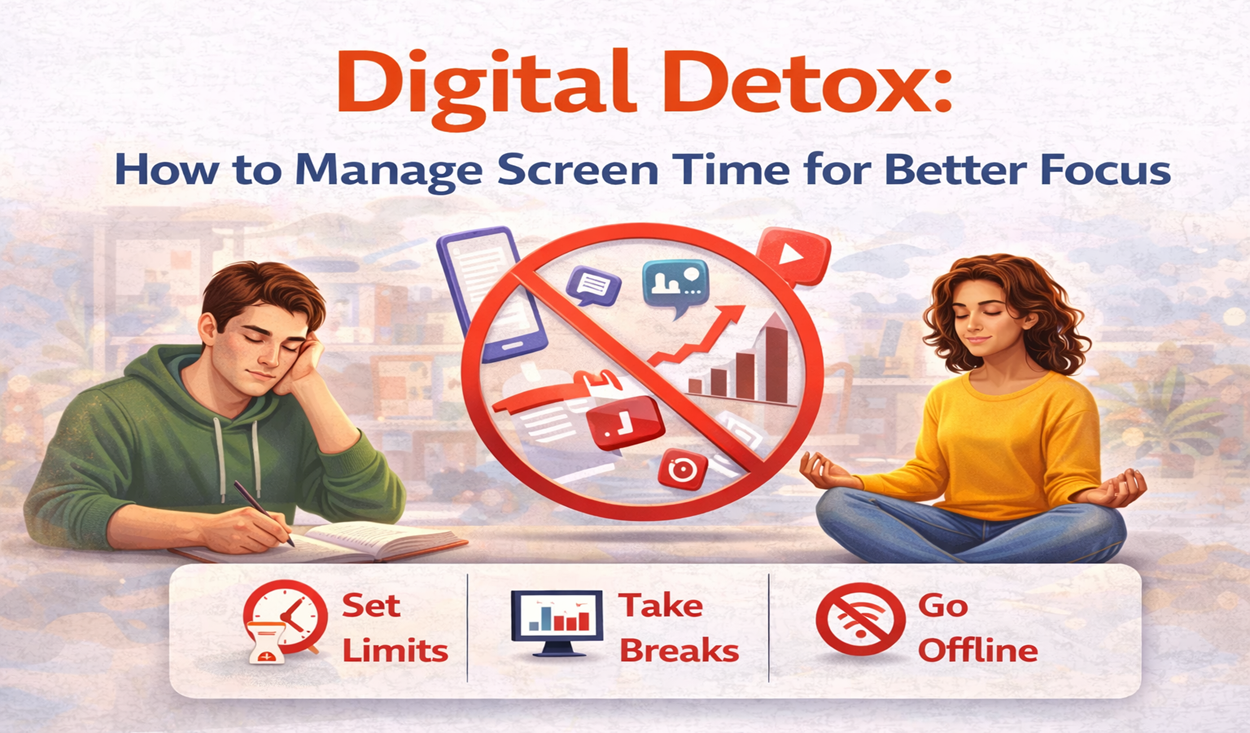
In an age where screens are everywhere—on our phones, computers, TVs, tablets, and smart watches the steady glow of digital devices is a constant in most waking hours. While technology has brought us excellent benefits, there is growing recognition of the costs: decreased attention, fragmented focus, sleep problems, mental fatigue, and a creeping sense of being “always on.” A digital detox, consciously managing and reducing screen time, can help restore balance, clarity, and better focus. This blog explores what digital detox means, why screen time affects focus, the benefits of stepping back, practical strategies for managing screen time, challenges, and how to sustain healthier habits.
What is a Digital Detox?
A digital detox is when a person reduces or refrains from using electronic devices such as smartphones, computers, tablets, and social media platforms. The idea is not necessarily complete unplugging forever, but building conscious boundaries and habits that allow rest for the mind, reduce overstimulation, and re-center attention.
Digital detox can take different forms-
- Short breaks: say an hour or two each day without screens.
- Time-block detox: evenings, weekends, or certain “no-device” hours.
- Longer retreats: days or weeks with minimal or no digital device use.
- Micro-detoxes are small habits like not using a phone at the dining table or using screens before sleeping.
Why screen time impairs focus and well-being?
Let's examine the effects of high screen usage to understand why we need to detach or re-adjust our relationship with screens.
- Attention fragmentation and multitasking overload- Notifications, app alerts, pop-ups, tab switching +all these promote constant context switching. Each time you shift attention, there’s a “cognitive cost” in refocusing, which drains mental resources. Over time, this reduces capacity for sustained focus or deep work.
- Mental fatigue and information overload- Our brains are exposed to more information than ever, news updates, social media feeds, email, and messages. Processing this stream can lead to mental fatigue. Also, harmful content, comparisons, fear of missing out (FOMO), or just constant partial attention contribute to stress and anxiety. Studies show excessive screen time is linked to increased anxiety, depression, and poorer emotional regulation.
- Sleep disruption—One of the most well-established harms of late or prolonged screen use is its impact on sleep. Blue light from screens suppresses melatonin, the hormone that helps you fall asleep, and high stimulation (scrolling, games, late chats) keeps the brain wired. Poor sleep affects attention, mood, memory, and learning.
- Physical effects—Staring at screens for long periods causes digital eye strain, which can cause dry eyes, headaches, blurred vision, and discomfort. Poor posture while using devices can also cause neck, shoulder, and back pain. Sedentary screen time also reduces physical activity, contributing to various health risks.
- Reduced productivity and creativity- When you’re constantly distracted or pulled away by digital interruptions, getting into a zone of deep work becomes harder. Creativity often benefits from mental space—when the mind is not occupied with instant inputs. Digital detox allows reflection, new ideas, and uninterrupted workflow.
- Impacts on mental health and social connections—It’s not just about what we lose by being online too much, but what we miss: real face-to-face interactions, deeper conversations, presence, and being mindful of our surroundings. Also, social media can amplify comparisons, loneliness, and anxiety. Detoxing gives a chance to reconnect with the physical world and real social bonds.
Explore More: Role of social media in study abroad |
What are the benefits of a Digital Detox?
Implementing a digital detox offers multiple benefits. Here are some that have been documented or observed:
- Improved focus and concentration—With fewer interruptions, the brain can concentrate longer and work more deeply on tasks without being pulled away.
- Better sleep—Less exposure to blue light and less mental stimulation before sleep leads to better sleep quality. You fall asleep more easily, have more restful sleep, and wake up refreshed.
- Lower stress, anxiety, and mental clutter—Disconnecting from constant pings, news feeds, and social media reduces stress and helps with mental rest.
- Greater mindfulness and presence: Being more aware of Here and Now instead of always thinking ahead, reflecting, noticing small details, and being with people.
- Enhanced Productivity & Creativity: More uninterrupted time leads to better work output, innovation, and creative thinking.
- Stronger relationships and real connections—When you’re less hooked to screens, there is more space for meaningful interactions with family or friends.
- Physical health benefits- Reduced eye strain, better posture, possibly more physical activity, and better rest.
How do you manage screen time, and what are the practical strategies for better focus?
Knowing the benefits is good; putting together realistic strategies makes the difference. You can try various methods; different ones work for other people, so you might experiment, adopt, or adapt.
1. Audit and awareness-
- Track your usage. Many phones and devices have built-in tools (Digital Wellbeing on Android, Screen Time on iOS, etc.) that show how much time you spend in individual apps and how many times you pick up your phone. Seeing the numbers often raises awareness.
- Note down what habits feel wasteful. Do you scroll through social media first thing in the morning? Check messages when waking up? Watch videos until late? These are moments of leakage in your focus.
2. Set clear limits and boundaries-
- App/time limits- Use built-in or third-party tools to limit time spent on distracting apps. For example, allow only 30 minutes of social media per day.
- Scheduled screen-free times- Decide parts of your day or week when you intentionally avoid screens. E.g., during meals, the first hour after waking up, the last hour before bed, on weekends, or designated “digital sabbath.”
- No-screen zones: Physical boundaries help. Phones are not allowed in bedrooms, at the dining table, in the bathroom, etc. Sometimes, putting devices in another room helps.
3. Reduce distractions-
- Turn off non-essential notifications- Each ping is a temptation to shift attention—Disable notifications from apps you don’t need to check constantly.
- Use “Do Not Disturb” or “Focus Mode”- These modes mute alerts, hide banners, or restrict certain apps during work or rest.
4. Replace and redirect-
- Find screen-free activities: Physical exercise, reading books, gardening, crafts, playing musical instruments, walking, cooking, painting, and journaling. These give your mind rest and refill your energy.
- Hobbies or projects- Investing time in something meaningful—learning a skill, hobby, or volunteering.
5. Mindfulness and rituals-
- Mindful usage- Before picking up your phone, ask: “Why am I doing this?” Is it necessary, beneficial, or just a habit or boredom? Pause.
- Rituals for transition—e.g., dim lights one hour before bed, no screens, read a book; no screen in the early morning until after some physical activity or meditation. This helps shift the mindset.
6. Eye and health rest practices-
- The 20-20-20 rule states that every 20 minutes of screen time, look at something 20 feet away for at least 20 seconds. This helps reduce eye strain.
- Ergonomics: Proper posture; screen height; seating; ambient lighting; reduce glare.
7. Use features or tools wisely-
- Grayscale or monochrome mode- Makes the screen less tempting. Colors draw attention. Some people report that it reduces compulsive checking.
- Restrict apps / uninstall—If certain apps (social apps, endless feeds) always pull you in, uninstall them or move them so they're harder to reach.
8. Plan and reflect-
- Set goals: e.g., reduce non-essential screen time by X amount in a week or month.
- Monitor progress: Weekly check-ins, adjust limits.
- Reward yourself: Celebrate milestones.
Sample plan for taking a Digital Detox step-by-step-
Here’s a sample plan you might adapt. The idea is to build habits gradually rather than forcing abrupt, unsustainable change.
|
Phase |
Duration |
Actions |
|
Week 1 |
7 days |
Track your screen time. Identify top 3 apps causing distraction. Turn off non-essential notifications. Set “no screens” during meals. |
|
Week 2 |
7 days |
Introduce “screen-free hour” before bed. Set app limits on the distracting apps. Use grayscale mode during non-essential hours. |
|
Week 3 |
7 days |
Add morning ritual without phone for first 30 mins. Designate one “tech-light” day/week (limited screen only for essential matters). |
|
Week 4 |
7 days |
Evaluate what worked, what didn’t. Adjust limits. Expand screen-free times (e.g., during commuting, when with friends). Maintain healthy routines. |
You could also do a mini-detox (e.g., one weekend) once a month or take a more extended break (holidays, retreats).
What are the common challenges people face during a Digital Detox, and how can they effectively overcome them?
Change is hard. Here are some of the common obstacles and ideas for dealing with them.
- Feeling of Missing Out (FOMO): You may worry about being disconnected, missing news, or missing messages. Solution: Communicate expectations with friends/family that you’ll check certain apps at designated times and let people know you're doing it. Sometimes, limiting rather than eliminating helps.
- Dependency for Work / Study- Many tasks require screens. The goal isn’t zero screen, but reducing non-essential usage. For work/study, try batching tasks, using focus times, turning off distractions, and using tools that block distracting sites/apps.
- Habit & Impulse Checking—Often, phone checking is an automatic habit. To counter this, change the environment: put the phone in another room, disable lock screen previews, design friction (e.g., turn off one step to reach apps), and use “Do not disturb” or focus modes.
- Social / Peer Pressure—If everyone else is online, you might feel pressured. You can set shared boundaries (among friends and colleagues), suggest alternative get-togethers without phones, lead by example, or adjust your availability window.
- Inertia / Giving Up—You might start strong, then slip. It helps to plan for relapses, accept small slip-ups, and recommit. Tracking, visual feedback, and accountability (friend, partner) can help.
- Boredom or Lack of Alternatives—Without screens, some people feel restless or unsure how to spend their time. Plan engaging offline activities, such as reading, exercising, journaling, cooking, or learning a hobby. Schedule social meet-ups, walks, or outdoor activities to stay active and entertained.
- Initial Anxiety or Withdrawal- Feeling uneasy or stressed when first cutting back on screen time. Start by gradually reducing usage in stages rather than quitting all at once. Practice mindfulness or breathing exercises to handle discomfort. Track your progress and celebrate small milestones to stay motivated.
- Relapsing into Old Habits- It’s easy to slide back into heavy screen use after a few days. Set weekly or monthly check-ins to review your screen time. Create a support system, family or friends who share your detox goals. Revisit your reasons for the detox to reinforce commitment.
How can you sustain the digital detox habit in the long term and make it a consistent part of your lifestyle?
Making digital detox a lasting part of life requires integrating it into everyday routines and mindset shifts, not treating it as a “quick fix.” Here’s how to sustain:
Shift your mindset-
- Adopt an identity-based approach- Instead of thinking, “I’m trying to use my phone less,” start seeing yourself as someone who values presence, focus, and mindful tech use.
- Focus on intention, not restriction- Remember that the goal isn’t to reject technology but to use it purposefully.
Build screen-free routines-
- Morning and night rituals: Start and end your day without screens. For example, read, meditate, or stretch instead of checking your phone.
- Meal times and family time- Establish device-free meals or “phone baskets” to make screen-free moments a daily norm.
Replace, don’t just remove-
- Engage in offline hobbies- Fill your time with activities like exercising, journaling, painting, gardening, or cooking.
- Strengthen real-world connections- Spend time with friends and family face-to-face to reduce the urge to be online.
Use tech to control tech-
- Leverage tools wisely- Use features like Focus Mode, app timers, or website blockers to keep your usage in check.
- Regularly review screen-time data- Monitor your habits and adjust limits as needed.
Schedule regular “Mini-Detoxes”-
- Weekly or monthly breaks- Plan screen-free hours, weekends, or vacations to reset and reinforce the habit.
- Tech-light days- Dedicate certain days (like Sundays) to minimal digital engagement.
Practice mindfulness-
- Pause before picking up devices- Ask yourself if it’s necessary or just a reflex.
- Reflect on benefits- Notice improved focus, sleep, and mental clarity—these positive outcomes motivate you to continue.
Stay flexible and forgiving-
- Accept occasional slip-ups- Life events or work demands may increase screen time; instead of quitting, adjust and return to your routine.
- Evolve your strategy- As technology changes, periodically revisit and update your digital detox plan.
What practical digital detox tips can be adapted specifically for the Indian or local context?
If you are in India (or any similar context), some additional thoughts for adaptation-
- Create family screen-free zones- Place a “phone basket” near the dining area where everyone can deposit devices during meals. Encourage family conversations or traditional games like carrom, ludo, or cards to replace screen time.
- Embrace traditional morning routines. Instead of checking your phone, start the day with yoga, pranayama (breathing exercises), or a morning walk. Rather than scrolling social media, read a newspaper or a physical book for news and entertainment.
- Limit WhatsApp and Social Media overload- Mute or archive non-essential groups that flood your phone with forwards. Schedule fixed times to check WhatsApp or Instagram rather than responding instantly.
- Use local community activities- Join neighbourhood groups for evening walks, temple visits, or volunteering to foster offline social connections. Attend local cultural events or festivals, which naturally provide screen-free engagement.
- Plan tech-light weekends or outings- Visit parks, historical sites, or nature trails. India offers many scenic spots even in cities. Travel to rural or less networked areas occasionally to enjoy natural disconnection.
- Encourage children’s outdoor play- Organize or support cricket, kabaddi, or badminton sessions in local playgrounds to keep kids active and away from screens. Make it a family habit to spend evenings outdoors.
- Leverage festivals and rituals- Indian festivals like Diwali, Holi, or Pongal can be celebrated with a “no-phone” policy, focusing on rituals and face-to-face interactions.
- Use affordable tech-management tools. Most Indian smartphones, even budget models, have Digital Wellbeing or Screen Time features that enable daily limits and downtime. Set your phone to grayscale mode to reduce the appeal of colorful apps.
- Support local hobbies and crafts- Explore traditional crafts, such as pottery, rangoli, or knitting, which keep hands busy and minds engaged without screens. Join local hobby clubs to learn skills like cooking regional dishes or folk dance.
- Involve the whole household—Make screen-free evenings a collective decision so that children, parents, and elders participate. Rotate responsibility for planning offline family activities.
What is a healthy amount of screen time in the context of Digital Detox?
There is no one-size-fits-all. What matters more is how and when you use screens rather than just how much. Some guidelines-
Recreational screen time: Aim for ≤ 2 Hours a Day-
- Leisure activities like social media scrolling, binge-watching, or gaming should ideally be under 2 hours daily.
- A digital detox encourages you to swap passive consumption for offline activities, such as reading, exercising, or spending time outdoors.
Work or study screen time: Use break-based rules, not hour caps-
- For adults and students whose jobs or classes require screens, the focus is on structured breaks, not rigid hour limits.
- Follow the 20-20-20 rule- Every 20 minutes, look 20 feet away for 20 seconds to reduce eye strain.
- Insert a 5–10 minute off-screen break every hour to stretch or walk.
Device-free zones and times-
- Tech-free mornings and evenings- Start and end the day with at least 30–60 minutes of no screens.
- Meal times and bedrooms- To improve mindfulness and sleep quality, keep these areas screen-free.
Weekly or monthly detox periods-
- Schedule “mini-detoxes” like-
- One screen-free evening every week.
- A full day each month without recreational screen use.
- These intentional breaks help reset habits and keep total screen time in check.
Quality over quantity-
- Prioritize meaningful or productive screen use (learning, work, connecting with loved ones) over endless scrolling.
- Even if total hours are high for work, mindful use and regular breaks align with digital detox principles.
What are the digital detox tools and resources?
- Built-in tools: Screen Time (iOS), Digital Wellbeing (Android), Focus modes, and Do Not Disturb.
- Apps & browser extensions to block or limit usage (blockers, productivity timers).
- Books on mindfulness, habit formation (e.g., “Deep Work” by Cal Newport).
- Offline alternatives: physical books, board games, outdoor sports, crafts.
- Communities or accountability partners: friend, family, online groups.
What are the common myths and misconceptions?
- A Digital Detox Means Completely Avoiding Technology-
Reality—A detox isn’t about living without technology forever. It’s about mindful use, reducing unnecessary screen time, and using devices intentionally, not eliminating them.
- Only People Addicted to Phones Need a Digital Detox-
Reality- Even those who use screens mainly for work or study can benefit. Constant notifications and multitasking can cause stress and attention fatigue, so a detox helps almost everyone.
- You Must Take a Long Break (Weeks or Months) for It to Work-
Reality- Digital detox can be as short as a few hours a day, a screen-free evening, or a weekend without social media. Consistency matters more than the length of a single break.
- Digital Detox Is Only About Reducing Social Media-
Reality- social media does not just cause screen fatigue. Detoxing includes streaming platforms, gaming, endless scrolling of news, and even work emails.
- Going Offline Will Harm Your Work or Social Life-
Reality- With clear communication, most people experience better productivity and stronger real-life connections, not harm.
- Using Productivity or Tracking Apps Defeats the Purpose-
Reality- The right tools, like Focus Mode, website blockers, or mindfulness apps, help you stay accountable and support your detox, not undermine it.
- A Single Detox Will Permanently Fix Screen Habits-
Reality- A one-time detox can reset habits, but long-term success requires lifestyle changes: setting screen-free routines, maintaining mindful use, and regularly reviewing habits.
- Digital Detox Is Only for Young People or Students-
Reality—Professionals, parents, and even seniors can benefit from managing screen time. Sleep quality, mental clarity, and real-world relationships improve at any age.
- Myth: All Screen Time Is Bad-
Reality- Not all screen time is harmful. Educational, creative, or work-related use can be productive and meaningful. The key is to cut mindless and passive consumption.
Conclusion
Digital technologies are powerful, and much of modern life depends on them—but they also carry costs when used without boundaries. Managing screen time via a digital detox isn’t about rejecting technology; it’s about restoring balance, protecting mental and physical health, and regaining focus.
You can build a sustainably healthier relationship with the digital world by raising awareness of your habits, setting boundaries, replacing mindless screen time with meaningful activities, and being kind yet disciplined with yourself. The rewards, better sleep, clearer mind, deeper focus, and more satisfaction are well worth the effort.
FAQs
Q1. What is a digital detox?
Ans- A digital detox is a planned break from screens—like phones, laptops, or social media—to reduce distraction and improve mental well-being.
Q2. Why is a digital detox important?
Ans- It helps improve focus, reduce stress, enhance sleep quality, and strengthen real-life relationships.
Q3. How long should a digital detox last?
Ans- It can be as short as a few hours daily, a screen-free weekend, or longer—consistency matters more than duration.
Q4. Is it necessary to quit technology completely?
Ans- No. The goal is mindful use, not total avoidance—focus on reducing unnecessary or mindless screen time.
Q5. Can working professionals do a digital detox?
Ans- Yes. Set app limits, schedule screen-free breaks, and use focus tools even if your job requires screens.
Q6. What are common challenges during a digital detox?
Ans- FOMO (fear of missing out), work demands, boredom, and habit withdrawal are typical challenges.
Q7. How can you overcome FOMO while staying offline?
Ans- Inform close contacts in advance, use auto-replies for emails, and plan meaningful offline activities.
Q8. What tools can support a digital detox?
Ans- Apps like Forest, Freedom, or built-in features like Screen Time and Digital Wellbeing can track and limit usage.
Q9. Does a digital detox improve productivity?
Ans- Yes. Reducing distractions leads to better concentration, deeper work, and improved time management.
Q10. How can you maintain the habit long-term?
Ans- Create screen-free routines (like no-phone mornings), schedule regular mini-detoxes, and replace screen time with hobbies or outdoor activities.






Leave a Comment
Your email address will not be published.