
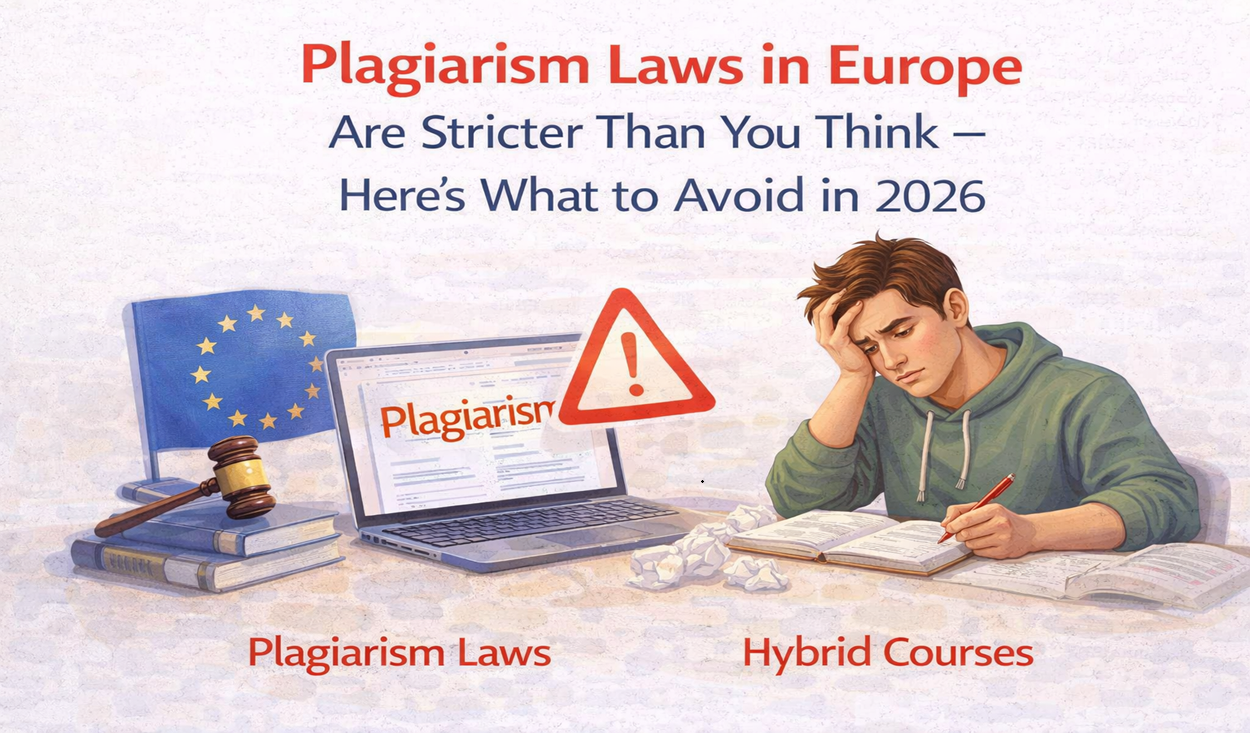
Plagiarism is not just an academic “oops” you can fix with a better bibliography. In many European countries, it can end careers, undo degrees, and trigger criminal inquiries. Over the last two decades, high-profile scandals and mounting pressure on universities to protect research integrity have turned plagiarism from a mostly internal disciplinary issue into something with legal, professional, and sometimes criminal consequences. This long-form guide explains why plagiarism in Europe is treated so seriously, how the rules differ from place to place, what real-world penalties look like, and the concrete things you must avoid if you’re a student, researcher, or professional working with text, data, or ideas.
Why is Europe especially serious about plagiarism?
Europe treats plagiarism as a primary offence because of a strong culture of academic integrity and the legal frameworks that protect intellectual property. Three forces make plagiarism a high-risk behaviour in Europe:
- Academic culture and reputation. Many European universities, both long-established institutions and newer research-intensive bodies, place enormous value on original scholarship and institutional reputation. Moreover, when plagiarism surfaces, it threatens not only a person’s credibility but also the credibility of the granting institution and, in public cases, national trust in institutions.
- There is a legal overlap with copyright and fraud laws. Plagiarism can sit at the intersection of academic misconduct and civil/criminal law. While “plagiarism” is often a policy-based academic offence, copying that infringes copyright or involves false representation, for example, faking a thesis, can trigger civil suits or criminal investigations in some countries. This creates an extra layer of risk beyond academic discipline.
- High-profile political and public scandals. When politicians or senior academics are implicated, cases become public quickly and lead to resignations, revocations of degrees, and even criminal inquiries. Those cases change the public and legal appetite for strict enforcement. The examples below show how far consequences can reach.
Other reasons are also such as
- Protection of intellectual property: European copyright laws give strong rights to authors and researchers, so copying without permission can lead to civil or even criminal action.
- Reputation of institutions: Historic universities and research bodies guard their credibility fiercely; plagiarism scandals can damage national and international trust.
- Cross-border mobility: With students and researchers moving freely across Europe, consistent, strict standards ensure fairness and academic quality.
- Technological detection: Widely used plagiarism-detection tools make it easier to uncover misconduct, increasing both awareness and accountability.
What is the range of penalties you could actually face related to plagiarism laws in Europe?
Consequences fall into three overlapping buckets: academic, legal (civil/criminal), and professional/reputational.
1. Academic penalties (most common)-
- Failing the assignment or module.
- Forced resubmission under penalty or a capped grade.
- Failing the entire course or year.
- Suspension for a fixed term.
- Expulsion.
- Revocation of a degree (retroactive).
Universities often keep plagiarism records that can affect transcripts and references. The European Commission’s student-advice materials emphasize that universities may take severe action up to expulsion and that consequences can be lifelong.
2. Legal consequences (varies by country but real)-
- Copyright infringement claims. If you copy-protected text without permission, authors or rights-holders may sue. Some prosecutions have involved multiple copyright violations extracted from dissertations or books.
- Criminal investigations. In cases where plagiarism overlaps with fraud (e.g., falsely claiming a qualification) or apparent large-scale copyright theft, prosecutors in some countries have opened criminal inquiries. Outcomes vary: charges may be dropped, result in fines, or, in rare cases, lead to other sanctions.
- Civil suits or settlements. Courts may award damages or require corrective actions if copyright owners demonstrate loss.
Legal action is rarer than academic sanctions, but the risk is not hypothetical. When public figures are involved, prosecutors are more likely to examine whether copyright or fraud laws were broken. The Guttenberg case in Germany is a stark example: the politician’s doctorate was revoked, and prosecutors examined possible copyright violations (some charges were later conditionally discontinued, after settlement).
3. Professional and reputational fallout-
- Loss of employment or job offers. Employers, particularly in research, publishing, and public service, treat integrity breaches seriously.
- Difficulty getting future funding, fellowships, or positions. Funding bodies may blacklist researchers or require stronger vetting.
- Public condemnation and media scrutiny can result in high-profile cases, which can lead to resignations and long-term reputational damage. The Norway case from 2024 showed how thesis irregularities can end a minister’s career.
How do Plagiarism Laws and rules differ across Europe?
Europe is not a single legal system. Expect variation in the following key areas-
- Whether plagiarism itself is a criminal offence. In most countries, plagiarism as an academic policy breach is handled within universities, not directly criminalised. However, when the behaviour also violates copyright, involves forgery, or constitutes fraud, prosecutors can and do get involved (as in Germany’s prosecutions linked to doctoral theses.
- How easy it is to revoke degrees. Many jurisdictions allow universities to rescind degrees if they find evidence of academic dishonesty, even retroactively. That administrative route is often quicker and more certain than criminal prosecutions.
- How universities enforce policies. Enforcement intensity varies: some institutions treat plagiarism as a teachable first offence with warnings; others have formal disciplinary panels and publish decisions. Transnational comparisons show a broad upward trend in enforcement, partly driven by public scandals and the availability of detection tools.
- Terminology and legal definitions- Some jurisdictions define plagiarism under copyright law, while others treat it as part of fraud or academic integrity policies, creating different paths for appeals and sanctions.
What are the forms of plagiarism you must avoid?
Plagiarism takes many shapes, not all of them obvious. Avoid these:
- Verbatim copying- Copying text word-for-word without quotation marks and attribution.
- Patchwriting / poor paraphrase- Changing a few words or sentence order while keeping the original structure/ideas without citation. Moreover, this is often flagged by detection software and considered misconduct.
- Paraphrase without attribution- Even if you put the idea in your own words, you must credit the source for unique arguments or data.
- Self-plagiarism- Reusing substantial parts of your previous submissions without disclosure or permission. Some institutions treat this as academic misconduct.
- Data fabrication or misrepresentation- Claiming results or using someone else’s data without attribution. This is severe misconduct.
- Ghostwriting/contract cheating- Paying or commissioning third parties to produce work you submit as your own. Moreover, many European universities treat this as the worst kind of misconduct.
- Misuse of generative AI- Using ChatGPT or other generative tools to produce assessed work without clear disclosure and permission. Policies are evolving, but using AI to generate work you pass off as wholly your own is increasingly treated as misconduct.
- Image or media plagiarism- Using photos, illustrations, or multimedia without rights or credit.
- Idea plagiarism- Taking original concepts, arguments, or research hypotheses without acknowledging their originator.
- Citation manipulation- Citing sources inaccurately or fabricating references to hide copied material.
Specific modern risks: AI, contract cheating, and detection tech-
- AI tools: Universities are updating policies on AI. Some permit AI for drafting with disclosure and human oversight; others ban its use for assessed work. Detection is still imperfect, but oversight processes now look at metadata, drafts, and oral defences to verify authorship. Cases of expulsions for “unacceptable AI use” have been reported.
- Contract cheating marketplaces: Companies and freelancers offering essays or theses are widespread. When discovered, submitting purchased work is treated harshly — universities view it as deliberate deception. Detection combines textual similarity checks, suspicious submission patterns, and behavioural evidence.
- Improved detection tools: Turnitin and other services flag similarities, but institutions also require drafts, source files, and interviews. Because of these measures, trying to “beat” software is both unethical and increasingly ineffective.
Practical, country-aware advice on what to do and avoid-
While specific rules vary, the following actions are universally smart-
If you are writing a paper, thesis, or report-
- Start with precise note-taking. Record bibliographic information for every idea or quote you copy.
- Quote and cite verbatim passages. Use quotation marks for direct quotes and give a full citation.
- Paraphrase properly and cite anyway. If an idea or argument isn’t yours, cite it even if you paraphrase.
- Ask your supervisor about self-plagiarism. Reusing past work may be allowed if disclosed and approved.
- Keep drafts and evidence of the writing process. Save timestamped notes, earlier drafts, and emails with supervisors; these can prove your original authorship if challenged.
- Declare the use of AI tools where required. Don’t assume you can use generative tools without disclosure. Universities are drafting clear rules; follow them.
If you are a researcher preparing publications-
- Respect copyright and licensing. Use only material you have the right to; ask permission when necessary.
- Be transparent about co-authorship and contributions. Many disputes arise from unclear credit. Use author contribution statements when journals require them.
- Check institutional policies before reusing your own previously published text (self-plagiarism). Policies vary by field and publisher.
If you are a supervisor or faculty member-
- Set clear expectations early. Give students a written plagiarism policy and examples.
- Teach citation and paraphrasing skills. Don’t assume students know disciplinary conventions.
- Require process evidence. Draft submissions, version histories, and intermediate checks make misconduct harder to hide.
What to do if you are accused of plagiarism?
Stay calm and take these steps immediately-
- Read the allegation carefully- Understand exactly what work or section is in question and which rules are said to be violated.
- Gather your evidence- Save drafts, notes, research logs, emails, and any proof of your writing process or original data.
- Check university procedures- Review your institution’s academic misconduct policy and the timelines for responding or appealing.
- Seek advice early. Contact a student union representative or academic advisor, or if legal action is possible, contact a qualified lawyer.
- Prepare a clear explanation- If the issue was accidental (e.g., citation errors), show how and provide supporting documents.
- Respond through official channels only- Use the formal process; avoid heated or informal discussions that could be misinterpreted.
- Cooperate but protect your rights- Answer questions truthfully while following the guidance of your adviser or representative.
- Request a fair hearing- You are entitled to due process; ensure you have the chance to present your side and evidence.
- Follow appeal procedures if needed- If you believe the decision is wrong, use the official appeal route within the deadline.
- Learn and prevent future issues-Whatever the outcome, use plagiarism-detection tools and strengthen your citation practices.
Practical checklist: how to avoid plagiarism (printable)-
Before you start writing-
- Keep a running bibliography from the beginning, and record full citation details for every source.
- Take careful notes: clearly mark direct quotes, paraphrases, and your own ideas to avoid confusion later.
- Check your university’s citation style guide (APA, MLA, Chicago, etc.) and bookmark it.
While drafting-
- Quote accurately- Use quotation marks for any exact words you take and cite the source.
- Paraphrase properly- Rewrite ideas entirely in your own words and still cite the source.
- Cite all non-common knowledge- Give credit for unique arguments, statistics, or data.
- Track your drafts- Save dated versions to prove your writing process.
Using technology or outside help-
- Declare AI use- If you use tools like ChatGPT or grammar checkers, follow your institution’s disclosure rules.
- Avoid contract cheating- Never pay someone or use a ghostwriter for assessed work.
- Run your draft through a plagiarism checker to catch accidental overlap before submission.
Before Submission-
- Review every quote, paraphrase, and reference for correct formatting.
- Ensure your reference list matches in-text citations exactly.
- Double-check figures, images, or tables: confirm you have the right or permission to use them.
After Submission-
- Keep all notes and drafts until grades or reviews are final; they can prove your authorship if questioned.
Common misunderstandings -
- “Plagiarism = copyright break.” Not always. Plagiarism is attribution-related; copyright is a legal right. You can plagiarize uncopyrighted works, and you can infringe copyright even with attribution. But the two sometimes overlap — and that overlap is where legal action occurs.
- “It’s only an academic penalty.” Not always. In high-profile or severe cases, copyright claims or fraud investigations can follow. Renowned cases in Europe show how academic and legal consequences can combine.
- “Small passages don’t matter.” Context matters. Systematic copying, concealed borrowings, or lifted key arguments are treated severely; even small unattributed passages in a thesis can trigger complete investigations.
How do institutions detect plagiarism, and what does that mean for you?
1. Automated similarity checks-
- Most institutions run all student papers and theses through software such as Turnitin, iThenticate, or Urkund.
- These tools compare your text against billions of web pages, academic journals, and previous student papers.
- What it means for you: Even small copied sections or poorly paraphrased passages are likely to be flagged. Don’t rely on “hidden” sources or minor word changes.
2. Human review and expert judgment-
- Lecturers or examiners examine flagged sections to see whether they are appropriately cited or genuinely plagiarized.
- They also notice sudden shifts in writing style or level of vocabulary.
- What it means for you: Clear and consistent writing style supported by proper citations helps demonstrate that the work is genuinely yours.
3. Draft and process evidence-
- Some departments require interim drafts, notes, or version histories (for example, Google Docs history).
- What it means for you: Keep dated drafts and research notes to prove authorship if questions arise.
4. Oral defences or interviews-
- For dissertations and high-stakes projects, you may be asked to defend your arguments in person.
- What it means for you: Be prepared to explain your research process and key sources.
5. Cross-checking figures and data-
- Institutions review tables, graphs, and datasets for originality or signs of fabrication.
- What it means for you: Always cite the origin of data and keep raw data files.
What about the policy trends in the near future?
- Stricter AI policies: As generative AI becomes ubiquitous, universities are clarifying what is acceptable. Expect more requirements for disclosure and limits on using AI for assessed work.
- Increased administrative enforcement: Scandals continue to push institutions to act more decisively, including revoking degrees retroactively.
- Public transparency: Some institutions publicly report misconduct cases or enforce publication of findings, which increases reputational stakes for individuals.
- Institutional governance and collaboration—There should be more cross-university, even cross-national frameworks for integrity: shared standards, recognition of best practices, cooperation on detection tools, and policy development. Bodies like the European Network for Academic Integrity (ENAI) are helping drive this.
- Higher stakes / stricter enforcement—As scandals and misuse grow, institutions are expected to enforce rules more strictly. Potentially tougher consequences include stricter plagiarism or AI misuse thresholds, retroactive checks, degree revocations, and academic misconduct becoming more formalised, with less leniency for “first offences.”
- Policy in line with legal and regulatory changes- European and national law will likely evolve to cover AI’s place in education, copyright, authorship, data protection, etc. The recent EU AI Act and other regulatory initiatives may require educational institutions to adapt their academic integrity policies accordingly.
- More emphasis on process documentation—Policies will require and reward good documentation, such as version histories, notes, research logs, and annotated drafts. These help prove originality and author attribution if challenged.
Conclusion-
Plagiarism in Europe is far more than a minor academic slip—it can bring severe academic, legal, and professional consequences. From failing grades to revoked degrees and even civil or criminal action when copyright or fraud is involved, the risks are fundamental and far-reaching. With universities using advanced detection tools and updating policies to include AI-generated content, “getting away with it” is increasingly impossible. The best protection is proactive integrity: document your work process, cite all sources properly, follow institutional guidelines, and disclose any AI use. Upholding transparency safeguards your reputation and ensures your scholarship remains credible and respected.
FAQs on Plagiarism Laws in Europe Are Stricter Than You Think – Here’s What to Avoid
Q1. What is considered plagiarism under European academic rules?
Ans- Plagiarism includes copying text, ideas, or data without proper citation, even if you paraphrase or slightly reword the content.
Q2. Are plagiarism laws the same across all European countries?
Ans- No. Each country has its own academic policies and copyright laws, but all treat plagiarism as serious misconduct.
Q3. Can plagiarism lead to legal action in Europe?
Ans- Yes. When plagiarism overlaps with copyright infringement or fraud, it can result in civil lawsuits or even criminal investigations.
Q4. What are the common academic penalties for plagiarism?
Ans- Penalties include failing grades, course failure, suspension, expulsion, or even revocation of a degree.
Q5. Does self-plagiarism count as a violation?
Ans- Yes. Reusing your own previous work without disclosure is often treated as academic misconduct.
Q6. How do universities detect plagiarism?
Ans- They use similarity-checking software like Turnitin, manual reviews, and checks of drafts and metadata to confirm originality.
Q7. Is using AI-generated content considered plagiarism?
Ans- If you present AI-generated work as entirely your own without disclosure, many European universities treat it as plagiarism.
Q8. Can a degree be revoked years after graduation for plagiarism?
Ans- Yes. Universities in several European countries can retroactively revoke degrees if serious plagiarism is discovered.
Q9. What should you do if you are accused of plagiarism?
Ans- Preserve all drafts and notes, read the allegation carefully, and seek guidance from student support services or legal advisers.
Q10. How can you avoid plagiarism completely?
Ans- Keep clear notes, cite every source, use quotation marks for direct quotes, follow your university’s citation style, and disclose AI or outside assistance.


Leave a Comment
Your email address will not be published.