
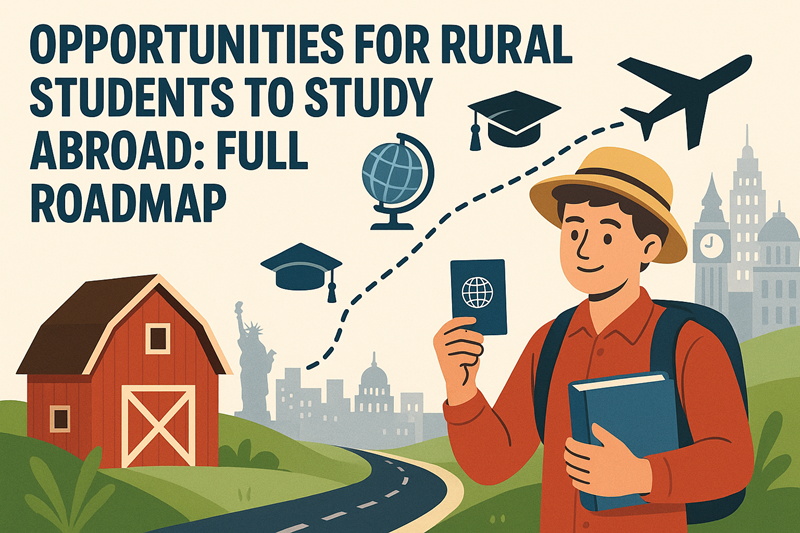
For many students living in rural areas, the dream of studying abroad may seem distant or unattainable. Limited access to resources, lack of guidance, and financial constraints are perceived barriers. However, with the right mindset, strategic planning, and support, rural students can reach international universities and thrive there. This guide is a roadmap for students from villages and small towns who aspire to study abroad, outlining the steps, strategies, and resources available to help them realize this dream.
What are the key steps that rural students should adopt to study abroad?
Rural students may effectively pursue study abroad options by utilizing a variety of tools and tactics. These include developing excellent academic profiles, refining critical abilities, and investigating financial aid, scholarships, and internet resources. Thanks to improved internet connectivity and the emergence of digital platforms, students in rural areas may now access knowledge and opportunities more easily.
1. Shifting Mindset: Dreaming Big Despite Limitations
The first and most crucial step is believing that it is possible. Rural students often limit their aspirations due to societal norms, fear of rejection, or lack of exposure. Overcoming this mental block is essential. Students can fuel their ambitions by looking at the success stories of others who have made it from similar backgrounds.
Key things to remember-
- Follow inspirational study abroad journeys on social media.
- Connect with alums from rural backgrounds.
- Attend webinars and online workshops focused on global education.
2. Researching Opportunities and Destinations
Not every destination or university is equally accessible. Some countries offer more scholarships, affordable tuition, and welcoming immigration policies. Students should research which countries and institutions align with their academic interests, financial capacity, and long-term goals.
Top affordable countries for Rural Students-
- Germany (No tuition fees for public universities)
- Norway (Free education for all, including international students)
- Canada (Strong support systems and work-study options)
- India-based scholarships for study in the UK, USA, Australia
3. Understanding Eligibility and Requirements
Each study abroad program has eligibility criteria such as academic scores, language proficiency, and entrance exams. Students from rural areas must become familiar with these early on.
Common requirements-
- Academic transcripts
- English proficiency tests (IELTS, TOEFL)
- Competitive exams (SAT, GRE, GMAT)
- Statement of Purpose (SOP), Letters of Recommendation (LOR)
- Valid passport and visa documentation
Start preparing for English proficiency and entrance exams in advance. Use free online tools.
4. Overcoming Financial Barriers: Scholarships and Education Loans
Finances are a significant concern for rural families. However, numerous scholarships and loan facilities make studying abroad feasible.
Popular Scholarships for Indian Rural Students-
- Inlaks Scholarship
- Chevening Scholarship (UK)
- Fulbright-Nehru Fellowship (USA)
- DAAD Scholarships (Germany)
- Tata and Mahindra Foundation support
Strategies to access financial aid-
- Maintain high academic performance.
- Apply to multiple scholarships simultaneously.
- Create strong personal statements and essays.
- Explore education loans from Indian banks under government schemes.
5. Building English and Communication Skills
Students from rural backgrounds may not have had access to English-medium education. Improving language and communication skills is vital.
Ways to improve English-
- Watch English news and movies with subtitles.
- Practice daily speaking with friends or online communities.
- Join spoken English classes (offline or online).
- Use language apps like Duolingo or Hello English.
Free resources-
- BBC Learning English
- British Council online modules
- YouTube channels like "English with Lucy," "Learn English with Emma"
6. Finding Mentors and Support Networks
Guidance is critical. Students from urban areas often have access to counselors; rural students must proactively seek mentorship.
Where to find mentors?
- Online platforms like LinkedIn or Unacademy
- Alum groups on Facebook
- NGOs supporting rural education (e.g., Pratham, Make a Difference)
- Local educators or returned scholars
Surround yourself with people who believe in your dream, including parents, teachers, and peers.
7. Using Technology to Bridge the Gap
Technology has become a great equalizer. It enables rural students to access global resources, classes, and information at their fingertips.
Useful platforms-
- Coursera and edX (for free university courses)
- Study portals like Yocket, Leverage Edu, and StudyAbroad.com
- WhatsApp and Telegram groups for entrance exam prep
Maintain regular internet access through mobile data or community centers.
What is the application process, defined step-by-step?
Here’s a step-by-step guide to the application process for students, especially those from rural areas, who wish to study abroad:
Self-Assessment and Goal Setting-
- Decide your academic goals: What subject or career are you passionate about?
- Choose your level of study: Undergraduate, Postgraduate, Diploma, or Research?
- Assess strengths and limitations: Language fluency, budget, academic record, etc.
Researching Countries and Universities-
- Choose the right destination: Consider factors like tuition fees, language, job prospects, and student-friendly policies.
- Select suitable universities: Shortlist 5–10 based on your profile, interests, and ranking.
- Note deadlines: Application windows vary, so track them early.
Check Eligibility and Admission Requirements-
- Academic qualifications: Ensure your grades match the entry criteria.
- Language proficiency: Most programs require IELTS/TOEFL/PTE scores.
- Standardized tests: GRE, GMAT, SAT, or ACT may be needed, depending on the course.
Prepare Documents- Common documents include-
- Academic transcripts
- Statement of Purpose (SOP)
- Letters of Recommendation (LORs)
- Passport
- CV/Resume
- Test scores (IELTS, GRE, etc.)
- Financial proof (bank statements, sponsorship letters)
Appear for Required Tests-
- Book and prepare for standardized tests like IELTS, TOEFL, GRE, or SAT.
- Use online resources like Magoosh, Khan Academy, and free mock tests.
- Take tests at least 6–8 months in advance of application deadlines.
Write SOP and Collect LORs-
- SOP (Statement of Purpose): Write a personal essay explaining your goals, achievements, and why you chose the course and university.
- LORs (Letters of Recommendation): Collect 2–3 letters from teachers or mentors who can vouch for your capabilities.
Apply to Universities-
- Apply online via university websites or centralized platforms (like UCAS for the UK, Common App for the USA).
- Pay the application fee, if required (some offer fee waivers).
- Upload scanned copies of all the necessary documents.
Track Application and Attend Interviews-
- Track the application status via email or the university portal.
- Some universities conduct interviews (online or by phone), so be prepared and confident.
Receive Offer Letter- You may receive-
- Conditional Offer: Admission granted if specific criteria are fulfilled (e.g., final grades).
- Unconditional Offer: Admission granted without conditions.
Apply for Scholarships/Financial Aid- Apply for scholarships through:
- University portals
- Government programs (like Chevening, Fulbright, DAAD)
- Private organizations or NGOs
Meet all deadlines and requirements for financial support.
Dealing with Emotional and Cultural Transitions
Transitioning from a rural setting to a global university can be emotionally challenging. Students may face culture shock, homesickness, or discrimination.
Preparation tips-
- Learn about the culture of your destination country.
- Practice self-care and mental wellness.
- Connect with international student communities.
- Stay in touch with family regularly.
Role of Parents and Local Community
Parents might initially be hesitant, fearing for safety or financial pressure. But their support can be transformative.
What can parents do?
- Encourage academic performance from an early stage.
- Help in gathering documents and managing finances.
- Emotionally support and trust their child’s capabilities.
Role of community-
- Spread awareness of global education.
- Offer moral and sometimes financial support.
- Celebrate and share success stories to inspire others.
What are the post-arrival tips for Rural Students abroad?
- Attend the university’s orientation program to understand campus services and meet fellow students.
- Familiarize yourself with your new environment, including public transport, local shops, and emergency contacts.
- Open a local bank account to manage finances, receive funds, and avoid international charges.
- Get a local SIM card to stay connected with university staff and family back home.
- Understand how the healthcare system works, and always keep your health insurance and ID card with you.
- Find affordable and safe housing—consider on-campus hostels or shared rentals through verified sources.
- Join student communities or cultural associations from your home country for emotional support.
- Start developing academic habits early, including attending classes, taking notes, and asking questions.
- Explore part-time job opportunities that are permitted under your student visa rules.
- Use mobile apps to budget and track your daily expenses, avoiding unnecessary spending.
- Ask for help from professors, student support centers, or local communities when needed.
- Stay regularly in touch with your family to feel emotionally connected and supported.
Conclusion-
In conclusion, the dream of studying abroad is not limited to urban students alone—rural students can achieve this goal with the right mindset, planning, and support. Despite challenges like limited resources or exposure, determination, digital learning, and government or NGO-backed scholarships can bridge the gap. With consistent effort, mentorship, and belief in one’s potential, students from villages can thrive on global platforms, bringing pride to their communities. By breaking barriers and taking bold steps, rural youth can unlock opportunities and contribute meaningfully to their home country and the international stage.
The world is open, no matter where you come from; your journey can lead you anywhere.
FAQs on "From Village to Study Abroad: How Students from Rural Areas Can Study Abroad":
Q.1 Can students from rural areas study abroad?
Ans- With proper planning, resources, and support, rural students can successfully study abroad like their urban counterparts.
Q.2 What are the main challenges rural students face?
Ans- Common challenges include limited internet access, lack of awareness, financial constraints, and fewer local mentors.
Q.3 How can they find scholarships?
Ans- Students can explore scholarships on official university websites, government portals, and platforms like DAAD, Chevening, or Studyportals.
Q.4 Do rural students need high English fluency?
Ans- Yes, most universities require proficiency through tests like IELTS, TOEFL, or PTE. Online prep resources can help.
Q.5 Can they prepare for entrance exams without coaching?
Ans- Absolutely. Free online resources like Khan Academy, Magoosh, or YouTube tutorials offer quality preparation materials.
Q.6 How do you get guidance for applications?
Ans- Seek support from study-abroad consultants, NGOs, alums, school teachers, or online forums like Reddit and Quora.
Q.7 Is studying abroad expensive for rural students?
Ans- While tuition and living costs can be high, numerous scholarships, grants, and part-time job options reduce the burden.
Q.8 Which countries are best for low-cost education?
Ans- Germany, Norway, Taiwan, and some Eastern European countries offer affordable or tuition-free education for international students.
Q.9 What documents are needed for study abroad?
Ans- Key documents include transcripts, passports, English proficiency scores, SOPs, LORs, and proof of funds.
Q.10 How can parents support their child’s dream?
Ans- Parents can offer emotional encouragement, help with finances or paperwork, and trust their child’s abilities and decisions.



Leave a Comment
Your email address will not be published.